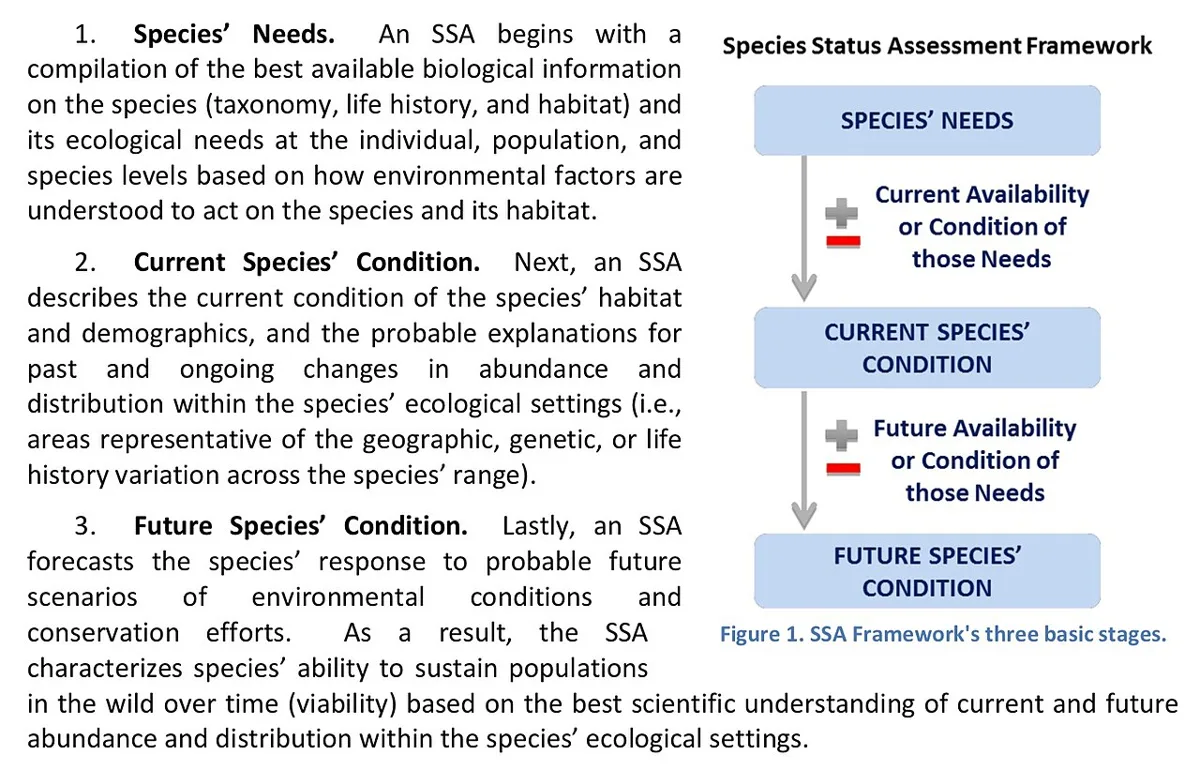
The Trump administration just quietly repealed the part of the Endangered Species Act that protected where animals actually live, eat, and raise their young. After fifty years of keeping 99% of listed species from going extinct, that protection is now gone. Doug Burgum called habitat rules a "regulatory trap." Scientists call what comes next an extinction cascade.
What Got Killed, Exactly
Here's the thing you need to understand before the administration's spin machine muddies it. The Endangered Species Act, passed in 1973, defined "harm" to a protected species broadly enough to include destroying the habitat those species depend on. Not just shooting a bald eagle. Not just physically touching a spotted owl. Actually wrecking the forest it lives in counted as harm too. The Supreme Court agreed in 1995. That interpretation held for half a century.
Now it doesn't. According to The Guardian, the Department of the Interior and the Department of Commerce have officially finalized a new rule stripping that habitat protection out of the definition entirely. Going forward, as the administration put it, only "actions that directly injure or kill listed wildlife" are prohibited. Which is a bit like saying you can't punch someone in the face, but you can absolutely demolish their house, poison their water supply, and pave over their grocery store.
Earthjustice attorney Kristen Boyles put it plainly: "For the first time ever, a presidential administration now claims that species protected by the Endangered Species Act shouldn't be safe from habitat modification that destroys where they live, raise their young, or search for food." That sentence should terrify you.
Who This Actually Kills
Let's talk specifics, because the administration absolutely does not want you to. The Endangered Species Act has protected more than 1,700 species since it became law, and The Guardian reports it has prevented 99% of listed species from going extinct. The bald eagle. The grizzly bear. The California condor. Species that were genuinely barreling toward oblivion and pulled back from the edge because the law said their habitat mattered.
Stephanie Kurose, deputy director of government affairs at the Center for Biological Diversity, said last year when the proposal was first floated that the rule would be "a death sentence for wolverines, monarch butterflies, Florida manatees and so many other animals and plants that desperately need our help." Those aren't abstract symbols. Wolverines need specific snowpack conditions to den. Monarch butterflies need milkweed corridors across half a continent. Florida manatees need warm-water refuges. You open those habitats to logging and mining and you don't just inconvenience these animals. You end them.
And this isn't happening in a vacuum. A 2019 assessment from the Intergovernmental Science-Policy Platform on Biodiversity and Ecosystem Services estimated that roughly one million species are currently threatened with extinction globally, including about 40% of amphibians and a third of reef-forming corals. We are already in an extinction emergency. The Trump administration just poured gasoline on it.
The Domino Nobody Wants to Talk About
Habitat destruction isn't just bad for the specific species that lives there. The Guardian's reporting flags something that ecologists have documented for decades: when you modify an ecosystem, you don't just lose the obvious animal. You trigger a domino effect. The loss of one species pulls the rug out from everything that depends on it, and suddenly you have collapses nobody predicted at the start.
Insects are the most alarming case study right now. The Guardian notes that about 80% of insect species haven't even been identified yet, and some are disappearing before scientists can name them. Insects are the foundation of most ecosystems on Earth. Birds eat them. Fish eat them. Plants depend on them for pollination. Gut the insects and you gut everything above them in the food web. Opening critical habitat to industrial use doesn't just threaten the wolverine on the poster. It starts pulling threads in a sweater nobody fully understands yet.
The Administration's Case, Such As It Is
Interior Secretary Doug Burgum's official statement accused federal agencies of abusing the ESA to "obstruct lawful land use and burden American families and businesses", and claimed the old protections had "turned routine activity into a regulatory trap." The administration framed the change as returning to what they believe was the original intent of the law.
This argument does not hold up to basic scrutiny. The Supreme Court reviewed this exact question in 1995 and sided with the broader habitat interpretation. The public has weighed in repeatedly. A 2023 poll cited by The Guardian found that 80% of registered voters favored full funding of the ESA, and 73% said biodiversity matters to their everyday lives. Hundreds of thousands of public comments were submitted opposing this specific rule change. The administration received all of that input and finalized the rule anyway. So when officials say this is about respecting the original intent of the law, what they actually mean is: industry access won.
Where This Fits in the Bigger Picture
This isn't a standalone call. The Guardian reports that Trump has systematically targeted endangered species protections across his second term to boost energy extraction and industrial access, even in the country's most ecologically sensitive areas. In March, he convened the so-called "God Squad," a rarely used panel with the authority to override ESA protections entirely, specifically to expand oil and gas operations in the Gulf of Mexico. The administration appointed senior officials to the group with explicit instructions to find ways around ESA rules that create "obstacles to domestic energy infrastructure."
The pattern is clear. Every bureaucratic mechanism that stood between an extractive industry and a piece of land or water is being systematically dismantled. The endangered species habitat rule isn't a one-off policy tweak. It's one more brick pulled out of a wall that was never perfect but was genuinely holding something back.
Legal challenges are already coming. Earthjustice's Boyles said flatly: "There is no support for the Trump Administration's rule, no scientific support, no legal support, no public support. We will see the Trump Administration in court." Conservation groups have won in court before on ESA cases. But litigation takes time, and habitat destruction doesn't wait for a ruling.
The Dingo Take
Let's be honest about what just happened. The administration took a law that demonstrably works, one that has kept 99% of listed species alive through half a century of development pressure, and surgically removed the part that made it effective. They did it over hundreds of thousands of public objections. They did it with no scientific backing. They did it because the industries that funded the campaigns wanted the land, and the animals living on that land do not write campaign checks.
The "original intent" framing is particularly rich. The original intent of the Endangered Species Act, as its authors were pretty explicit about, was to stop species from going extinct. That was the whole point. The habitat provision existed precisely because you cannot protect an animal while destroying every place it needs to survive. Claiming you're honoring the spirit of the law while gutting its core mechanism is the kind of logic that only survives if nobody pushes back on it.
So here we are. An extinction emergency is already underway globally, insects are vanishing faster than we can count them, and the United States government just decided this was the moment to open critical wildlife habitats to logging and mining. Future generations are going to look back at this period the way we look back at the guys who thought DDT was fine. The difference is we actually know better this time. We just elected people who don't care.


Comments