Suella Braverman, the anti-immigration hardliner who somehow keeps getting handed microphones, suggested this month that Britain's former colonies owe the crown a thank-you check for centuries of imperial 'investment.' Barbados Prime Minister Mia Mottley had a word for that. Several words, actually, and they were not polite ones.
What Braverman Actually Said (No, Really)
On July 3rd, Braverman posted to X in response to news that Jamaica was planning to lodge a formal reparations petition later this year. The British Empire, she wrote, 'did so much good for the world.' So far, so standard revisionist nostalgia. Then she went further.
'If the government is seriously thinking about this, then former colonies should pay the British back for the considerable investment, effort and contribution that this country made which laid the foundations for many flourishing democracies today,' Braverman wrote. The argument, stripped to its bones, is this: Britain enslaved people, extracted their labor and resources for centuries, and the enslaved should be grateful for the infrastructure built on top of their suffering. The bill is in the mail.
Braverman is a former Home Secretary and now a member of Reform UK, the anti-immigration party that has become a reliable factory for this kind of opinion. She is not a fringe blogger. She held one of the most powerful positions in the British government. This is the mainstream.
Mottley Did Not Mince Words
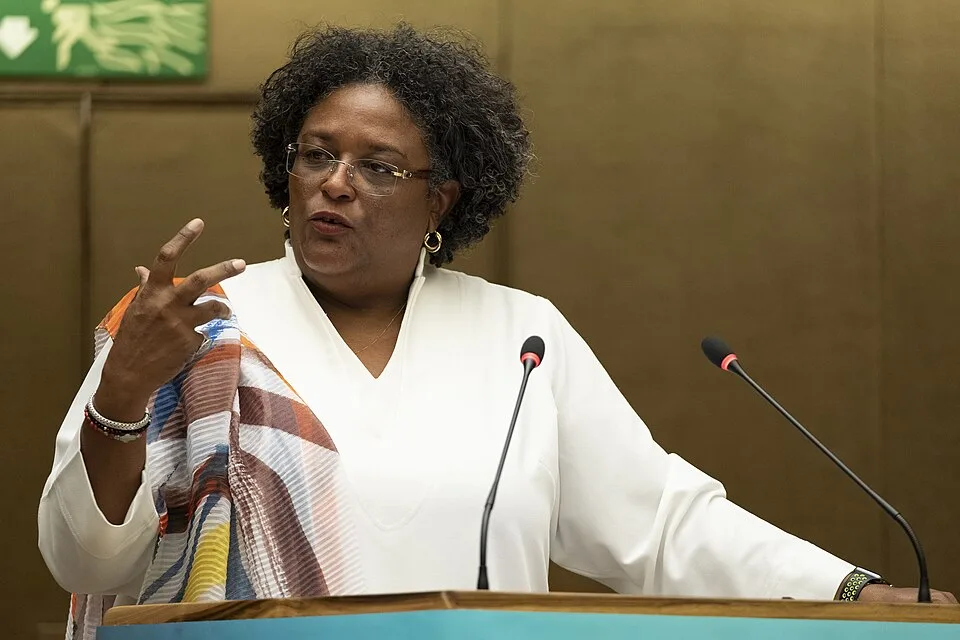
Mia Mottley, the Prime Minister of Barbados, was speaking at the closing press conference of the Caribbean Community summit in St. Lucia when she was asked about Braverman's post. She did not reach for diplomatic language.
'I am not sure that you want me to reply to things that are asinine and certainly the notion that we should pay the United Kingdom for oppressing us, for enslaving us and for treating us as chattel,' Mottley told reporters, according to Africanews. She called it 'asinine.' That word, for those keeping score, means too stupid to be worth serious engagement. Mottley chose it deliberately, and she was not wrong.
This is not a leader who shies away from the subject. Mottley recently led a subcommittee of Caribbean leaders that launched a new slavery reparations manifesto at a conference in Ghana. She was also the prime minister who cut Barbados's ties with Queen Elizabeth II in November 2021, ending the country's status as a constitutional monarchy. She has, in other words, been building toward this conversation for years. Braverman picked the wrong person to provoke.
The CARICOM Summit and What's Actually at Stake
The Caribbean Community leaders were gathering in St. Lucia this week specifically to discuss reparations among other regional issues. This is not a fringe movement or a vague talking point. It is organized, it has institutional backing, and it is accelerating.
Jamaica plans to file a formal reparations petition. Caribbean leaders have called for a formal British apology, debt cancellations, and a broader package of restorative measures. The United Nations human rights chief, Volker Turk, has stated that an estimated 25 million to 30 million Africans were forcibly removed from their homes for the purposes of slavery, with enormous numbers sent to work on Caribbean and American plantations. The scale of that crime is not a matter of historical debate. The question of accountability is.
Britain's position, consistent and immovable for years now, is that it will not pay reparations. The government has acknowledged the history without conceding that acknowledgment requires anything of them. Caribbean leaders have been pushing back on exactly that logic, and the Braverman post landed in the middle of a week when that push was getting louder.
The 'We Built Your Roads' Defense, Explained
The argument Braverman is making is not new. It is, in fact, one of the oldest deflections in the colonial apologist playbook: the empire was an investment, the colonies benefited, so everyone should call it even. The railways! The legal systems! The English language!
The problem with this argument is straightforward. The infrastructure built during colonial rule was built primarily to extract resources for Britain's benefit, using coerced and enslaved labor, and governed by systems designed to suppress local populations and prevent genuine self-determination. Calling that an 'investment' in the colonies is like a burglar demanding rent for rearranging your furniture while cleaning out your safe. The framing requires a specific kind of audacity to sustain.
What makes Braverman's version particularly striking is the inversion. She did not just defend the empire. She proposed that the descendants of enslaved people should write a check. That is a move so aggressive it genuinely surprised people who thought they had heard every available take on this subject.
Reform UK's Greatest Hits
Braverman's post fits neatly into the broader Reform UK project, which has made political hay out of nostalgia, anti-immigration rhetoric, and a particular hostility to anything that sounds like accountability for British history. The party has been gaining ground in British politics, which tells you something about where a portion of the British electorate is right now.
The fact that a former Home Secretary feels comfortable making this argument publicly, in 2026, without apparent concern for how it lands internationally, is its own kind of data point. It is the political equivalent of showing your whole hand and daring someone to call you on it. Mottley called her on it. Loudly.
The Dingo Take
Here is the remarkable thing about Suella Braverman's post: it did the reparations movement a favor. For years, the debate in Britain has been conducted in the language of solemn regret and vague sympathy, with the government expressing that it takes history 'very seriously' while doing absolutely nothing. Braverman ripped that curtain down. She said the quiet part at full volume: we think you owe us. Not the other way around. That clarity is useful. It makes it harder for the British government to hide behind performative empathy while the actual argument playing out in their political class looks like this.
Mia Mottley, meanwhile, is doing something that more leaders with legitimate historical grievances should consider: refusing to treat bad-faith arguments as worthy of polite rebuttal. 'Asinine' is not a diplomatic word. It is an accurate one. When a former Home Secretary suggests that Caribbean nations should compensate Britain for the experience of being enslaved, there is no version of 'on the other hand' that makes sense as a response. Mottley understood that and said so.
The reparations conversation is not going away. CARICOM is organized, Jamaica is filing formal petitions, and the UN has put numbers to the scale of the historical crime we are talking about. Britain is going to keep insisting it owes nothing while its own politicians make the moral case for reparations accidentally, just by explaining why they think they are owed instead. At some point, the cognitive dissonance becomes impossible to maintain. We are not there yet. But Braverman helped.



Comments