Indonesia's top anti-corruption prosecutor has resigned after police raided his home and found 74 kilograms of gold bars, $5.8 million in US dollars, and another $13.3 million in Singapore dollars sitting around like he'd forgotten where he put them. Febrie Adriansyah, the Assistant Attorney General for Special Crimes, was literally the guy whose job it was to prosecute exactly this kind of thing. The irony isn't subtle. It's a sledgehammer.
What Police Actually Found
According to CNA, police raided at least 12 locations this week, including properties linked to Febrie in and around Jakarta. The haul: 74 kilograms of gold bars, US$5.8 million in cash, and S$17.2 million, which converts to roughly another US$13.3 million. That's close to $20 million in combined cash and gold, found in a residence and linked properties belonging to a government prosecutor.
Police spokesman Budi Hermanto confirmed the raids and told reporters that 15 witnesses had already been questioned. Suspects, he added, would be announced "soon." No formal charges have been filed yet, so Febrie is technically still in the category of person-the-police-are-very-interested-in rather than accused criminal. A distinction that feels more technical than meaningful when you've got a walk-in closet's worth of gold bars.
Febrie spoke to reporters before his resignation and acknowledged the Bogor house was his private residence. But he denied the seized assets had anything to do with corruption, insisting everything could be "accounted for." He did not elaborate on what legitimate accounting system produces 74 kilograms of gold bars in a Jakarta-area home.
The Resignation Nobody Will Call Voluntary
The Attorney General's Office announced Saturday that Febrie had resigned and that the resignation had been accepted. Spokesman Anang Supriatna offered this gem of a quote to explain the departure: "The decision was a form of commitment to maintain the integrity, objectivity, and neutrality of law enforcement."
Sit with that for a moment. The integrity of law enforcement. The man who just had tens of millions in unexplained cash and gold seized from his properties resigned to protect the integrity of the institution he was allegedly looting. Someone in that press office has either a tremendous sense of irony or absolutely none at all.
This is how these things work in a lot of places, and Indonesia is far from unique here. The corruption investigator gets investigated. The formal language of institutional accountability kicks in. A resignation is framed as an act of honor rather than a strategic exit before the handcuffs come out. The gold bars, presumably, remain in evidence lockup.
What He Was Supposedly Investigating
Here is where the story gets genuinely interesting rather than just darkly funny. CNA reports that police are probing at least three cases involving Febrie's office, including suspected corruption and money laundering tied to coal procurement for PLN, Indonesia's state utility company. Coal procurement corruption is not a small-scale graft problem. State utility contracts in Indonesia move serious money.
Before resigning, Febrie told reporters that his office was still focused on its own cases, including a corruption scandal inside President Prabowo Subianto's flagship free school meals program. That program, one of Prabowo's signature policy initiatives, has already attracted scrutiny over how its contracts were awarded and managed. Febrie was, until Saturday, nominally the person overseeing that investigation. Whether his departure complicates that case or conveniently buries it is a question Indonesian journalists are going to be asking for months.
The Broader Problem This Represents
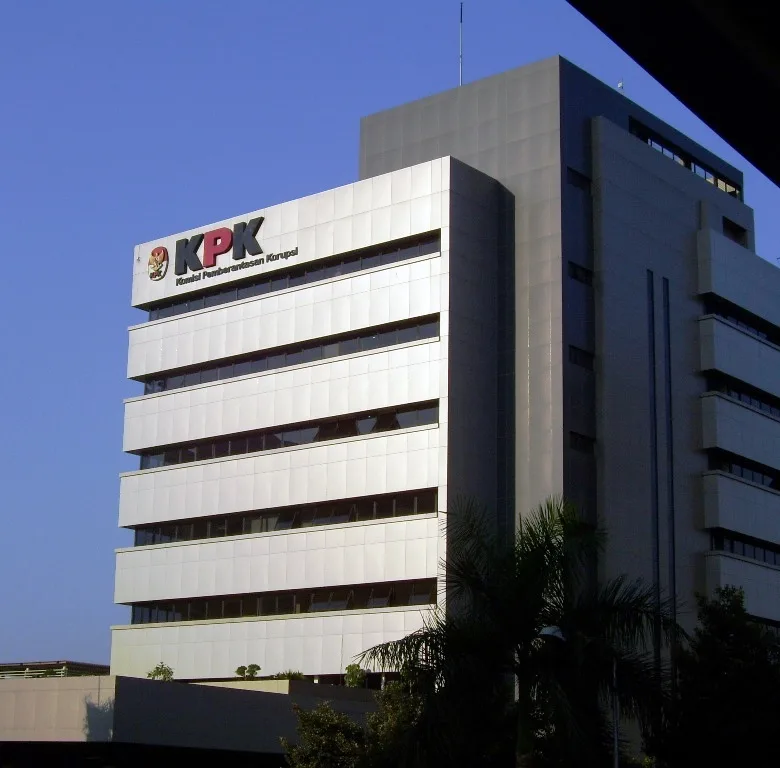
Indonesia has been fighting systemic corruption for decades with mixed results. It has the Corruption Eradication Commission, known as the KPK, which is a separate body from the Attorney General's Office and has itself been subject to political pressure and weakening legislation in recent years. The fact that a top graft prosecutor at the AG's office is now the subject of a police corruption investigation is not just a scandal. It's a structural indictment.
When the people enforcing anti-corruption law are themselves allegedly swimming in unexplained gold bars, it raises the obvious and uncomfortable question of how many cases got buried, how many investigations got slow-walked, and how many deals got made in exchange for exactly the kind of wealth that police just found sitting in Febrie's house. These questions won't get answered quickly, and some of them may never get answered at all.
President Prabowo's government is going to face serious pressure to respond in a way that goes beyond accepting one resignation and issuing a statement about integrity. Whether that pressure translates into anything meaningful is a different question entirely.
The Dingo Take
Let's be honest about what this story is. It's not a surprising story. It's a depressingly predictable story dressed up in specifics so brazen they become almost impressive. Seventy-four kilograms of gold. Not a briefcase of cash. Not a numbered account in the Caymans like a normal corrupt official. Actual, physical, stacked-in-your-house gold bars, the kind of thing that requires a forklift and a complete absence of self-awareness to accumulate while prosecuting corruption cases for a living.
The resignation statement about "integrity, objectivity, and neutrality" is going to haunt Indonesian political commentary for years. It should. It belongs in a textbook on how institutions use the language of accountability as a substitute for actual accountability. One man steps down with a carefully worded farewell and the machinery grinds on, maybe a little cleaner-looking on paper, almost certainly not cleaner in practice.
The real story here isn't Febrie specifically. It's the free school meals corruption case that his office was supposedly overseeing, and what happens to it now. Prabowo ran on a platform of feeding Indonesia's children. If the man supervising the corruption investigation into that program just resigned under a gold-bar cloud, the question of who was watching the watchmen just got a lot more urgent. Someone should be asking that question very loudly, very soon.



Comments