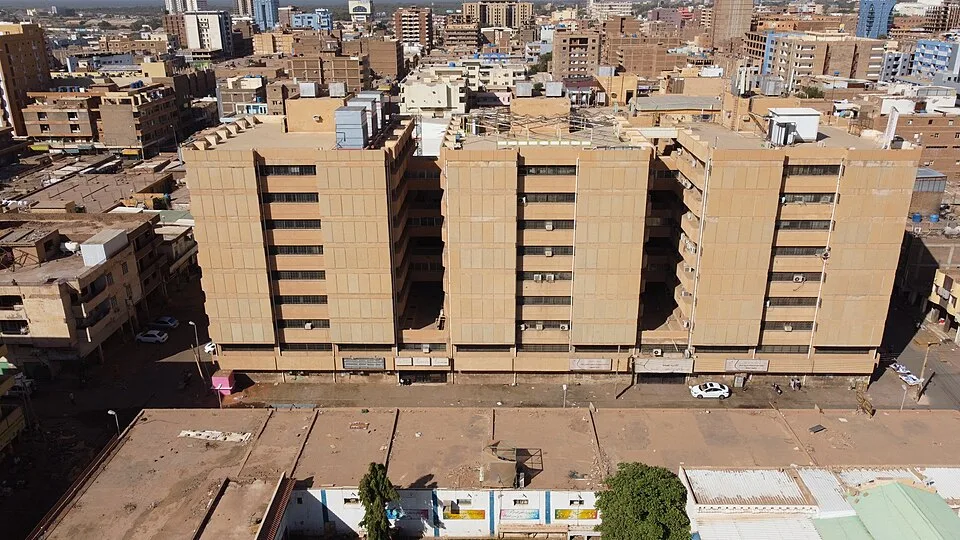
Two million people have returned to Khartoum, the Sudanese capital that was torn apart street by street over the last three years of civil war. The Sudanese military beat back the Rapid Support Forces paramilitary group and declared victory. The victory party, it turns out, is being held in a city with no electricity, no running water, and an unknown number of landmines scattered through the downtown core.
A Ghost Town With Two Million People In It
Africanews reports that at least 2 million of the roughly 5 million Khartoum residents who fled their homes have now returned. That sounds like progress. It is not, really, progress so much as it is the least-bad option available to a lot of very desperate people.
The city centre, which once held busy markets, major commercial districts, and the kind of wealthy neighborhoods that made Khartoum one of Africa's more recognizable capitals, is described by Africanews as a ghost town, a mass grave, and a minefield. All three of those things at once. Let that settle in for a second.
Fewer than 80,000 people have returned to central Khartoum specifically, according to the United Nations. The rest of the 2 million are spread across surrounding areas. Which means the heart of the city, the part that absorbed the worst of the fighting, remains almost entirely empty. Emptied and ruined and still dangerous.
How Khartoum Got Here
The short version: in April 2023, the RSF, a paramilitary force that grew out of the brutal Janjaweed militias responsible for the Darfur genocide, swept through Khartoum and took it. Block by block. Street by street. The Sudanese Armed Forces eventually fought their way back in, also street by street, also last year, leveling whatever the RSF had left standing.
Two armies spent the better part of three years using a city of 5 million people as a battlefield. The result is exactly what you would expect if you thought about it for even a moment, which the people running both sides of this war apparently did not.
Afrcanews describes a quick drive through downtown Khartoum as leaving little to the imagination. Buildings damaged or destroyed. Infrastructure gone. The physical record of how the fighting moved, neighborhood to neighborhood, written into the rubble.
The Government's Promises Are Worth About What You'd Expect
After the military's victory, Sudanese authorities promised residents a swift return to normal life. Power restored. Services running. The city livable again. Standard post-war government reassurance stuff.
According to Africanews, power is still mostly out. Buildings are still damaged. Workers are going unpaid. Water shortages are, in the reporter's words, becoming the norm. So the promises have not exactly landed.
This is not a minor administrative failure. People made the decision to go back, to load up whatever they had left and make the journey home, partly because the government told them it was worth doing. Some of those people are now sitting in damaged homes, in a city without reliable water or electricity, running out of options.
Running From Egypt to Run Back Into a Minefield
Here is a detail that deserves more attention than it will probably get. Africanews reports that some of the people returning to Khartoum are not coming back because things there are good. They are coming back because things in Egypt got worse.
Sudan has one of the largest refugee populations on earth right now. Millions fled to neighboring countries, including Egypt. But Egypt has been cracking down on Sudanese refugees, and for some people, the calculus has shifted: a bombed-out home in a city with landmines is, apparently, preferable to what is being done to refugees in Cairo.
That is the kind of sentence that should stop you cold. People are choosing a literal minefield over the alternative. And the alternative is a neighboring country that signed the Refugee Convention. This is what a complete collapse of international protection looks like in practice.
Overwhelmed Just to See It Again
Africanews includes something in its reporting that is easy to skip past but shouldn't be. It notes that many of those returning were simply overwhelmed by the thought of seeing their city for the first time in years. Not overwhelmed by joy exactly. Just overwhelmed.
Think about that. Three years away from your home, your neighborhood, the streets you grew up on. Then you go back and the markets are gone and the buildings are craters and there are mines in the ground. And you are still glad to be there, because it is yours, and because you have been displaced and afraid and stateless for three years, and this broken thing is still the place you are from.
The human cost of this war has been staggering by any measure. Over 150,000 people killed, according to prior estimates. Millions displaced. And now 2 million people returning to a city that is going to take decades and billions of dollars to rebuild, with a government that cannot currently keep the lights on.
The Dingo Take
The Sudan war has received a fraction of the global media coverage it deserves from the beginning. In April 2023, when the RSF launched its offensive, the world was busy with other things. The conflict metastasized. Cities fell. Mass atrocities were documented in Darfur again, in 2024, echoing a genocide the international community swore it would never allow to repeat. The response from the United Nations Security Council was about what you would expect from a body where Russia and China hold vetoes and everyone else mostly argues about process.
What is happening in Khartoum right now is not a recovery story. It is a triage story. Two million people going home to a city that cannot feed or power or protect them, because the other options are worse. That is the bar. That is what winning looks like in Sudan in 2026.
The international community will send some aid. There will be pledging conferences. Diplomats will give speeches about reconstruction and resilience. And the people of Khartoum will spend years digging mines out of their streets and rebuilding their lives without electricity, while the world moves on to the next catastrophe it also will not adequately address. We have gotten very good at this particular cycle. We should be embarrassed about that.



Comments