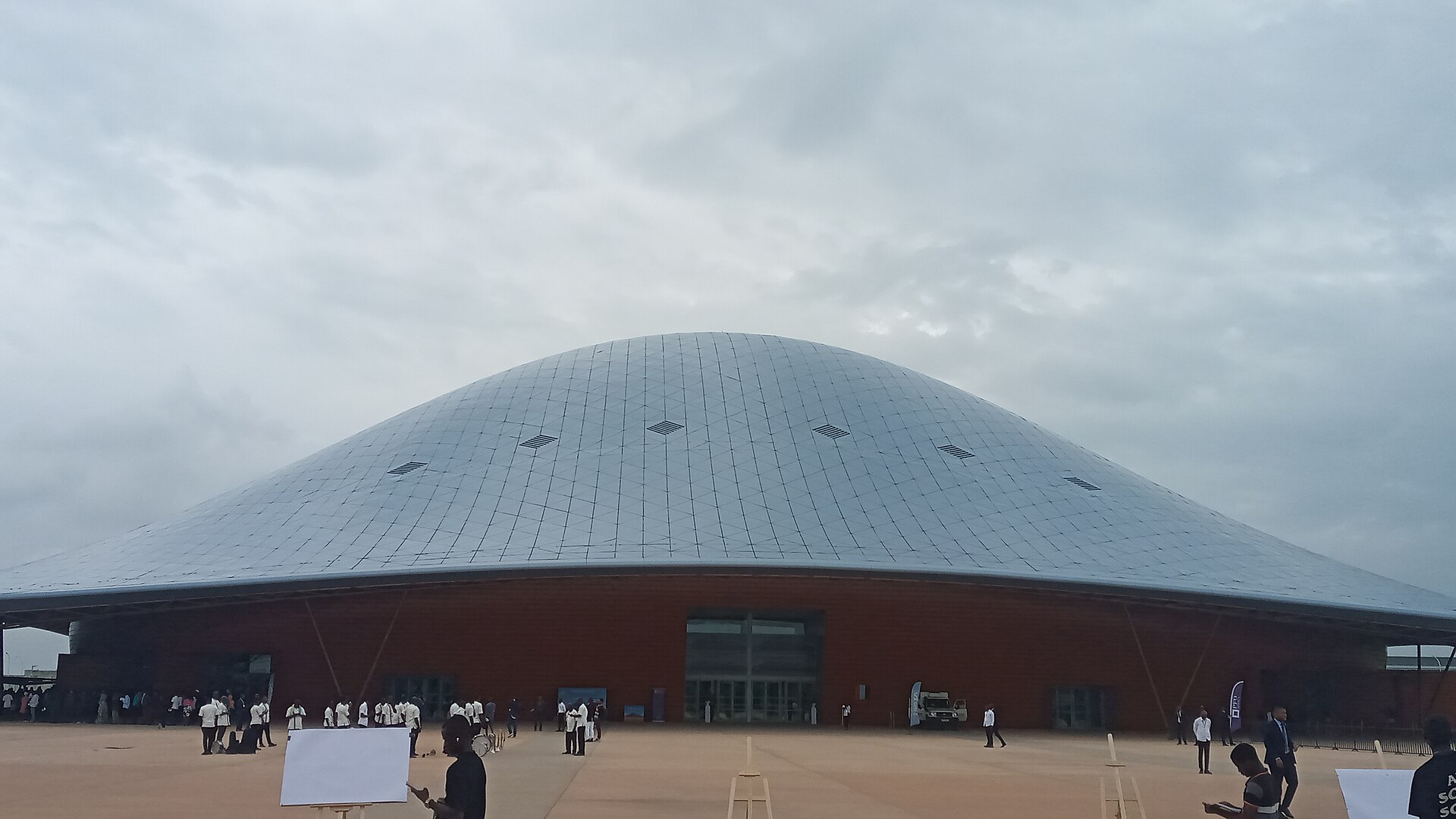
While the world's attention stays locked on billionaires launching themselves into orbit for sport, something considerably more useful just happened in Abidjan. The second African Space Solutions Market wrapped up this week at the Ivory Coast's Abidjan Exhibition Center, and the people there were using space technology to actually solve problems that matter. Farmers knowing what land they own. Mining companies getting better data. Agriculture feeding people instead of just producing shareholder reports.
What Actually Happened in Abidjan
From July 7 to 9, the Abidjan Exhibition Center hosted the second edition of the African Space Solutions Market, a three-day trade show focused specifically on putting satellite and space-based technologies to work for African development. According to Africanews, the event drew experts, researchers, startups, investors, and decision-makers from across the continent.
This was not a vanity conference with a bunch of panel discussions going nowhere. The agenda was satellite imagery, geomatics, artificial intelligence, drones, telecommunications, and Earth observation. Each of those technologies was being presented with a specific African problem in mind and a proposed way to fix it. That distinction matters more than it sounds.
A Startup Trying to Fix Land Rights With Satellites
One of the standout presentations came from Junior Traoré, founder of a startup called Geofonex. Traoré presented something called the COST Network, a technology designed to address one of the most persistent and consequential problems facing African farmers: land tenure security. As Africanews reports, Traoré explained that the system allows "every farmer and every landowner to know where they stand, what belongs to them, and to obtain the necessary property documents."
Stop and think about that for a second. Land tenure insecurity is not a minor inconvenience. It is a structural disaster that keeps millions of African farmers trapped in poverty, unable to get loans, unable to invest in their land, and vulnerable to displacement. When you don't have legal documentation proving you own what you work, you have almost nothing. A satellite-based solution that pins down property boundaries and generates legitimate documentation could be genuinely transformative. Geofonex is betting on it.
This is the kind of application that doesn't get breathless TED Talk coverage in the United States, but probably should. It is not glamorous. It is not a rocket. It is a farmer being able to prove in court that the land her family has worked for three generations is actually hers.
Drones in the Mines and Fields
Geofonex wasn't alone. Africanews also spoke with Yao Rahissa, a sales representative at Drone Group, who described an operation that crosses multiple industries. "We use drones to collect data in order to provide solutions to businesses," Rahissa said. "We operate in several industries, such as construction, mining, and agriculture as well."
That is a wider footprint than most people picture when they think about drone technology in Africa. Construction site surveys, mining operations that need terrain mapping, agricultural monitoring at scale. The common thread is data collection in environments where getting accurate, up-to-date information has historically been expensive, slow, or physically dangerous. Drones make it cheaper, faster, and safer. The applications are not theoretical. Companies at this market were already running them.
The broader picture the event painted, according to Africanews, is of a continent where public and private sector players, startups, researchers, and institutions are actively looking for where space-based technology intersects with real-world African problems. That is a different conversation than the one happening in most Western space coverage.
Why This Is the Second Edition and Not the Twentieth
Here is the honest context. This was only the second African Space Solutions Market. Africa's space sector, while growing, is still finding its footing on events like this. The continent has made real strides in recent years, with multiple African nations launching satellites and establishing national space agencies, but the ecosystem of startups, investors, and institutions that turns space technology into usable ground-level tools is still being built.
That is precisely what makes an event like this one matter. The African Space Solutions Market is trying to accelerate that ecosystem-building process by getting the right people in the same room. When a startup founder like Traoré can pitch to investors and government decision-makers who are already oriented toward space applications, the gap between "promising satellite technology" and "farmer with a land title" gets shorter. That is the whole point of the thing.
The Dingo Take
The framing problem with African technology coverage in Western media is that it almost always looks like charity. Either someone is donating something, or a Western company is "bringing connectivity" to the continent, or some NGO is rolling out a pilot program. What you don't see nearly enough is Africans building companies, pitching technologies, and designing solutions for African problems on African terms. The African Space Solutions Market is that, and Africanews covering it is that, and most major English-language outlets ignored it completely.
The specific work being showcased in Abidjan is worth taking seriously. Land tenure security is one of those issues that sounds bureaucratic until you understand that it underpins access to credit, legal protection, generational wealth transfer, and basic economic participation for hundreds of millions of people. If Geofonex's COST Network can do what Traoré says it can, at scale, that is not a minor product launch. That is infrastructure. Same goes for drone-based data collection in mining and agriculture. These are not gimmicks.
The Western space conversation right now is dominated by Starship timelines and billionaire rivalries and who gets to put a flag on the moon next. Meanwhile, in Abidjan, people spent three days figuring out how to use the tools that already exist to help farmers prove they own their land. One of those conversations is going to matter more in twenty years. Place your bets.



Comments