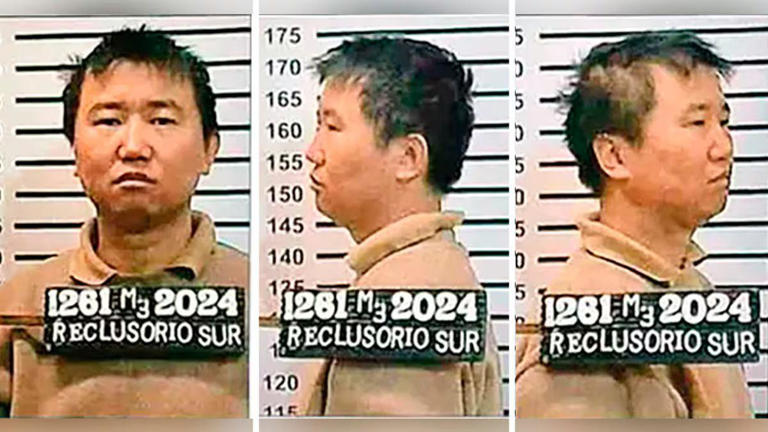
He graduated from China's most prestigious university with a Spanish degree, moved to Mexico to work in mining, and then allegedly became the single most important link in the supply chain poisoning tens of thousands of Americans every year. Meet Zhang Zhidong, 39, known in criminal circles as the "king of fentanyl" -- a title he reportedly earned not through violence or family ties, but through networking, chemistry contacts, and an almost reckless love of living on the edge.
The Man Cartel Members Called 'Brother Wang'
The BBC spoke with Enrique, a self-described high-level coordinator in the Sinaloa cartel, who described Zhang's importance to the organization with a chuckle and a short sentence: "Brother Wang was very important. He was number one." That's not the kind of review you'd put on a LinkedIn profile, but it tells you everything about how Zhang allegedly positioned himself inside one of the world's most dangerous criminal enterprises.
Zhang graduated from Peking University in Beijing in 2010 with a degree in Spanish, then headed to Mexico the following year to work for a Chinese-owned iron ore mining company. According to the BBC's reporting, people who knew him at the time saw a sharp, adaptable young professional who could talk to absolutely anyone. Fluent Spanish. Strong Beijing accent. The kind of guy who'd drive you out to a deserted highway at night to shoot pistols at road signs, apparently just for fun.
When the mining company collapsed in 2013, most of his colleagues went home. Zhang stayed.
From Currency Exchange to Fentanyl Empire
Alex, a former Peking University classmate who worked alongside Zhang at the mining company, told the BBC that a year or two after the company folded, Zhang started posting in the university's Spanish alumni WeChat group offering favorable dollar exchange rates. Alex's read on it: Zhang was laundering money. It's a hell of a pivot from junior mining executive.
According to US court filings, Zhang has been accused of operating "a massive narcotics trafficking and money laundering organization" since at least June 2016. Cartel member Enrique says Zhang also got involved in drugs, and another source, Luis, recalled a specific afternoon in 2019 when his bosses asked him to stand guard at a meeting where Zhang "came to offer his products." Those products were fentanyl precursors -- the chemical building blocks you need before you can start cooking the stuff that ends up in someone's veins in Ohio.
The BBC reports that Zhang allegedly used his contacts back in China to source those precursor chemicals, which were then shipped by air or sea to Mexico and distributed to clandestine labs throughout Sinaloa. Luis, who became a fentanyl cook himself, says he watched at least five colleagues die in front of him from chemical exposure -- passing out mid-cook because the substances seeped through gaps in their protective clothing.
How a Mining Contact Becomes a Cartel Insider
Here's the part of this story that's genuinely worth understanding, because it says something uncomfortable about how criminal enterprises grow. According to Alex, doing business in Mexico's mining sector sometimes meant dealing with cartels that effectively control large parts of the country. Zhang had a talent for cultivating relationships with "whoever mattered locally -- both the official side and the unofficial side."
Enrique told the BBC that Zhang also reportedly entered a romantic relationship with a female relative of one of the cartel's leaders, which helped cement his access to the organization's inner circle. Whether that relationship was strategic, genuine, or both, nobody's saying. What they are saying is that it worked.
This is how Zhang allegedly went from a promising young graduate with a Spanish degree to the person cartel members credit with establishing the entire fentanyl precursor supply chain between Chinese chemical manufacturers and Mexican drug labs. Not through violence. Through relationships, logistics, and apparently a very useful set of contacts from his time in the Chinese business world.
Arrested, Escaped, Recaptured, Extradited
Zhang's story doesn't end with him quietly running a fentanyl empire from a comfortable office in Culiacan. He was arrested in Mexico in 2024, then managed a dramatic escape before being recaptured and extradited to the United States in 2025, according to the BBC. When he appeared in court in New York, the Deputy Attorney General at the time, Todd Blanche, called him one of "the world's most dangerous traffickers" and accused him of running a global operation that pumped cocaine, fentanyl, and methamphetamine into the US while laundering millions in narcotics proceeds.
Zhang has pleaded not guilty and is awaiting trial. His lawyer declined to comment while the case is ongoing. So we wait.
Fentanyl, for the record, is a synthetic opioid 50 times more potent than heroin. A lethal dose is measured in grains -- as small as a few grains of salt. The drug kills tens of thousands of people in the United States every year. President Trump has called fentanyl dealers "narco-terrorists" and classified the drug and its precursors as weapons of mass destruction, using the fentanyl trade as justification for tariffs on China, Mexico, and Canada.
The People Doing the Actual Dying
It would be easy to let this story become purely about Zhang's extraordinary biography -- the elite university, the career pivot, the criminal enterprise, the escape. But the BBC's reporting pulls the camera back to the people on the ground level, and it's grimmer than anything in Zhang's arc.
Luis, the fentanyl cook, tried to quit. His boss told him the alternative was putting on tactical gear and going out on patrol to fight. "You put on the vest, the gear, and you go out and fight -- it's either that or working as a cook," Luis was told. He kept cooking.
Enrique, the cartel coordinator who vouched for Zhang's importance, told the BBC that one of his own relatives died of a fentanyl overdose. "It shakes your conscience," he said, then added: "work is work and we don't know another way to make a living." That's not a defense. But it's a window into something the tariff debates and the terrorism designations tend to skip right over -- the fact that almost everyone in this chain is also trapped inside it.
The Dingo Take
Let's be honest about what this story is, because the temptation is to make it into a movie pitch -- and it kind of already is one. Brilliant Chinese graduate leverages elite education to build a transnational criminal empire from the inside of a Mexican drug cartel. That's a streaming series in three years, guaranteed. But the actual story is about fentanyl killing tens of thousands of Americans every year, and the supply chain behind that is apparently so sophisticated and well-embedded that one man with a Spanish degree and a talent for relationships could become, in the words of people who would know, "number one."
Trump has used fentanyl as a political football to justify tariffs on China and Mexico in ways that economists have repeatedly pointed out won't actually disrupt a black market supply chain. You don't stop chemical precursors from moving through ports by slapping a 145% tariff on Chinese goods -- you stop them through intelligence, international law enforcement cooperation, and the kind of patient investigative work that led to Zhang's eventual extradition. The latter is unglamorous and doesn't play well at rallies. So instead we get "narco-terrorists" and "weapons of mass destruction" as rhetorical flourishes while the actual pipeline keeps moving.
Zhang is awaiting trial and maintains his innocence. If half of what the US government alleges is accurate, he is genuinely one of the more consequential figures in the fentanyl crisis that's reshaped American mortality statistics. And he built that position, reportedly, the same way anyone builds a career: by being good at networking, staying when everyone else left, and finding out who the important people were. The fact that the important people happened to run a cartel is, apparently, a detail you work around.




Comments