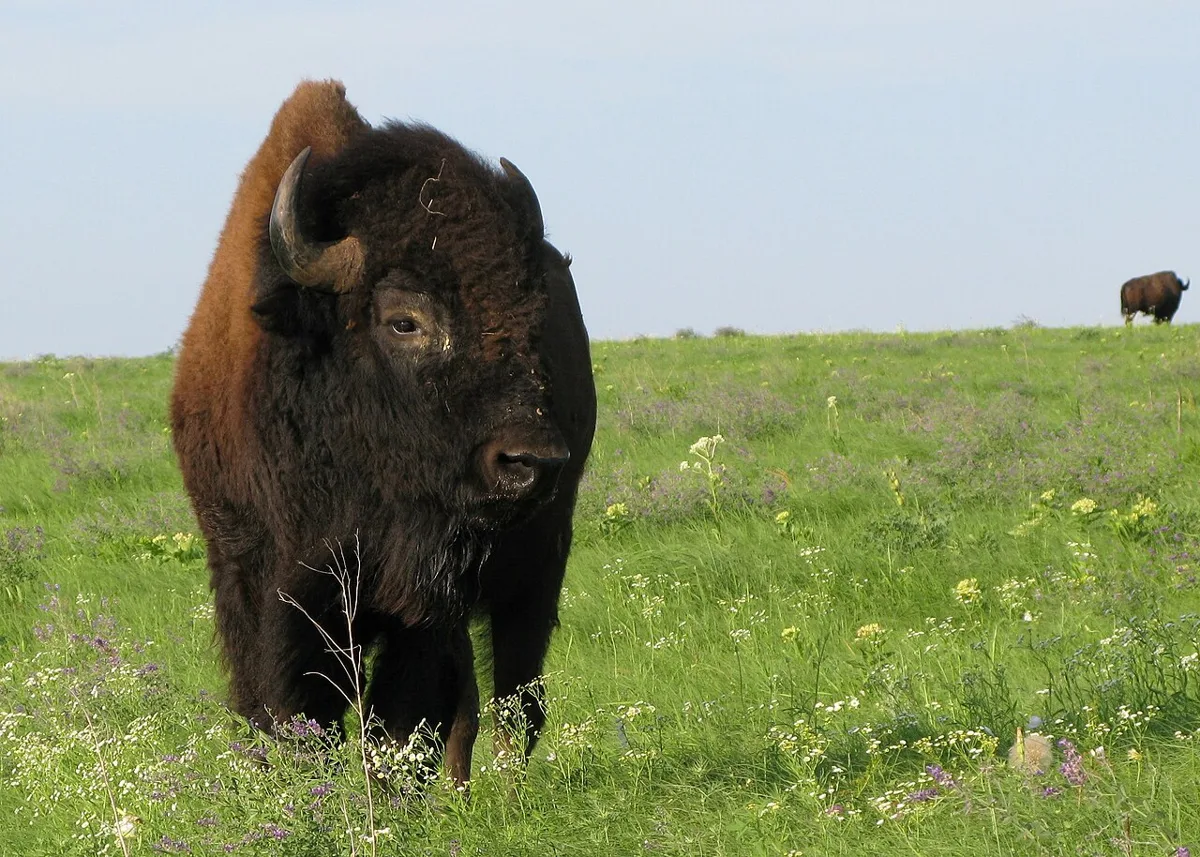
A 2,000-pound bull bison at Yellowstone National Park hooked a 65-year-old man with its left horn, sent him spinning through the air in what witnesses described as a "perfect flip," and deposited him on the ground in considerable agony. The whole thing is on video. The park service sign says to stay 25 yards away. It has been there for years.
What Actually Happened, Start to Finish
According to the BBC, the incident went down Friday evening at Bridge Bay Campground near Yellowstone Lake, in the final stretch of daylight before sunset. Carl Isom-McDaniel, 65, and his grandson were out for a walk when they spotted a bull bison lying in the grass. They slowed down. They raised their cameras. They took a picture.
The bison, which was not asleep, had opinions about this. Viral footage captured by witness Mike Macleod shows the animal flopping aggressively on its side several times, in the way that large animals with terrible moods do when they are about to make a decision you will regret. Then it got up. Then it ran.
A white truck pulled up and apparently reconsidered its involvement immediately after the bison charged at it and drove away at speed. The bison, unbothered, kept going. Isom-McDaniel and his grandson ran for a stand of trees. The grandson made it. His grandfather did not.
Macleod, who filmed the whole thing for the Cowboy State Daily, described the impact plainly: "The bison hooked him with his left horn on his hip and tossed him in the air. He made a perfect flip and landed on his side." The New York Times reports Isom-McDaniel was taken to hospital with multiple injuries. Macleod said the man was conscious throughout, joking despite the pain. Genuinely impressive given the circumstances.
The Sign Is Right There
Here is the thing about Yellowstone bison attacks that makes each one both completely shocking and completely predictable. The National Park Service does not hide the ball on this. Their website states, in plain English, that bison have injured more people in Yellowstone than any other animal. Not bears. Not wolves. Bison. The ones that look like very large, slow cows standing next to the road.
The NPS advises visitors to stay at least 25 yards from bison at all times and specifically warns people to "never approach a bison to take a photo." That guidance is not buried in a brochure no one reads. It is on their website, on signs throughout the park, and has been repeated so many times that "Yellowstone bison attack" has basically become its own genre of viral video. And yet, here we are, every single summer, watching the same movie with different extras.
The footage of this particular incident does show the grandfather and grandson stopping at what looks like a reasonable distance before raising their cameras. But "looks like" is doing a lot of work there. Because a 2,000-pound animal that can run three times faster than a human being has a way of making reasonable distances feel extremely unreasonable, very quickly.
Mating Season Makes Everything Worse
Why July specifically? Jennifer Barfield, scientific lead at Colorado's Laramie Foothills Bison Conservation Herd, explained it to the BBC without pulling any punches. July is peak breeding season for bison. Testosterone levels in bulls are elevated. Moods are foul. Behavior is unpredictable. Barfield said her own team avoids getting near the animals on foot during this period, limiting contact to observations made from inside vehicles.
She put the takeaway simply: "It's always good to keep in mind that 25 yards is a minimum distance for safety." Minimum. As in, the floor. Not the target. Not "approximately 25 yards, give or take depending on how good your camera's zoom is."
Yellowstone also happens to be absolutely packed in July. The NPS reports that nearly 60% of annual park visitation happens across just three months, June through August. So you have millions of tourists descending on the park at exactly the moment the bison are at their most volatile. It is a perfect storm of bad timing and worse judgment, and it produces a highlight reel that refreshes itself annually with depressing reliability.
The Grandfather, For What It's Worth, Kept His Sense of Humor
Carl Isom-McDaniel deserves credit where it's due. Witnesses say he was conscious throughout the ordeal, joking with bystanders while waiting for emergency services despite being in serious pain. Getting launched into the air by a nearly one-ton animal and landing hard enough to sustain multiple injuries, and then making jokes about it while you wait for the ambulance, requires a certain kind of constitution that most people do not have.
The NPS has not officially commented on the incident, and the BBC reports it has reached out for a response. That silence is not unusual. The park service tends to let the video do the talking on these ones, possibly because there is not much to add beyond "we told you so" and "please look at the signs."
The Dingo Take
Look, nobody wants to see a 65-year-old man get thrown into the air by a bison. That is not the point here. The man is apparently okay enough to crack jokes, which is genuinely good news, and we wish him a quick recovery. The point is that this happens every single summer, at the same park, involving the same animal, because the same species of tourist cannot resist the same instinct to get slightly closer for a slightly better photo.
The bison is not doing anything wrong. The bison is a wild animal operating on wild animal logic, which says that large creatures standing nearby during mating season are threats to be eliminated. The bison does not know about your Instagram. The bison does not care about your Instagram. The bison has one setting right now and that setting is "charge." The park service has told you this. Barfield's research team has told you this. The entire genre of Yellowstone bison attack videos, stretching back years, has told you this. At some point the conversation stops being about the bison.
If you are going to Yellowstone this summer, and millions of you are, print this out and tape it somewhere useful: 25 yards. That's the minimum. Use the zoom on your phone like the rest of civilization and keep moving. The bison will still be impressive from a distance. They are, after all, enormous. You do not need to get closer. The video evidence on this point is extensive and available on YouTube.




Comments