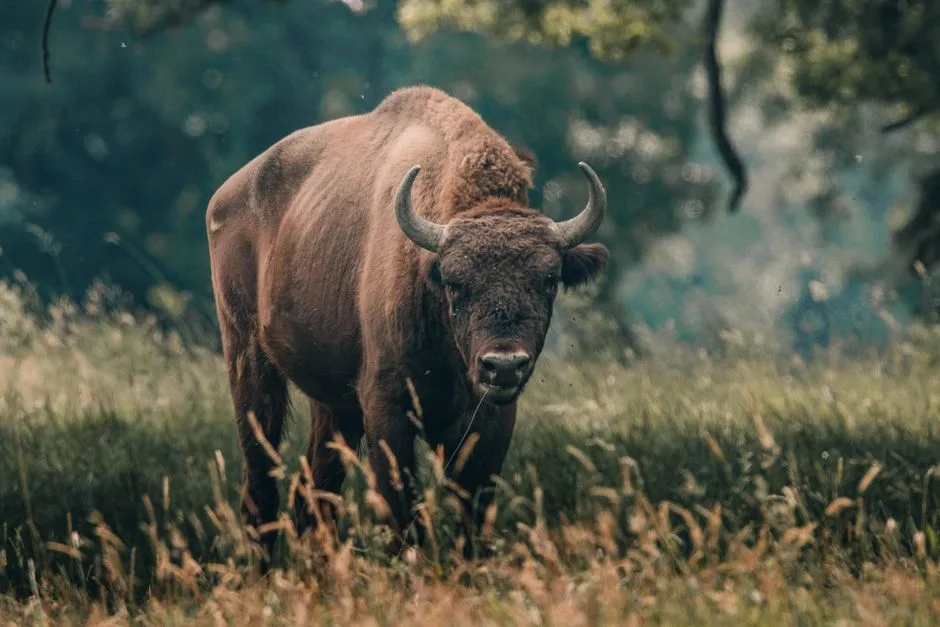
A bull bison at Yellowstone National Park picked a man up with its horns, launched him eight feet into the air, and flipped him over, because nature does not care about your vacation. The 65-year-old grandfather was standing near his grandchild snapping phone pictures when the bison, which had been lying on the ground roughly 100 yards away, stood up, ran over, and made its feelings about that extremely clear. He was taken to a nearby hospital with serious injuries.
What Actually Happened, Start to Finish
According to CBS News, this went down Friday at one of Yellowstone's campgrounds. The man was doing what approximately four million people a year do at Yellowstone: standing near a wild animal and taking pictures with his phone. The bison, lying down at the time, apparently decided it had seen enough.
The animal got up, charged, chased the man back and forth through a patch of trees, and then hit him with its horns hard enough to send him airborne. Professional photographer Mike MacLeod happened to be at the campground and caught the whole thing on camera, which is how we know the exact altitude involved. MacLeod later told CBS Mornings that after the bison knocked the man down, he charged toward the animal himself, yelling and waving his camera in the air, until other men joined him and they collectively hazed the bison away from the victim.
That is a man who ran toward a 2,000-pound animal to save a stranger. Let that sit for a second.
The Part Where We Talk About How Big Bison Are
The National Park Service, which has been saying this on its website for years to apparently little effect, notes that bull bison can weigh up to 2,000 pounds and run at least three times faster than any human being on earth. They are not slow. They are not friendly. They are not interested in your Instagram content.
The NPS also specifies that more people have been injured by bison in Yellowstone than by any other animal in the park. Not bears. Not wolves. Bison. The large, shaggy, seemingly lumbering creatures that tourists consistently treat like props for a family photo. The agency describes bison as "unpredictable" and notes they can become aggressive when they feel their space is being threatened. One hundred yards, it turns out, may not be far enough if the bison has opinions about it.
This Is Not a One-Off
CBS News reports this incident came just a few weeks after a 12-year-old was hurt by a bison at the end of June. Details on that one were sparse, but an investigation was underway. Before that, last year produced multiple bison goring incidents: a New Jersey man was gored near Old Faithful, and a Florida man was gored in the Lake Village area, which is not some remote backcountry trail but a part of the park with restaurants and hotels.
So to recap: people are getting launched, gored, and chased at Yellowstone with enough regularity that this is now a recurring news format. It has its own rhythm. A season. Every summer, the bison hold their end of the bargain, and every summer, a fresh wave of visitors discovers, the hard way, that they did not.
The Rules That Exist and That People Keep Ignoring
Yellowstone's rules are not complicated. The NPS asks visitors to stay at least 25 yards from bison, elk, deer, moose, bighorn sheep, and coyotes. Bears, wolves, and cougars get a 100-yard buffer. These are not suggestions buried in fine print. They are posted, repeated, and enforced by rangers who have to explain them constantly.
The grandfather in this case was reportedly about 100 yards from the bison before it charged, which technically meets the distance requirement. The animal charged anyway, because bison are not reading park literature and the "at least" in "at least 25 yards" is doing a lot of heavy lifting when the thing running at you can hit 35 miles per hour. The rules are a floor, not a guarantee.
The Dingo Take
Here is the thing about Yellowstone bison incidents. They are never really surprising, and they never really stop. The information is freely available. The signs are posted. The NPS website reads like it was written by someone who has personally watched too many people get hurt to stay polite about it. And yet every summer the cycle continues, because the gap between knowing something intellectually and truly believing a 2,000-pound animal will absolutely destroy you is, for many people, apparently unbridgeable.
The grandfather here was not doing anything dramatically stupid by the standards of what people do at Yellowstone. He was 100 yards away. He was taking pictures. The bison simply did not agree with his presence, stood up, and settled the matter physically. That is the deal with wild animals. They do not issue warnings in a language you can parse, and they do not accept apologies.
Get well soon to the man involved. Genuinely. And to the rest of the four million people heading to Yellowstone this summer: the bison does not know you mean well. It does not know you drove 14 hours to get here. It weighs a ton and it can run faster than you, and it will make that your problem the moment it decides to. Keep your distance. Keep it further than you think you need to. And for the love of God, put the phone away.



Comments