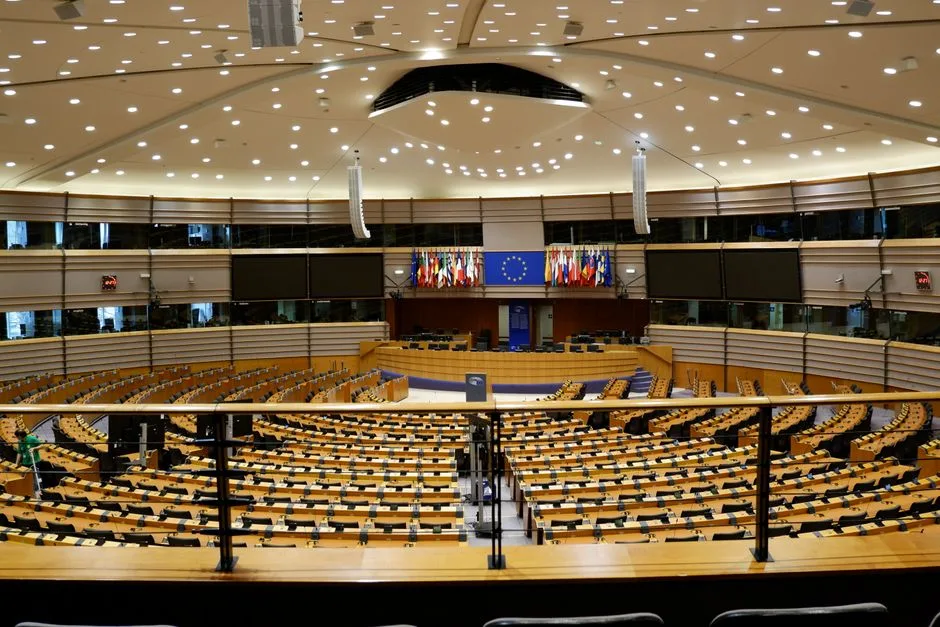
While Israeli settlers and soldiers killed 16 Palestinian children in 2026 alone, the European Union was busy having a very serious meeting about meetings. On Monday, EU foreign policy chief Kaja Kallas announced that most of the bloc's 27 foreign ministers have backed a full ban on imports from illegal Israeli settlements, and that lawyers say they can do it without giving Germany, Italy, or the Czech Republic a veto. Progress, technically. Sort of.
What They Actually Agreed To
Here's what happened in Brussels on Monday: EU foreign ministers met, most of them backed a full trade ban on goods coming out of illegal Israeli settlements in the West Bank, and Kallas told reporters the ambassadors have been tasked with taking the proposal forward. There will probably be an extraordinary ministerial meeting to finalize it, she said, because the next regular one isn't until October 12.
The settler export trade they're targeting is worth somewhere between €150 million and €250 million a year, according to media estimates. The European Commission, embarrassingly, doesn't actually have a real figure because member states haven't been reporting the right customs data. What they do know is that a ban would hit around 45 individual Israeli settler firms, most of them in the food and wine sector.
Callас was careful to frame this as a housekeeping exercise, not a political attack. An EU-level action would fix "inconsistent implementation" of existing customs obligations, she said, rather than constituting a move "against Israel." Whether you find that framing reassuring or infuriating probably depends on your relationship with diplomatic understatement.
Germany and Friends Would Like to Speak to the Manager
France and Sweden have been leading the charge on a settler ban, with Belgium, Ireland, the Netherlands, and Spain riding shotgun. That's a solid coalition. The problem is Germany, Italy, and the Czech Republic, who have been dragging their feet and, more strategically, raising legal objections about whether a settler trade ban requires unanimous consent or just a qualified majority vote.
If it requires unanimity, any one of those three countries can kill the whole thing. That's the veto play, and everyone in the room knew exactly what was happening.
Kallas moved to cut that off at the knees. "The European Council has a legal opinion that trade issues are QMV decisions," she told reporters, adding that the Council's own legal services confirmed it. "It's always the case that you can find different lawyers who come up with different ideas. Two lawyers, three opinions," she said, in what was a remarkably dry burn for a press conference. The message was clear: the in-house lawyers have spoken, and the qualified majority math is there if the political will is.
What's Actually Happening on the Ground
Let's pause on the number that should be dominating this story. The United Nations, in its July 11 report, documented that Israeli forces and settlers killed 16 Palestinian children in 2026 so far, including a 16-year-old shot dead on July 5. Settlers were carrying out an average of six attacks per day, injuring hundreds of people, including 187 children this year alone, according to that same UN report.
That is the context inside which these trade discussions are happening. The EU has not been completely asleep. EUobserver reports the bloc blacklisted several settler extremist groups and sanctioned settler celebrity Daniella Weiss back in May. The Commission froze €14 million in bilateral cultural projects with Israel after October 7, 2023. These are real actions.
But overall EU-Israeli trade hit €43.3 billion in 2025. Israel remains eligible for billions in EU science grants through the Horizon program. And the 26-year-old bilateral association agreement that gives Israel preferential trade access remains fully intact, despite Israeli finance and security ministers openly calling for West Bank annexation and the Israeli parliament passing a capital punishment law that applies to Arab defendants. Belgium, Ireland, the Netherlands, and Spain want to suspend that agreement entirely, which could cost Netanyahu's government €1 billion a year. The rest of the bloc isn't there yet.
Netanyahu's Electoral Calendar Complicates Everything
There's a reason the EU is feeling some urgency right now beyond the moral one. Benjamin Netanyahu has elections scheduled for October 27, which means Israeli domestic politics are about to get even more combustible than usual. A prime minister fighting for his political survival while simultaneously running wars in Gaza, the West Bank, East Jerusalem, Lebanon, Syria, and against Iran is not a prime minister with a lot of incentive to moderate his coalition's behavior.
For the EU, the window to signal consequences before that election is narrow. A trade ban announced in September lands differently than one announced in November after Netanyahu has either won or been replaced. Whether the bloc can actually get from Monday's meeting of the minds to an enforceable regulation before Israeli voters go to the polls is an open question, given that the next scheduled ministerial meeting is in October and extraordinary sessions require political will to convene quickly.
The Dingo Take
Let's be honest about what's on the table here. The EU is debating whether to ban imports worth at most €250 million from settlement wineries and food producers while maintaining a €43 billion trade relationship, billions in science funding, and a preferential association agreement with a government whose ministers are calling for annexation and whose forces are killing children at a documented rate. The settler ban is not nothing. But calling it a proportionate response to what the UN is describing on the ground requires a very particular definition of proportionality.
The legal fight over qualified majority voting matters because it exposes exactly who is willing to use a procedural argument to protect a substantive outcome. Germany, Italy, and the Czech Republic are not raising sovereignty concerns in the abstract. They are using process to block policy, and Kallas calling that out directly, by name, in a press conference is about as aggressive as EU diplomacy gets. If the QMV legal opinion holds and the political coalition stays together, the holdouts lose their veto. That's the entire ball game right now.
The harder truth is that the EU has spent nearly three years threading needles, calibrating symbolic gestures, and preserving the association agreement while the situation in the West Bank has deteriorated week by week. A wine and cheese import ban, however symbolically important, does not change that trajectory. The countries pushing to suspend the full association agreement, Belgium, Ireland, the Netherlands, and Spain, are at least pointing at something that would actually register. The question is whether the bloc has the stomach for it, or whether this whole exercise ends with 45 settler vineyards losing their European market access while everything else stays exactly the same.


Comments