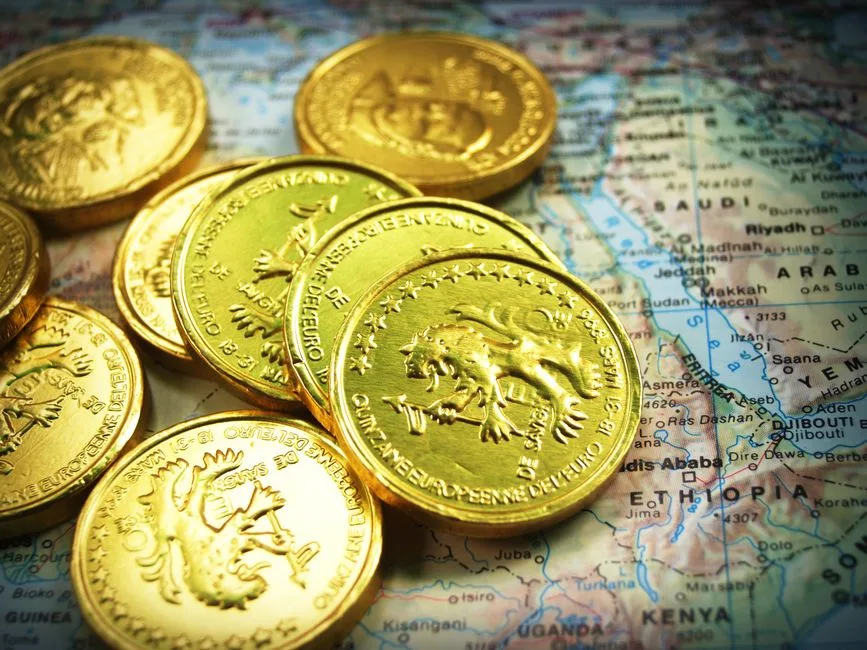
The European Union just banned the import of Sudanese gold to choke off funding for a militia the UN says is committing genocide. Then, in the same breath, declined to sanction the country that's been bankrolling that militia all along. The UAE is right there. They know it's the UAE. Everyone knows it's the UAE.
What the EU Actually Did
On Monday, EU foreign ministers meeting in Brussels announced a ban on the purchase, import, or transfer of gold originating in Sudan. According to EUobserver, the package also bans the export of mercury and cyanide to Sudan, since those chemicals are the workhorse inputs for gold mining and extraction.
The logic is sound enough. Illicit gold smuggling has been one of the primary financial engines of Sudan's civil war, which began in April 2023. Cut off the gold revenue, cut off the guns. The ministers said in a statement that the measures aim to "reduce the resources available to those responsible for perpetuating the violence." Fine. Sure. Good.
But here's where it gets uncomfortable. The sanctions package does not include any new measures targeting the Rapid Support Forces, the paramilitary group that controls most of northern and western Sudan and that the EU's own parliament formally accused of genocide-level atrocities just days before this announcement.
The RSF and the Darfur Siege the World Forgot
The RSF is not some murky insurgent group of disputed provenance. This is an organization that, according to a United Nations expert group report cited by EUobserver, committed atrocities during an 18-month siege of El Fasher, the main city in Darfur, that bore what the UN called "the hallmarks of genocide." Hallmarks of genocide. That's the phrase. The UN used it.
El Fasher is not a footnote. It has been under sustained assault. The RSF has been accused of funnelling billions of dollars worth of gold out of Sudan through the UAE and Kenya to pay for weapons and mercenaries. Billions. With a B. While the siege of a city was underway.
The European Parliament voted 476 to 28 last week to urge the EU to designate the RSF as a terrorist organization. Four hundred and seventy-six to twenty-eight. That is not a close vote. That is a landslide. The EU's foreign ministers read that result and proceeded to do something else entirely.
The UAE's Very Convenient Invisibility
The parliament's resolution, passed on July 9th, was also notable for something that apparently had never happened before. According to EUobserver, it marked the first time MEPs specifically called out the UAE by name for its role in the war. The same resolution accused the Abu Dhabi-based Global Security Services Group, which has ties to the UAE ruling family and senior officials, of violating the UN arms embargo in western Darfur.
So the parliament voted 476 to 28 to name the UAE. The parliament backed designating the RSF as a terrorist organization. And then the foreign ministers' sanctions package contained no new measures against the RSF and no action against the UAE.
EUobserver notes that civil society groups have long complained that Abu Dhabi's lobbying operation in the EU parliament has been effective in watering down criticism of its role in the war. You don't say. You really, genuinely do not say.
A Country That Has Already Split in Two
Meanwhile, Sudan itself is in a state of de facto partition. EUobserver reports that the Sudan Armed Forces, which backs the internationally recognized government, controls Khartoum and Port Sudan. The RSF, which controls most of Darfur and western Sudan, declared a parallel administration last year. Two governments. Two armies. One ongoing catastrophe.
The civil war has been running for over three years now. The RSF and the SAF were formerly allies, both implicated in the brutal suppression of pro-democracy protesters after the 2019 revolution. They turned on each other in April 2023 and have been destroying the country together ever since, just from opposite sides now.
Sudan is home to roughly 48 million people. The war has produced one of the worst humanitarian crises on earth. The gold ban is a real measure with real teeth in principle. The problem is that the teeth are biting in the right direction while the jaw is pointed the wrong way.
The Gap Between Rhetoric and Sanctions Is Embarrassing
Here is the core absurdity. The EU's own parliament passed a resolution calling the UAE the main sponsor of the RSF. The EU's own parliament voted to designate the RSF a terrorist organization. The EU's gold ban is specifically designed to cut off RSF funding. And the EU's sanctions package does not touch the RSF or the UAE.
This is not a case of bureaucratic inertia or insufficient evidence. The evidence is a UN genocide report. The political mandate is a 476-28 parliamentary vote. What's missing is not information or democratic direction. What's missing is the willingness to actually follow through when a major Gulf state with a large sovereign wealth fund and active lobbying presence in Brussels is on the receiving end of the criticism.
The EU will ban the gold. It will not name the buyer.
The Dingo Take
Give the EU partial credit here, because the gold ban is not nothing. Cutting off a primary revenue stream for a militia running what the UN calls genocide is a real policy action, and it took real political will to get there. But partial credit on genocide response is not the grade you want on your transcript.
The 476-to-28 vote in the European Parliament is genuinely remarkable. It suggests that at least at the representative level, Europe has absorbed the scale of what is happening in Sudan and who is responsible. The foreign ministers' failure to act on that mandate is then all the more striking. It points to exactly where the UAE's lobbying money goes and what it buys: not silence, necessarily, but inaction at the precise moment when action matters.
Sudan has been at war for three years. El Fasher has been under siege. The RSF has been accused of genocide. The UAE has been named by the EU's own parliament as the main sponsor of the group committing those atrocities. At some point, a gold import ban starts to look less like a serious policy response and more like a way to say you did something without doing the thing that would actually cost anyone anything.


Comments