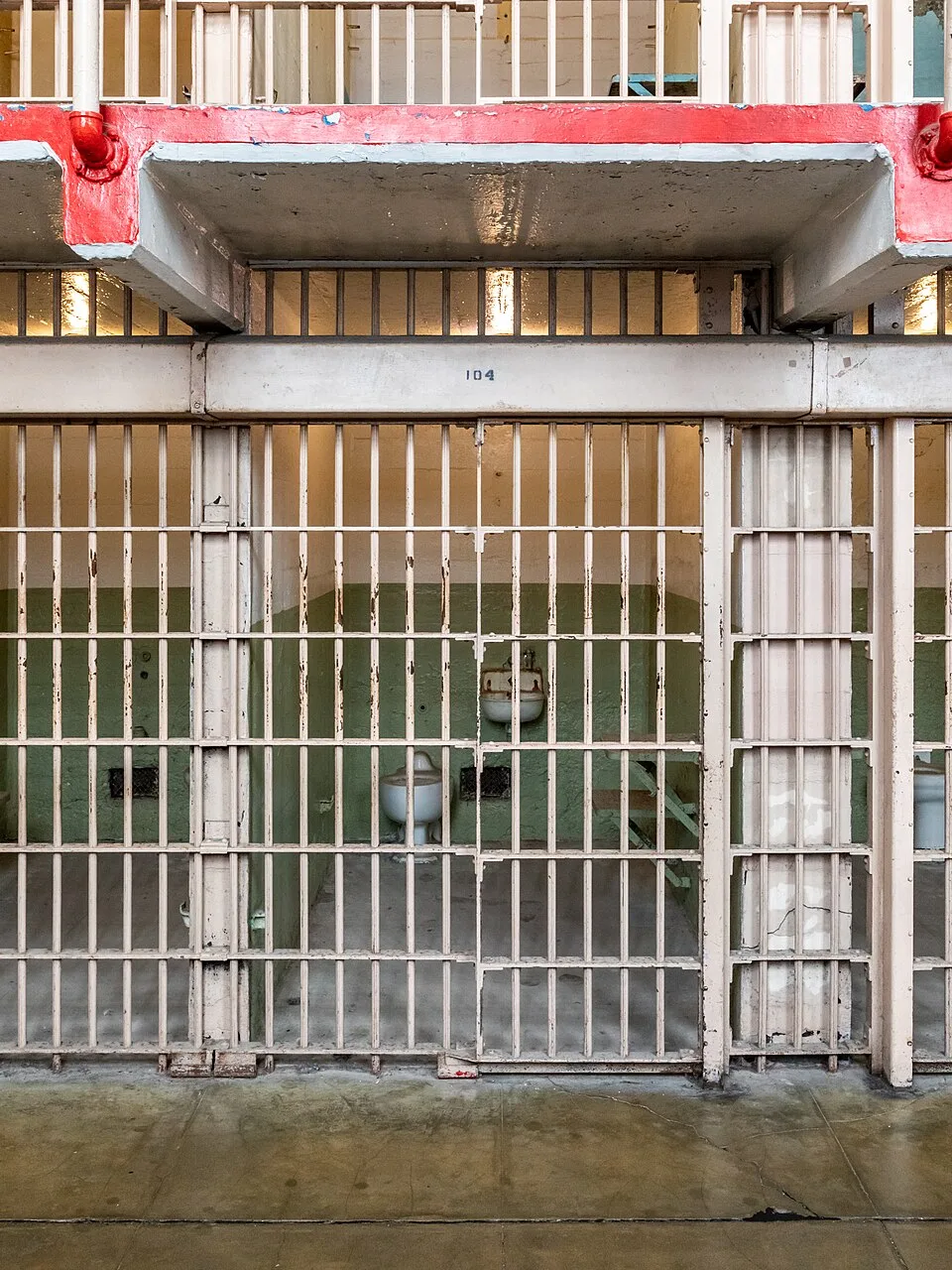
A federal prison guard in California punched an inmate in the face over a straw sunhat, then allegedly had him sexually assaulted in a camera-free hallway while other officers pinned him to a wall. The guard admitted to the assault and pleaded guilty to falsifying records. And the inmate still had to beg the same system that hurt him for permission to sue about it.
The Loop Is the Point
Here is the setup, and try not to throw your phone: Under federal law, people in prison must exhaust an internal grievance process before they can sue. That process is run by prison staff. The same prison staff who may have committed the abuse. The same prison staff who can, according to court records and lawsuits reviewed by The Marshall Project and NPR, destroy paperwork, claim forms got lost, deny access to the forms entirely, or simply punish anyone who tries to file.
"The guards functionally have power over whether a prisoner can sue them for their own misconduct," said Colin Prince, the civil rights attorney representing J.M., the man in the sunhat case. "The entire system is layer upon layer of bureaucratic insulation against accountability."
This is not a design flaw. This is the design.
Less Than 2% Granted. Read That Again.
The Marshall Project and NPR analyzed a federal database containing nearly one million federal prison grievance cases dating back to 2000. What they found, for the year 2023, is that less than 2% of grievances filed in federal prison were actually granted. The majority were rejected for procedural errors or "administratively closed" for other reasons.
Procedural errors. In a system where the procedures are controlled by the people you are filing complaints against. You filed the wrong form. You filed it too late. You filed it to the wrong office. Rejected. Start over. Except you cannot start over because the clock has run out and now you cannot sue.
And that data only counts grievances that actually got filed. An unknown number of cases, particularly those involving physical and sexual violence, never make it into any database at all, because the officers accused of abuse are often the same ones who hand out the forms.
What Happened to J.M.
The case documented by NPR and The Marshall Project is not an abstraction. On November 2, 2023, at a federal penitentiary in California, Officer Sandra Munagay confiscated J.M.'s sunhat. An argument followed. Munagay followed J.M. out of the office, and when he turned around, she punched him in the face. That part is on camera. Munagay admitted it and pleaded guilty this past January to falsifying records about the incident.
What came next happened in a hallway without cameras. According to J.M.'s lawsuit, Munagay kicked and hit him while shouting to other officers that he had attacked her. At least three other guards rushed in, forced him into a blind spot, pinned him face-first to a wall, and, with his hands cuffed, one officer allegedly sexually assaulted him with an unknown object.
That night, J.M. was transferred to another prison. A nurse there documented bleeding and rectal tenderness in his medical records. J.M. has more corroboration than most people in his situation ever get. He still had to fight to be heard.
The Law That Made All of This Possible
Thirty years ago, Congress passed the Prison Litigation Reform Act, which created the exhaustion requirement. The stated concern was frivolous lawsuits clogging up federal courts. Politicians at the time pointed to a case they claimed involved an inmate suing over whether he received chunky or creamy peanut butter. NPR notes that the actual case was about a $2.50 commissary refund, representing hours of prison labor. Congress built this system on a punchline that wasn't even accurate.
Since the act passed, the rate of civil rights cases filed from prison has dropped significantly. Which was, one assumes, the goal. Professor Margo Schlanger of the University of Michigan Law School, who has studied prison litigation nationally, told NPR that the framing of frivolous lawsuits obscures what these cases are actually about. "They're about abysmal medical care and awful conditions and failures to protect them from harm by staff or by other prisoners," she said. "They're about sexual violations."
A recent Government Accountability Office report found that fear of retaliation was a major barrier to reporting sexual abuse in federal prisons. The Bureau of Prisons told NPR that its policy prohibits retaliation and that the grievance system is "a safeguard intended to foster resolution within the system, not a barrier to court access." Bureau spokesperson Randilee Giamusso also noted that sexual abuse complaints can be submitted through third-party reporting and Prison Rape Elimination Act channels. Former federal inmate Jimmy Hodge, released in early 2025, offered a shorter review of the system: "The grievance system is a joke."
A Chokehold, Legally Speaking
Prince, J.M.'s attorney and a former federal defender, put it plainly to NPR: the mandatory grievance requirement gives prison staff a "chokehold over access to the courts." That is a precise legal metaphor, and it is worth sitting with. The law Congress passed to protect courts from prisoners is functionally a law that protects abusive guards from prisoners.
J.M. knew going in what the risks were. He told NPR that in other federal prisons he had seen what happens to people who try to file complaints: harassment, assault, and paperwork that disappears. He filed anyway. He had the medical records. He had an attorney. He had more going for him than almost anyone else in that position. And it is still an open lawsuit.
The Dingo Take
Let's be honest about what this system is. It is not a grievance process. It is a disposal mechanism. You take the worst, most vulnerable people in the country's custody, people who have no phone, no freedom of movement, and no public voice, and you tell them that if a guard beats or sexually assaults them, they have to go ask that guard's colleagues for a form, fill it out correctly, submit it on time, survive the retaliation, and clear a bureaucratic gauntlet with a less-than-2% success rate before a federal judge will even look at their case. Then you stand back and call it due process.
The Bureau of Prisons wants credit for having a policy against retaliation. Having a policy against retaliation while the people you are supposedly protecting are getting punched, assaulted, and having their paperwork buried is not a safeguard. It is a press release. Sandra Munagay pleaded guilty to falsifying records about an assault she admitted to committing. The system still made J.M. fight through it.
Congress built this architecture on a myth about peanut butter sandwiches and has not meaningfully touched it in thirty years. Meanwhile, per the GAO, fear of retaliation is actively suppressing reports of sexual abuse in federal custody right now, today, in prisons that your tax dollars fund. There is no punchline here. There is just a system that was designed to make sure certain people cannot be heard, working exactly as designed.





Comments