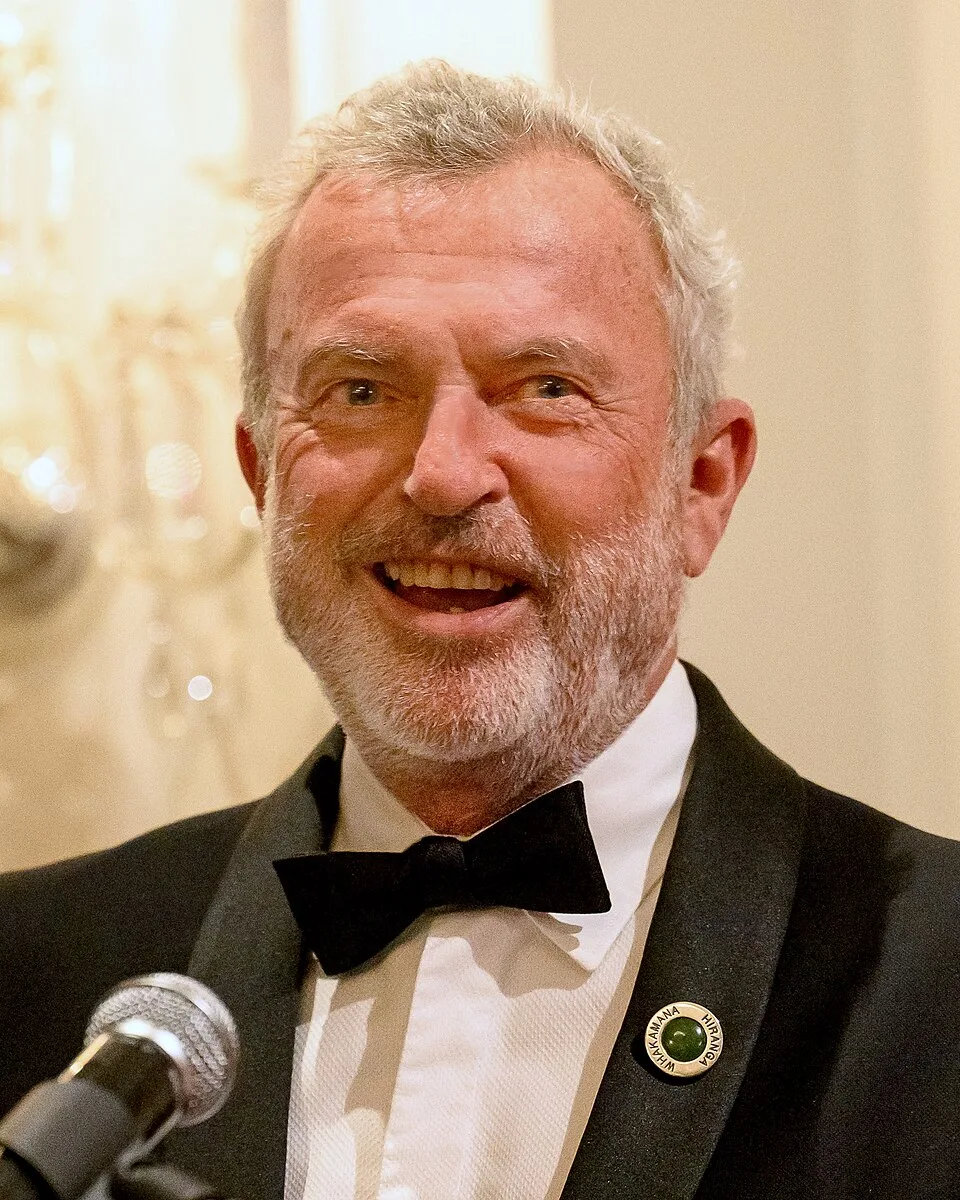
Sam Neill, the actor who outran dinosaurs on screen and beat a rare blood cancer in real life, died suddenly in Sydney on Monday at the age of 78. His family confirmed the news in a statement posted to his social media, calling the death 'sudden and unexpected' and stressing that he 'remained cancer free' when he passed. No cause of death was given.
The Cancer He Beat, and Then This
Let that land for a second. Neill disclosed in 2023 that he had been diagnosed with angioimmunoblastic T-cell lymphoma, a rare and nasty form of non-Hodgkin lymphoma. He went public about it with the kind of cheerful, self-deprecating candor that had always defined him. He did the treatment. He fought it.
According to CBS News, citing the French news agency AFP, Neill announced earlier this year that he was cancer-free, thanks to a genetic therapy that had essentially reprogrammed his immune system. He won. He actually won. And then, on a Monday in July, he was gone anyway. His family says he was surrounded by loved ones and that he 'passed with the dignity that has characterised his whole life.' The cruelty of the timing is almost too much to sit with.
From Northern Ireland to New Zealand to Isla Nublar
Neill was born Nigel Neill in 1947 in Northern Ireland. His family emigrated to New Zealand when he was 7, settling in Dunedin on the South Island. He told interviewers he adopted the name Sam because his school had too many Nigels, which is the most charmingly low-stakes reason to reinvent yourself on record.
He was part of a wave of Australian and New Zealand talent that crashed onto international screens in the late 1970s, a group that, as NPR notes, included Paul Hogan, Mel Gibson, Geoffrey Rush, Russell Crowe, Jane Campion and Gillian Armstrong. His first significant role came in Armstrong's 1979 film 'My Brilliant Career,' and he built from there with the kind of quiet, methodical professionalism that doesn't get you on tabloid covers but gets you a career spanning five decades.
He took on everything. Thrillers. Horror. Period drama. Comedy. He played a Soviet submarine officer dreaming of Montana in 'The Hunt for Red October.' He played Damien the Antichrist in 'Omen III.' He played Thomas Jefferson in a CBS miniseries. He poked his own eyes out in 'Event Horizon.' The man had range.
The Role That Made Him a Household Name
Ask anyone under 50 who Sam Neill was, and they will tell you: the dinosaur guy. Dr. Alan Grant. The paleontologist in 'Jurassic Park' who got dragged to that island off Costa Rica, saw the cloned dinosaurs, immediately clocked how badly this was going to go, and then had to survive it anyway.
His warning to John Hammond before everything went sideways is one of those movie lines that hits differently with age: 'Dinosaurs and man, two species separated by 65 million years of evolution have just been suddenly thrown back into the mix together. How can we possibly have the slightest idea what to expect?' He was playing a scientist who understood exactly what hubris costs. The character fit him.
He sat out 'The Lost World' in 1997, came back for the third film in 2001, and returned again for 'Jurassic World: Dominion' in 2022. That's a 29-year relationship with a single character. According to NPR, he told the Daily News of New York in 2001 that he'd finally 'worked out how to be an action hero.' He described Grant as 'gnarly and grizzled, but he looks like he knows what he's doing.' Sam Neill knew what he was doing.
A Working Actor's Working Actor
Beyond the blockbusters, Neill kept showing up in serious work throughout his career. He co-starred twice with Meryl Streep, appearing in both 'Plenty' and 'A Cry in the Dark,' the latter being the film about the dingo-takes-the-baby case in Australia. He earned Emmy nominations for playing Merlin in a 1998 miniseries and for narrating 'Wild New Zealand' in 2017. On television, he played the villainous Chester Campbell in 'Peaky Blinders' and squared off against Annette Bening in the Peacock series 'Apples Never Fall' in 2024.
His memoir, 'Did I Ever Tell You This?', came out in March 2023, right around the time he was processing his cancer diagnosis. He was awarded a knighthood for his outstanding contribution to film, a title approved by the late Queen Elizabeth II. He ran a winery in New Zealand's Central Otago region under the name Two Paddocks, producing pinot noir and riesling. He posted pictures of his farm animals online, many of them named after his famous friends. Laura Dern was a chicken. Kylie Minogue was a duck. Helena Bonham Carter was a cow. This is the most Sam Neill possible way to conduct yourself.
What New Zealand Lost
New Zealand Prime Minister Christopher Luxon put out a statement calling Neill 'one of the greats,' noting that when Neill started out, there was barely a film industry in New Zealand to speak of. NPR reports that Luxon wrote: 'For more than fifty years he took New Zealand stories to the world and his talents helped make our film industry into what it is today.'
Neill is survived by four children and eight grandchildren. He was known in New Zealand, according to NPR, as a modest and deeply unassuming person who wore celebrity lightly. In a 2023 interview with The Guardian, while reflecting on his cancer diagnosis, he said: 'I can't pretend that the last year hasn't had its dark moments. But those dark moments throw the light into sharp relief, you know, and have made me grateful for every day and immensely grateful for all my friends.' He meant it. That much was obvious.
The Dingo Take
There is a particular gut-punch quality to a death that comes after a victory. Neill spent years fighting a rare blood cancer, went public about it without drama or self-pity, and then beat it with a cutting-edge genetic therapy. He crossed the finish line. And then, without warning, he was gone anyway, surrounded by his family in Sydney, cause unknown, at 78.
The tributes will pour in and most of them will mention Jurassic Park first and everything else second, which is understandable and also a little reductive. This was a man who built a fifty-year body of work across continents and genres, who ran a winery, who named farm animals after his friends, who wrote a memoir while fighting cancer, who got knighted, and who by all accounts never let any of it turn him into someone insufferable. That last part is rarer than the knighthood.
Some people make the world feel a little more humane just by being in it. Sam Neill was one of those people. The velociraptors couldn't get him. The cancer couldn't get him. Whatever finally did get him, it did so quietly, surrounded by family, and that, as his family said, sounds exactly like him.


Comments