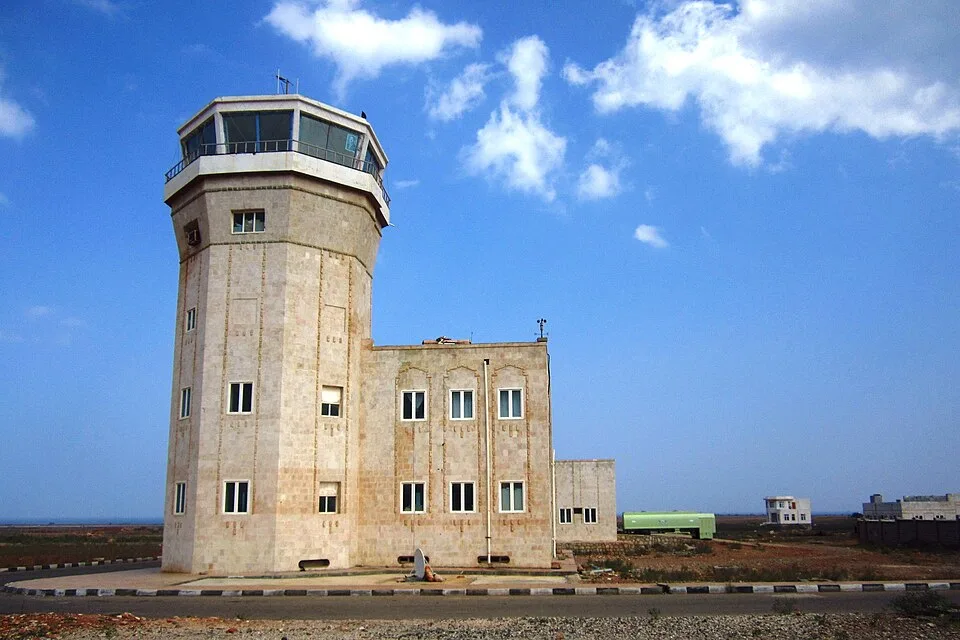
Saudi Arabia bombed an international airport on Monday because it did not want a plane full of Houthi officials landing there after they attended a funeral. That is a real sentence about a real thing that just happened. The Houthis are now promising revenge, all Yemeni airports are closed, and whatever fragile peace existed in one of the world's worst ongoing humanitarian disasters just cracked open again.
What Actually Happened Here
According to AP News, Houthi military spokesman Brig. Gen. Yahya Saree announced via Telegram that Saudi Arabia launched airstrikes on Sanaa International Airport on Monday, hitting the runway while an Iranian Mahan Air plane was apparently trying to land. The plane was carrying a Houthi delegation returning from Tehran, where they had attended the funeral of Supreme Leader Ayatollah Ali Khamenei. It was diverted to Hodeida Airport, where it eventually landed safely.
Yemen's defense minister, Gen. Taher al-Aqili, confirmed the strike from the other side. He said the runway was targeted specifically to stop that Iranian aircraft from coming in. Video from the Houthi-controlled broadcaster al-Masirah reportedly shows a missile hitting the runway followed by a large explosion. So we're not talking about a disputed incident. Both sides are basically agreeing on what happened. They just disagree about whether it was justified.
Yemen's Presidential Leadership Council, the internationally recognized government based in the south, said it had already denied Iran's request to operate the flight. The council said the Houthis were trying to receive the Iranian plane outside what it called the 'legal and sovereign frameworks governing civil aviation.' Which is a very diplomatic way of saying: we told you no and you tried to do it anyway.
A Truce That Was Already on Life Support
This is not happening in a vacuum. As AP News reports, a U.N.-brokered truce between the Saudi-led coalition and the Houthis has been holding since 2022, producing what the U.N.'s own special envoy for Yemen, Hans Grundberg, called 'relative calm.' For Yemen, a country that has been at war since 2014 and suffered one of the worst humanitarian crises on earth, 'relative calm' is about as good as it gets.
That truce just took a missile to the runway, metaphorically and literally. The Houthis, through Saree's statement, called Monday's strike the end of the 'de-escalation' period and warned that 'this aggression will not go unanswered or unpunished.' When a militia that spent years firing ballistic missiles at Saudi cities and drones at oil infrastructure says it plans to respond, it is probably worth taking seriously.
Tensions had already been flaring before Monday. AP News reports that earlier this month, the Houthis accused Saudi planes of violating their airspace to interfere with an Iranian aircraft carrying the same delegation to Tehran for the funeral in the first place. So this specific fight, over this specific plane, carrying these specific people to and from this specific funeral, has been building for at least two weeks.
The Saudi-UAE Collapse Makes This Even Messier
Here is a detail that does not get enough attention in Western coverage. AP News reports that earlier this year, the yearslong partnership between Saudi Arabia and the UAE inside the Yemen war broke down, leading to the UAE pulling out of Yemen entirely. The Saudi-led coalition is no longer the unified front it once was. Saudi Arabia is now, in some meaningful sense, doing this alone.
That matters because the UAE and Saudi Arabia had complementary roles in the conflict for nearly a decade. The UAE was deeply embedded on the ground in southern Yemen. Without that partnership, Saudi Arabia's strategic position is more exposed, its options more limited, and its decisions more likely to be reactive rather than calculated. Bombing an airport runway to stop a funeral plane is a reactive decision. It solves a narrow immediate problem while potentially blowing up an arrangement that has kept things from getting catastrophically worse since 2022.
Saudi officials did not respond to AP News's request for comment on the strikes. No explanation, no justification, nothing. They just bombed an airport and went quiet. That silence is doing a lot of work.
Yemen's Civilians Are, As Always, Not the Priority
Following the strikes, Yemen's recognized government announced that all airports in the country were 'closed until further notice, with immediate effect.' The Yemeni defense ministry also issued orders to evacuate Sanaa airport and surrounding areas. So a country that has been in a state of humanitarian catastrophe for over a decade now has no functioning international air access.
Grundberg, the U.N. special envoy, released a statement saying his office is monitoring the situation and is concerned about the risk of wider escalation. He called on all parties to engage in dialogue. That is the U.N. equivalent of asking two people throwing furniture at each other to please use their words. Necessary to say. Probably not going to land the way anyone hopes.
Yemen's civil war started in 2014 when the Houthis seized Sanaa and most of northern Yemen, pushing the recognized government into exile. Saudi Arabia and the UAE intervened militarily in 2015. Tens of thousands of people have died. Millions are on the edge of famine. The country is effectively split between a Houthi-controlled north backed by Iran and a government-controlled south backed by a coalition that is now fracturing. And now the airport is bombed and everything is closed. Again.
The Dingo Take
Let's be honest about what just happened. Saudi Arabia, which does not want Iran to have any foothold in Yemen, decided that letting a plane full of Houthi officials land in Sanaa after attending Khamenei's funeral was a line it was not willing to let slide. So it bombed the runway. That is a choice. A choice that ends a four-year ceasefire arrangement that was the only thing standing between 'humanitarian crisis' and 'full-scale renewed catastrophe.' The question of whether it was worth it is not even close to being answered yet, and the people who will pay the price for finding out are not the ones who made the call.
The Houthis are not innocent actors here. They have spent years firing missiles at Saudi cities, attacking commercial shipping in the Red Sea, and operating as Iran's most useful regional proxy. The delegation was at the funeral of a man whose government funds and arms them. Nobody is putting 'good guys' on the Houthi jersey. But the Saudi response, bombing civilian airport infrastructure to stop a single flight, is exactly the kind of move that sounds decisive in a briefing room and plays out as catastrophic for the people already living in rubble.
Watch the next two weeks carefully. The Houthis have promised retaliation and they have a track record of following through. Saudi Arabia has now re-established that it will use military force over airspace disputes. The UAE has exited the coalition and is not coming back to clean this up. And the United States, which spent years arm-in-arm with the Saudis on Yemen policy, is currently being run by an administration whose foreign policy is basically vibes and tariffs. Nobody with leverage seems particularly interested in stopping whatever comes next.


Comments