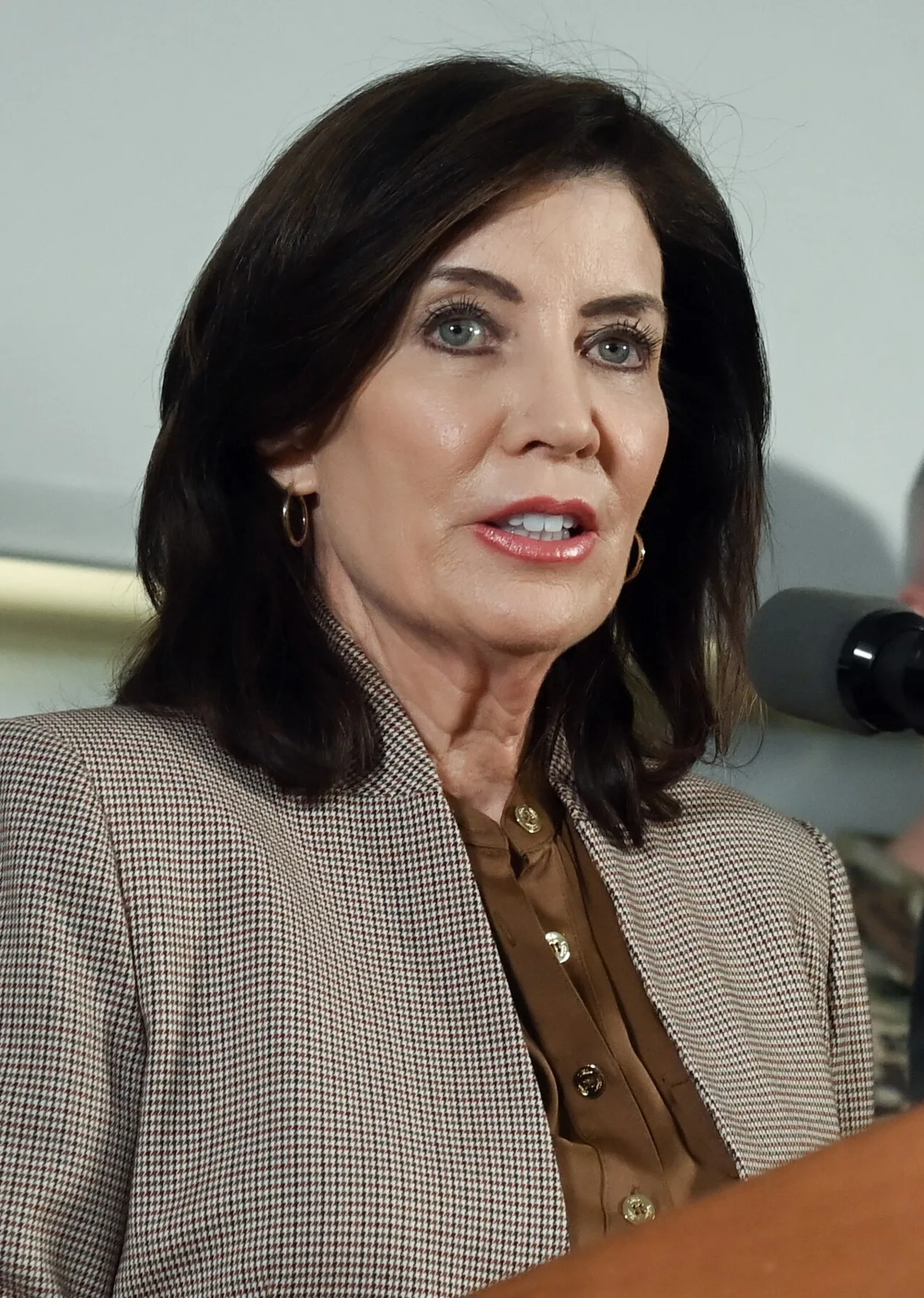
New York Governor Kathy Hochul just told the AI industry to take a number and wait. On Tuesday she signed an executive order imposing a moratorium of up to one year on new air permits for hyperscale data centers across the state, citing rising utility bills, strained natural resources, and a frankly alarming amount of electricity being quietly promised to tech companies that don't exactly have a reputation for restraint.
What Hochul Actually Did
The executive order, announced Tuesday, halts new environmental permit applications for large-scale data centers tapping into New York's electrical grid. This isn't a permanent ban. The New York Post reports the moratorium lasts "up to a year" while state regulators conduct a study and draft new standards. Once those standards land, the pause lifts and the permit pipeline reopens, assuming projects can meet whatever the new rules turn out to be.
Hochul's statement framed this as a consumer protection move as much as an environmental one. "As data center development threatens to hike up utility bills, deplete our natural resources, and create uncertainty for New Yorkers, it's my responsibility to take action and lead," she said. Whether you buy that framing or read it as an election-year calculation, the political math here is not subtle. A Siena University poll from last month found roughly half of New York voters thought a one-year moratorium was good for the state, while only 21% opposed it. Politicians tend to notice those kinds of numbers.
Why Data Centers Are Suddenly Everybody's Problem
Here is the part that the tech industry would prefer you not think too hard about. The AI boom is not just some abstract revolution happening in the cloud. It is a physical thing. It requires buildings. It requires land. It requires genuinely staggering amounts of electricity, the kind of demand that puts real pressure on grids that were not designed for it and that ultimately lands on utility bills paid by people who have never once used an AI image generator and never plan to.
Hyperscale data centers, the ones this moratorium targets, are the industrial backbone of companies like Google, Microsoft, and Amazon. They are enormous. They run hot. They need power around the clock. And right now, states across the country are racing to attract them with tax incentives and friendly permitting, apparently operating on the theory that hosting a server farm is some kind of economic miracle rather than a massive energy liability dressed up in press releases about innovation and jobs.
The Legislature Wanted to Go Further. Hochul Didn't Let Them.
This is where it gets interesting, and where Hochul's positioning becomes a little more complicated. The state legislature earlier this year passed a significantly stricter bill, according to the New York Post. That version would have required data centers to pay prevailing wages, meaning union-scale wages, and to source substantial portions of their power from renewable energy. Business groups fought it hard. Hochul did not sign it.
What she signed instead is lighter. The moratorium buys time for a regulatory study but doesn't lock in labor or clean energy requirements the way the legislature's bill would have. Depending on where you sit politically, that is either a pragmatic middle path or a familiar story of a Democratic governor giving just enough ground to look like she's doing something while making sure the business community doesn't totally lose its mind. Make of that what you will.
What Happens Next
The moratorium applies only to new permit applications. Projects that are already in the pipeline are not affected by this order. That is a meaningful carve-out for the industry, and don't let anyone tell you it isn't.
The state now has up to a year to design a new regulatory framework. What that framework looks like will determine everything. If it ends up with real teeth, things like renewable sourcing requirements and grid impact assessments, this moratorium will have meant something. If it produces a set of standards that the industry helped write and can live with comfortably, then this entire episode will have served mostly as a useful political moment for a governor heading into an election cycle. The Siena poll numbers suggest voters are paying attention to this issue, which means Hochul's office is definitely paying attention to the Siena poll numbers.
The Dingo Take
Credit where it's due: Hochul is at least acknowledging that you cannot build your way to an AI-powered future entirely on the backs of ratepayers who did not ask for any of this. The concern about utility bills and grid strain is real, not manufactured, and a governor who simply waved every hyperscale data center through without asking any questions would deserve the criticism she'd get for it. This moratorium, limited as it is, represents someone in power actually pumping the brakes instead of just issuing a press release about responsible innovation while signing everything the industry put in front of her.
But the fact that she let the stronger legislative bill die while signing a softer executive order tells you something about where the real power is. Prevailing wages and mandatory renewable sourcing are the kinds of requirements that actually change industry behavior. A one-year study with undefined outcomes is the kind of requirement that gives an industry time to hire lobbyists and shape whatever comes next. The legislature apparently had the votes to do more. Hochul apparently did not feel like doing more.
Watch what comes out of the regulatory process in the next twelve months. That is the actual story. If New York ends up with standards that genuinely hold data centers accountable for their energy footprint and their labor practices, this will look like smart, staged governance. If the standards end up being a checklist that every major player can sail through without changing a thing, then this moratorium will have been exactly what the cynics said it was: an election-year headline wrapped around a favor to an industry that just needed a little more time to get comfortable.


Comments