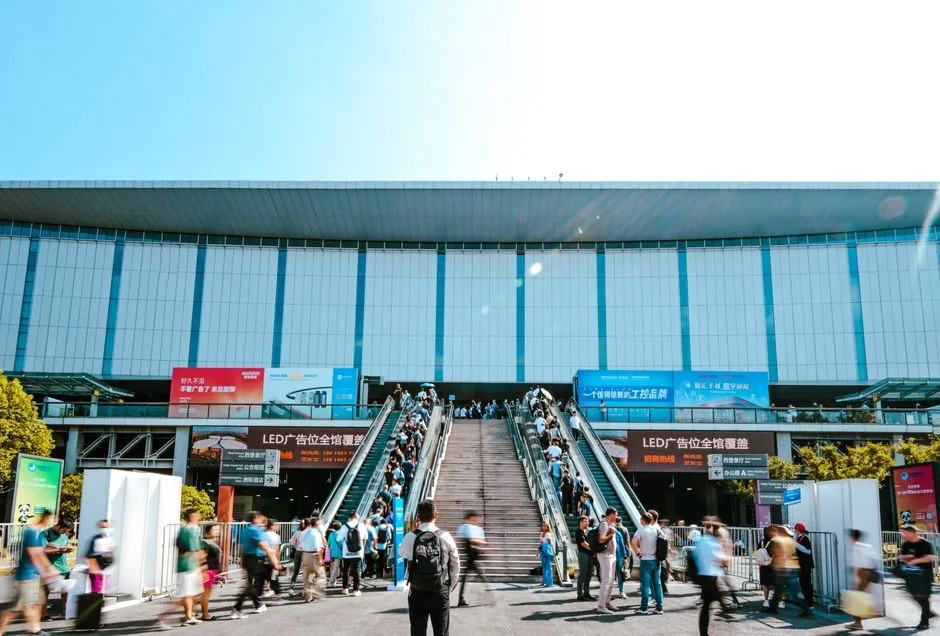
For eight years, Xi Jinping sent letters. Nice letters. Congratulatory letters. The kind you send when something matters but not enough to actually show up. That changes this week. China's Ministry of Foreign Affairs confirmed Monday that Xi will personally attend the 2026 World Artificial Intelligence Conference in Shanghai and deliver the keynote address, marking his first in-person appearance at the event since it launched in 2018.
Why This Is a Bigger Deal Than It Sounds
Xi skipping WAIC for years wasn't an oversight. It was a choice. The conference launched in 2018 and became a flagship showcase for Chinese tech ambition, but until now, Xi left the stage presence to others. Premier Li Qiang handled the opening ceremonies in both 2024 and 2025, according to the South China Morning Post. That's the kind of thing you do when the event matters institutionally but hasn't yet risen to the level of personal political priority.
Now it has. A sitting Chinese president delivering the keynote at a global AI conference is a statement, not a scheduling quirk. Beijing wants the world to know exactly where AI sits in its hierarchy of national concerns, and the answer is: at the very top, next to Taiwan and not far below Xi himself.
What Xi Has Been Saying About AI
This isn't a sudden pivot. During a visit to a Shanghai startup incubator in 2025, Xi said AI was entering a period of what he called 'explosive development' and told the city to take the lead in both building the technology and governing it. That framing, development and governance together, is intentional. China wants to write the rules, not just win the race.
China's government work report for 2026 doubled down on all of this, calling for a 'new form of intelligent economy,' expanding the country's 'AI+' campaign, and accelerating commercial AI adoption across industries, per the South China Morning Post. When a government document reads like a Silicon Valley pitch deck, you know the directive came from somewhere near the top.
The Conference Itself Is Enormous
The 2026 WAIC runs four days starting this Friday and, by any measure, is not a small affair. Organizers say the conference will feature more than 140 forums, 1,400 guests, and 1,100 exhibitors. More than 300 products are set to make their global debuts at the event, according to the South China Morning Post.
Running alongside the main conference is a high-level meeting specifically focused on global AI governance. That pairing is deliberate. China isn't just showing up to demo products. It's positioning itself as a serious participant in setting international standards for how AI gets built, deployed, and regulated. That's the geopolitical play underneath all the product launches.
The US-China Tech War Gets Another Chapter
None of this happens in a vacuum. The backdrop here is years of American export controls on advanced semiconductors, an ongoing effort by Washington to strangle China's access to the most powerful chips, and a parallel push by Beijing to develop domestic alternatives and accelerate its own AI ecosystem regardless. The US bet that choking hardware supply would slow China down. China's response has been to throw the weight of the entire state behind catching up anyway.
Xi showing up in person at a global AI conference is part of that response. It's a message to domestic industry that the government is all-in, and a message to the rest of the world that China intends to be a rule-setter in this technology, not a rule-taker. Whether that ambition matches the actual capability is a separate debate. The signal itself is loud and clear.
The Dingo Take
Here's what's actually happening. The United States spent the last several years treating AI dominance like a given, assuming Silicon Valley's head start was insurmountable and that export controls would keep China permanently behind the curve. Then DeepSeek showed up and embarrassed everyone. Then Xi Jinping decided the World AI Conference was now worth his personal time. These are not unrelated events.
China is doing what China does when it decides something is a national priority: it mobilizes the full apparatus of the state, assigns personal accountability at the highest level, and frames every setback as fuel for the next push. Xi attending WAIC isn't just symbolic chest-thumping. It's a signal to every Chinese tech executive, every local government official, and every state-backed research institution that the leader is watching and the stakes are as high as they get.
Meanwhile, the American AI strategy involves arguing about which billionaires get the best government contracts and whether we should defund the agencies that track what our competitors are doing. The race is very much on. Whether Washington has fully absorbed that fact is, generously, an open question.



Comments