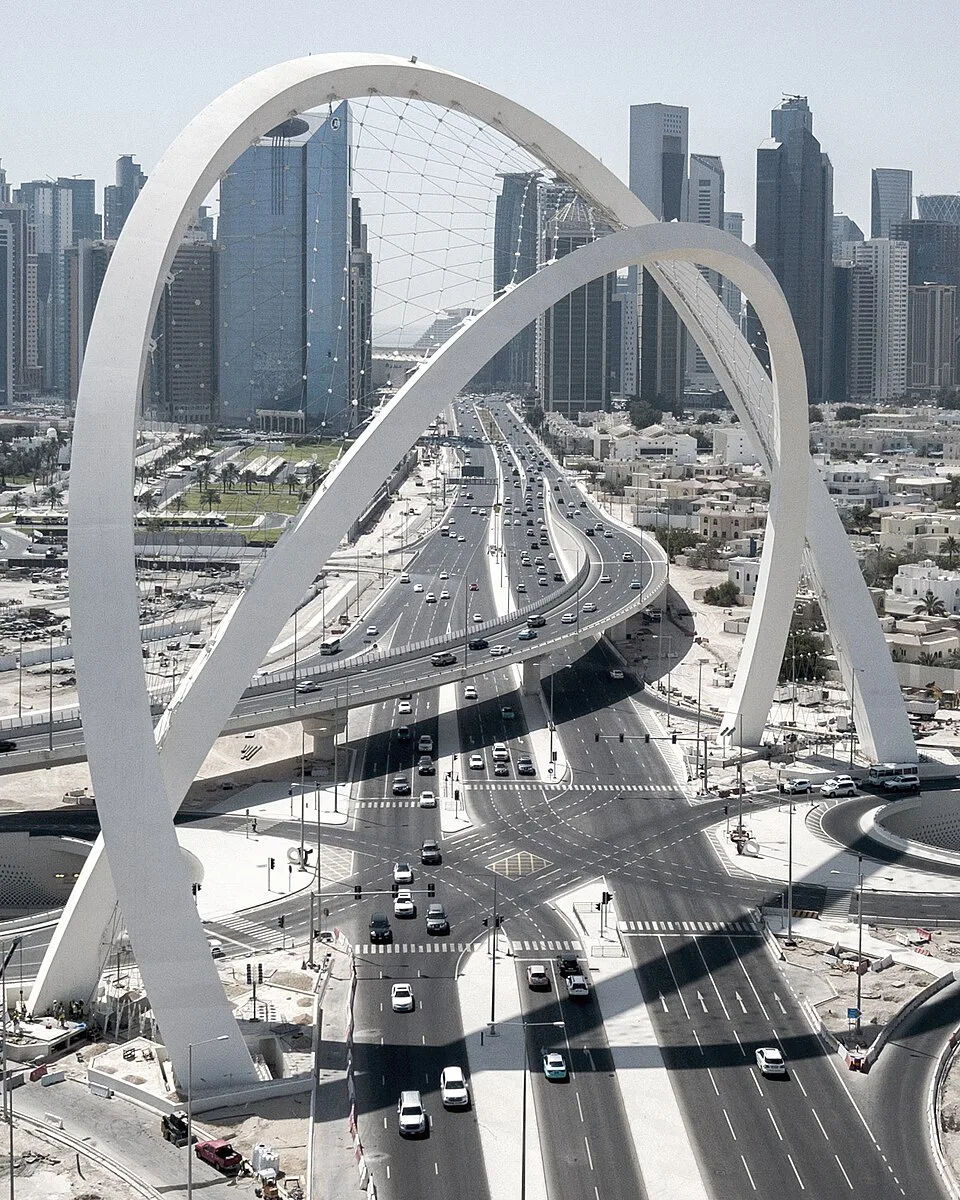
Iran looked Qatar in the eyes, made a promise, shook hands on it, and then fired a missile at Qatar. That's the situation right now in the Persian Gulf, where a conflict that several small but wealthy monarchies desperately tried to stay out of has just landed on their doorstep anyway — shrapnel and all.
What Actually Happened, Because It's Worse Than You Think
DW reports that Kuwait says border posts and an offshore oil platform were attacked in recent days, while Qatar reported injuries from shrapnel after intercepting an incoming missile. Iran has claimed responsibility for both strikes, framing them as retaliation for American attacks on Iranian targets.
Let that sit for a second. Iran is firing on Gulf states and calling it payback for what the United States did. The logic being: America has bases there, therefore the countries hosting those bases are fair game. It is the geopolitical equivalent of punching your neighbor's houseguest and then telling your neighbor they brought this on themselves.
The Promise Iran Just Broke in Spectacular Fashion
Here is the part that makes this story truly something. According to Middle East analyst Megan Sutcliffe of the London-based intelligence firm Sibylline, speaking to DW, Qatar had previously resumed maritime activity with Iran after receiving explicit assurances from Tehran. The assurance: Iran would not target Qatar if regional tensions escalated again.
Those tensions escalated again. Iran targeted Qatar.
"It's very clear that Iran does not seek to hold to those promises and to refrain from attacking Qatar," Sutcliffe told DW. Which is a very diplomatic way of saying that Tehran's word is currently worth roughly nothing to the countries that most need it to mean something.
The Gulf States Tried So Hard to Stay Out of This
The Gulf monarchies have spent years threading an impossible needle, hosting American military infrastructure while simultaneously maintaining functional economic and diplomatic ties with Iran. It is a balancing act born of pure geographic necessity. You do not get to pick your neighbors, and when your neighbors are the US military and the Iranian Revolutionary Guard Corps, you develop certain skills at keeping everyone calm.
That strategy is now in serious trouble. DW reports that Qatar has suspended non-commercial maritime activities in the region, which Sutcliffe describes as "a move from Qatar that does show more active engagement with the conflict when it comes to Iran." Read: Qatar did not want to pick a side, and Iran just picked one for them.
Why the Strait of Hormuz Makes This Everyone's Problem
Growing security concerns around the Strait of Hormuz, as DW notes, are now forcing Gulf states to reconsider positions they have held carefully for years. This matters well beyond the region. Roughly a fifth of the world's oil supply moves through the Strait of Hormuz. If that waterway becomes a war zone in any serious operational sense, the economic consequences radiate outward in ways that no amount of American energy production can fully offset.
We are not there yet. But Kuwait's offshore oil platform getting hit is not a reassuring data point for anyone tracking global energy stability. Neither is a missile being intercepted over Qatar, a country that hosts one of the largest American air bases in the Middle East.
Where This Leaves Everyone
The United States and Iran are in an active military exchange. Gulf states are now getting hit in what Iran frames as collateral retaliation. Diplomatic assurances have been revealed as worthless. Maritime activity is being suspended. And the region's smaller players, who spent years cultivating careful neutrality, are finding out that neutrality has a limit when one side decides the other side's geography is a legitimate target.
Sutcliffe's analysis for DW suggests Qatar's suspension of maritime activity is a signal of something shifting, not just a precautionary measure. When countries start changing behaviors they have held through previous rounds of tension, it tends to mean they no longer believe the situation is manageable the old way.
The Dingo Take
Iran made Qatar a promise. Qatar trusted it enough to resume normal shipping operations with a country that is currently in an active military conflict with the world's largest superpower. That is either an act of faith or an act of desperation, and given the geography, it was probably some of both. Iran then shot a missile at Qatar. So now we know exactly what Tehran's diplomatic assurances are worth in a shooting war: nothing.
The broader problem is that the Gulf states are trapped in a situation entirely of other people's making. The US-Iran conflict did not start in Kuwait or Qatar. The strikes, the escalation, the whole catastrophic logic of retaliation and counter-retaliation, all of that originated elsewhere. But it is landing in their waters, on their oil platforms, and in the form of shrapnel injuries on their territory. Iran's framing, that American bases make host countries legitimate targets, is the kind of argument that sounds like a legal theory right up until the missile arrives.
If Washington has a plan for protecting the countries that host its military from becoming targets in its wars, this would be an excellent moment to produce it. And if the answer is that Gulf states simply assumed the risk by hosting US forces, someone should have probably mentioned that before the platform got hit.


Comments