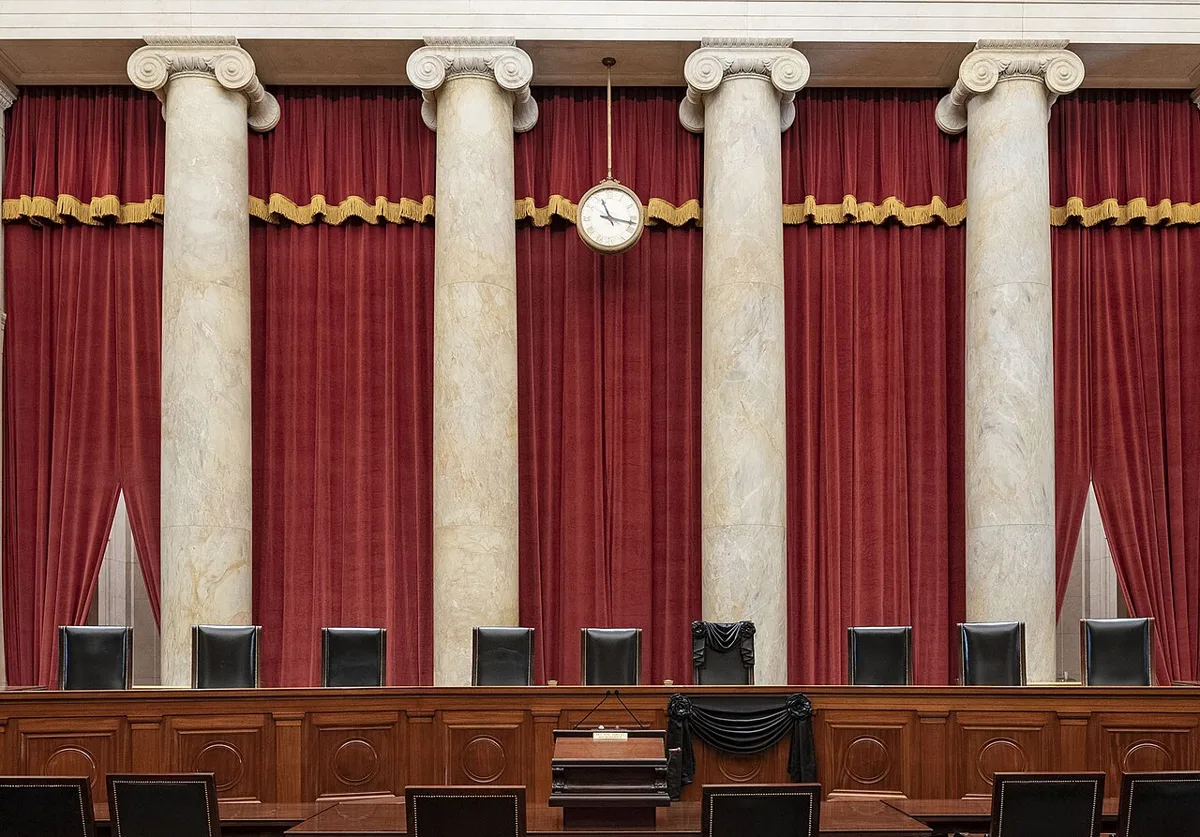
The Supreme Court Police Department is bracing for a 38% surge in threats against justices this year, on top of a 25% increase the year before. Justice Elena Kagan delivered that cheery statistic directly to the House Appropriations Committee on Tuesday. This is the part where we're supposed to act surprised.
Kagan Goes to Congress With a Very Grim Report Card
Let's get the numbers down first, because they're stark. According to Axios, Kagan told lawmakers the Supreme Court Police Department expects a "very substantial" 38% jump in threats against justices this year. That follows a 25% increase last year. Year over year, the people who are supposed to be the final, calm arbiters of American law are receiving threats at a rate that would concern anyone who runs a threat assessment program for a living.
Kagan wasn't up there presenting this as some abstract policy concern. She was in front of a committee that controls the budget, making the case, presumably, that the court's security operation needs more resources. That's a reasonable request when the trendline looks like a rocket launch pointed in exactly the wrong direction.
Congress Isn't Doing Much Better
If you thought this was a judiciary-specific problem, Axios also reports that threats against members of Congress are up 50% this year. Fifty percent. Which means the two branches of government that most directly make, interpret, and block the laws that govern your life are both swimming in an accelerating flood of menace from the public those laws are supposed to serve.
There is something deeply broken about a democracy where the mechanism for registering disagreement has shifted, for a meaningful chunk of the population, from voting or organizing or calling your representative to threatening the people who hold office. The ballot box and the threatening phone call are not morally equivalent options. One of them ends democracy. The other one is democracy.
Why the Court Became a Target
The Supreme Court has always been political, regardless of what any sitting justice will tell you with a straight face at a confirmation hearing. But the last several years turbocharged that reality. The Dobbs decision overturning Roe v. Wade in 2022 put the court at the center of the single most divisive domestic policy fight in a generation. Decisions on student loans, affirmative action, presidential immunity, and regulatory power have followed, each one leaving a large chunk of the country feeling like the institution had picked a side in their culture war.
When people feel like the court is a political actor rather than a legal referee, they treat it accordingly. That doesn't justify threats, not even close. But it explains the dynamic Kagan is describing. The court's decisions have consequences that feel immediate and personal to millions of people, and some of those people are responding with fury rather than due process. The distinction between legitimate political anger and criminal threats is one the broader political culture is currently doing a terrible job of maintaining.
The Security Situation Is Already Strained
Kagan's testimony comes against a backdrop that the court has been managing, badly at times, for several years. In 2022, a man was arrested near Justice Brett Kavanaugh's home carrying a gun, a knife, and zip ties, having told police he intended to kill Kavanaugh. That same year, a draft of the Dobbs decision leaked, which sent protesters to justices' private residences and exposed gaps in how the court handles security more broadly.
The Supreme Court Police Department is not a massive operation. It's a relatively small force protecting nine justices, the building, and court personnel across a portfolio that now apparently includes a 38% annual growth rate in the threat volume they're tracking. Whatever they're working with in terms of resources, Kagan's trip to the Appropriations Committee suggests it probably isn't enough.
Nobody in Power Is Rushing to Cool Things Down
Here's where the dark comedy lives. The political environment generating these threats is not cooling off. The rhetoric coming from elected officials, cable news, and social media platforms has not moderated. The incentive structure for politicians who traffic in rage, victimhood, and apocalyptic framing has not changed. If anything, it's gotten worse.
So we are in a moment where a sitting Supreme Court justice is going to Congress to report that people threatening her colleagues are increasing at a rate of roughly 30-40% per year, and the political actors who created the conditions for that environment are largely still doing the thing that created the conditions for that environment. Nobody at the top of either party has stood up and said, clearly and repeatedly, that threatening judges is not a political act, it's a crime, and it will be treated as one. The silence on that point from people who could actually move the needle is its own kind of answer.
The Dingo Take
Let's be honest about what a 38% year-over-year increase in threats against Supreme Court justices actually represents. It represents a political culture that has fully collapsed the distinction between losing an argument and seeking to terrorize the people who ruled against you. It is not a protest. It is not civic engagement. It is an attempt to intimidate the institutions of government into ruling differently, or into making justices too scared to rule at all. That is textbook authoritarian pressure, and it doesn't matter whether it's coming from the left or the right.
The fact that Kagan had to go to a House committee to make the case for protecting her colleagues from an accelerating wave of threats tells you something about the state of the republic that should genuinely unsettle people across the political spectrum. Courts only function if they can operate without coercion. Once the threat environment gets bad enough that justices start thinking about their physical safety when they write opinions, the independence of the judiciary is not a hypothetical loss. It's a present one.
And none of this exists in a vacuum. The same political figures who have spent years delegitimizing courts, calling judges corrupt, encouraging their supporters to view every adverse ruling as a stolen outcome, are not going to stand up tomorrow and ask those same supporters to please be nicer to the justices. The threats are the downstream consequence of that rhetoric, and until someone with real political power decides the cost of that rhetoric is too high, the Supreme Court Police Department's workload is going to keep growing.



Comments