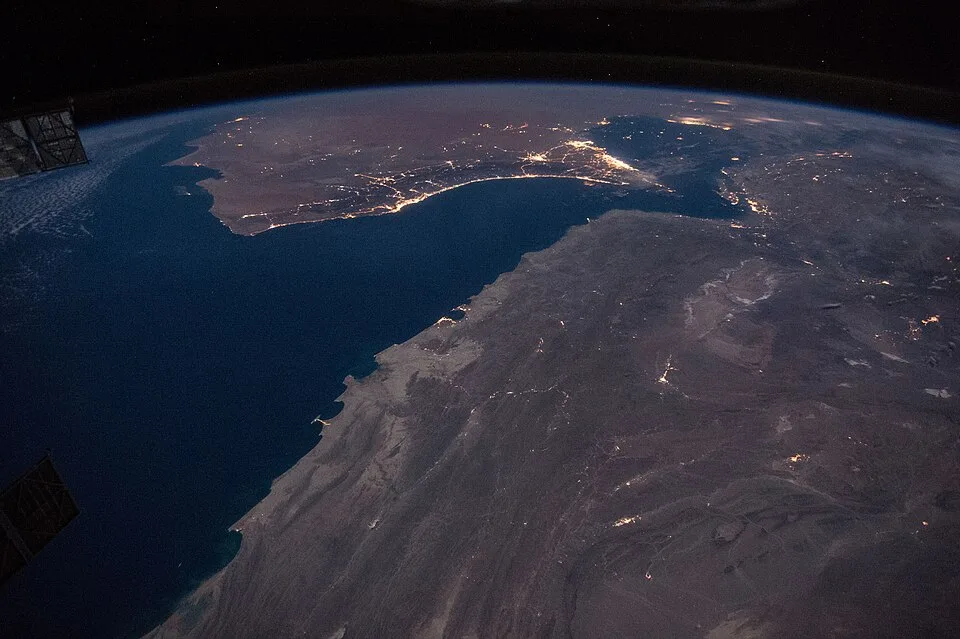
The United States military bombed Iran for the third consecutive night, hitting targets across the country's entire southern coastline while Iranian missiles lit two oil tankers on fire in the Strait of Hormuz, killing at least one Indian mariner and sending oil prices spiking. Bahrain is under missile attack. Jordan shot down four ballistic missiles over its own airspace. And somewhere in Washington, someone is presumably making a PowerPoint about how this is all going very well.
What the US Actually Hit, and Why It Matters
According to US Central Command, the overnight operation ran for five hours and hit targets in six locations along Iran's southern coast: Bushehr, Chah Bahar, Jask, Konarak, Abu Musa, and Bandar Abbas. The strikes focused on coastal defense systems, missile and drone launch sites, and other maritime infrastructure. CENTCOM says the goal is to degrade Iran's ability to threaten commercial shipping through the region.
That mission statement would be more convincing if Iranian missiles hadn't just disabled two tankers in the Strait of Hormuz hours later. The ships, identified by the UAE's Defense Ministry as the Mombasa and the Al Bahiyah, were sailing through Omani territorial waters along the southern shipping route when they were hit by what the UAE says were two cruise missiles. Both tankers caught fire. The fires were eventually extinguished, but the damage was done.
CENTCOM also confirmed that more than 50,000 American service members are currently deployed across the Middle East. The official language called them 'vigilant, lethal, and ready,' which is military press release for 'we are absolutely not going to tell you what happens next.'
Iran Says the Ships Sailed Into a Minefield. On Purpose.
Iran's Islamic Revolutionary Guard Corps claimed responsibility for the tanker strikes with the kind of confidence that only comes from either having absolute conviction or absolutely no sense of how this looks internationally. The IRGC said the ships 'ignored repeated warnings' and that they 'chose to pass through a minefield and were subsequently targeted and disabled.'
To be clear: Iran just told the world it mined international shipping lanes, warned ships not to use them, and then fired cruise missiles at the ones that tried anyway. That is not a legal defense. That is a confession with extra steps.
India summoned Iran's deputy ambassador after the attack, because one of those crew members killed was an Indian national. Eight others were wounded. The UAE, which owns the tankers, has threatened retaliation. The Strait of Hormuz, through which roughly 20 percent of the world's oil supply flows on any given day, is now a declared warzone with active mines. Oil markets noticed immediately.
Bahrain Is Getting Hit. Jordan Got Hit. Everyone's Getting Hit.
Iran's Revolutionary Guards didn't stop at tankers. They also launched missile and drone strikes on Bahrain, claiming they targeted weapons warehouses, a satellite communications center, and residential facilities for US forces. Bahrain hosts the US Navy's Fifth Fleet, so it was always going to be a target once things escalated this far. Residents were told to take shelter as missile alert sirens went off three separate times since dawn, according to DW's reporting.
Bahrain's Defense Force says it successfully repelled several of those aerial attacks, calling Iran's actions a 'flagrant violation' of international humanitarian law for targeting civilian sites. An AFP journalist on the ground confirmed hearing blasts in the capital, Manama. Whether 'successfully repelled' covers everything that came over the border is a question the Bahraini government has so far not answered with specifics.
Jordan, meanwhile, intercepted and shot down four ballistic missiles that entered its airspace from Iranian territory. The IRGC had targeted a US air base in Jordan, and in a statement distributed through Iran's Fars news agency, told Jordanians they should 'dismantle US bases in their country' while also insisting that Iran 'loves' the Jordanian people. Bombing your way into someone's airspace and then explaining that you love them is a diplomatic approach that has historically not worked great.
For People Actually Living in Iran, This Is Already Unbearable
It is easy, watching this from the outside, to reduce all of this to a geopolitical chess match. Strikes, countermeasures, escalation ladders, strategic objectives. But DW has been reporting from inside Iran, and what they are finding is a population that has been living in fear, economic collapse, and uncertainty for weeks while the outside world argues about regional deterrence theory.
Repeated ceasefire violations have left ordinary Iranians unsure whether any given day is a war day or a peace day, which turns out to be psychologically worse than just knowing it's a war. That distinction matters. The people getting bombed are not the IRGC commanders ordering cruise missile strikes on tankers. They are people trying to get through their day in a country that their government has steered into a direct military confrontation with the most powerful military on earth.
The Blockade Is Back On
DW reports that Trump has reinstated what is being described as a blockade, though the exact contours of that order and its legal framework under international law remain unclear from the reporting available. What is clear is that the combination of active US strikes, Iranian missile attacks on shipping, and a reinstated blockade has created a situation in the Persian Gulf that has no clean off-ramp visible from any angle right now.
Oil prices jumped on the news, which was the most predictable sentence anyone could write about this situation. When the body of water that carries a fifth of the world's oil is the active site of cruise missile attacks, mines, and a naval blockade, commodity markets do not respond calmly. This is now an economic crisis layered on top of a military one.
The Dingo Take
Here's where we are: the United States has now conducted three straight nights of airstrikes on Iran's southern military infrastructure. Iran has responded by mining the Strait of Hormuz, firing cruise missiles at civilian tankers, launching ballistic missiles at Jordan, and hitting Bahrain with drones. There are over 50,000 American troops in the region. And the official US position, as best as anyone can read it, is that this is working.
The IRGC's statement about the tankers is worth sitting with for a second. They announced, with apparent pride, that they mined an international shipping lane and then shot at the ships that tried to use it anyway. That is an act of war against global commerce, not just against the United States. India is already involved because its citizens are dying. The UAE is threatening retaliation. Saudi Arabia is watching its regional security calculus collapse in real time. Every country in the Gulf that is not Iran is now either under missile attack or watching tankers burn off their coastline.
Nobody in this conflict looks like they have a plan that ends somewhere good. The US is bombing Iran's coast every night without a stated endgame. Iran is escalating in ways that guarantee more US strikes while also tanking its own economy and killing foreign nationals whose governments are now furious. The people of Iran are trapped between an IRGC that will not stop and an American military that will not stop. And somewhere in the Strait of Hormuz, two tankers that were just trying to do their jobs are still smoldering.


Comments