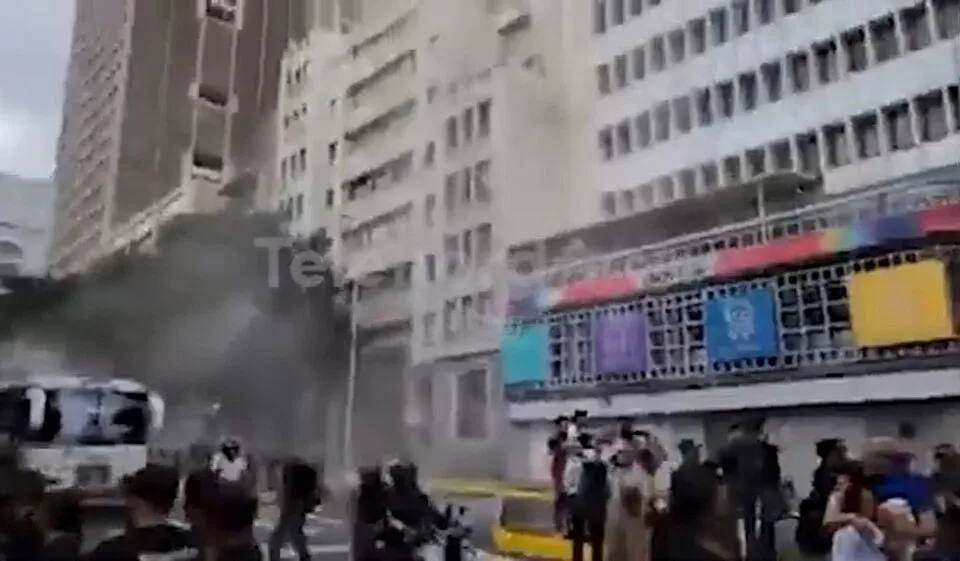
Six weeks ago, a magnitude 7.5 earthquake and its slightly smaller twin turned large sections of Caracas and the coastal state of La Guaira into rubble. The death toll is now at least 4,490, the UN estimates 50,000 people are still missing, and Venezuela's acting government is formally asking the Bank of England to hand over the country's gold reserves to pay for what comes next.
The Scale of This Is Hard to Sit With
Let's just spend a moment with the numbers, because they are genuinely staggering. The magnitude 7.2 and 7.5 quakes hit on June 24, DW reports, and they didn't just damage buildings. They razed entire high-rise apartment blocks. Over 850 structures are now in ruins or severely damaged. More than 19,000 people are living in makeshift camps in sports stadiums, schools, and on sidewalks.
And 50,000 people are still missing. That is not a typo. The United Nations puts the figure at fifty thousand human beings who have not been accounted for. To put that in context, that's roughly the population of Santa Cruz, California, just gone, unaccounted for, in the rubble of a capital city.
The death toll of 4,490 is almost certainly not the final number. It probably isn't close to the final number. When you have 50,000 missing and over 850 collapsed or destroyed buildings, the math is brutal.
The Government Has a Plan, Sort Of
Venezuelan National Assembly President Jorge Rodriguez, who happens to be the brother of acting President Delcy Rodriguez, announced on Saturday that the government is planning temporary accommodation for displaced families. According to DW, authorities have identified more than 40 plots of land in La Guaira state, totaling roughly 584,000 square meters, for new home construction.
The government estimates it needs to build about 25,000 homes. That is a staggering construction target for any country. For Venezuela, a country that has spent the last decade cycling through economic collapse, hyperinflation, and international sanctions, it is a different category of problem entirely.
Rodriguez also felt compelled to address rumors that the government planned to clear rubble without properly searching for bodies first. He rejected that suggestion outright. Whether families believe him is another matter. When you have 50,000 missing and a government that has not historically been known for its transparency, the fear that bodies will be buried under concrete and written off is not an unreasonable one.
The Clock Is Already Ticking on the Camps
Here is a detail that lands harder the longer you think about it. Many of the displaced people are currently sheltering in schools. September is two months away. The new academic year starts in September. DW reports that the schools will need to be vacated once that happens.
So thousands of people who just survived a catastrophic earthquake, who lost their homes, who are living in a gymnasium or a classroom, are going to need to move again. To where, exactly, is still being worked out. The 25,000 homes the government says it needs haven't been built yet. The land has been identified. The construction has not started.
The window between now and September is not long. And the rainy season in Venezuela, which typically runs through November, is not going to make emergency construction any easier.
About That Gold
This is where the story takes a turn that would be darkly funny if the circumstances weren't so catastrophic. To fund reconstruction, acting President Delcy Rodriguez this week formally requested that the Bank of England release Venezuela's gold reserves. She also asked the International Monetary Fund to release emergency assets, DW reports.
"This gold belongs to our people and should be used to serve them," she said.
She is not wrong about that, technically. Venezuela has had gold reserves held at the Bank of England for years, and accessing them has been caught up in a prolonged legal and political dispute tied to the broader international standoff over Venezuelan governance and the Maduro government's legitimacy. The earthquake doesn't make that dispute disappear. It does, however, make the argument for releasing those funds considerably harder to dismiss on humanitarian grounds.
Whether the Bank of England will move quickly, or at all, remains to be seen. International financial institutions are not known for their speed in the best of circumstances. This is not the best of circumstances.
What the International Response Looks Like
The UN's acknowledgment that 50,000 people remain missing is significant, because it signals that international bodies are at least tracking the scale of the disaster. What the actual international response looks like on the ground is a separate question, and one the available reporting doesn't fully answer yet.
Venezuela's relationship with international institutions and Western governments has been adversarial for years. Sanctions, disputed elections, and the long saga of the Maduro government versus a substantial chunk of the international community have not exactly built a foundation of goodwill and rapid coordination. Whether that political baggage will slow the humanitarian response is the question hanging over all of this.
Rodriguez's dual appeal, to the Bank of England for gold and to the IMF for emergency funds, suggests the government is trying to use every available lever. That's either a sign of genuine desperation, pragmatic crisis management, or both.
The Dingo Take
Fifty thousand missing people. Let that number roll around for a second. The United States lost roughly 3,000 people on September 11 and it reshaped the country's entire political identity for two decades. Venezuela is looking at a potential death toll that could be seventeen times that, in a country that was already on its knees before a pair of earthquakes showed up to finish the job. The scale of suffering here is almost too large to process, which is probably why it is not getting the sustained international attention it deserves.
The gold reserve situation is its own separate indictment of how international finance works. Venezuela has assets. Its people are living on sidewalks and in gyms. The assets are sitting in London, frozen in a geopolitical dispute that predates this disaster by years. At what point does the humanitarian reality outweigh the political calculation? At 4,490 dead? At 50,000 missing? There is no clean answer, but the question deserves to be asked loudly and repeatedly until someone gives one.
And the September school deadline is the kind of detail that keeps policy analysts up at night. The immediate crisis is terrible. The secondary crisis, thousands of earthquake survivors needing to move again in two months to make room for classrooms, is already visible on the calendar. Ready or not, it's coming.




Comments