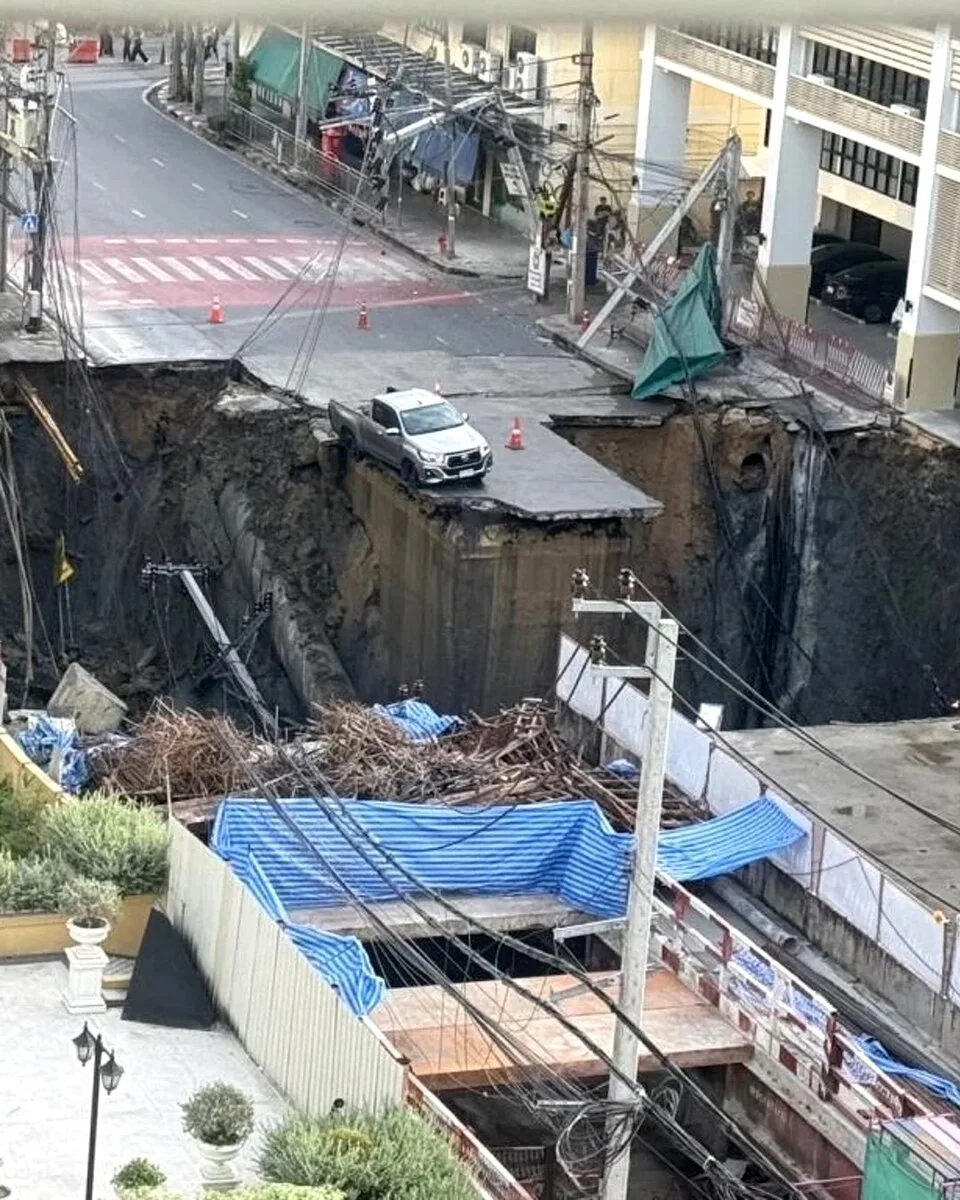
A water pipe installed before West Hollywood even existed as a city decided Thursday was the day to stop pretending everything was fine. The 36-inch riveted steel main burst beneath Sunset Boulevard, opened a sinkhole in the pavement, and left metro buses half-submerged in brown water on one of the most photographed stretches of road in America. Nobody got hurt. The infrastructure did, though, and it's been trying to tell us something for about a hundred years.
What Actually Happened Under Sunset
According to The Guardian, the pipe ruptured in the early hours of Thursday morning, flooding streets across West Hollywood and forcing the closure of several major roads along the Sunset Strip. The break left a visible sinkhole and cracked pavement where the old steel had finally given out.
City officials held a press conference where West Hollywood Mayor John Heilman confirmed no injuries and no evacuations. 'All of our residents to our knowledge are safe,' he said. Residents also still have clean drinking water, per David Hanson, the interim general manager for the Los Angeles Department of Water and Power. So the basics are covered. Everything else is a mess.
Images from the scene showed local transit buses sitting in murky brown floodwater like they'd taken a very wrong turn. The Sunset Strip, home to the kind of bars and restaurants that charge sixteen dollars for a cocktail, was effectively shut down for much of the day.
A Pipe Old Enough to Have Voted Against Prohibition
Here is the part that really deserves a moment of quiet reflection. This pipe predates the incorporation of West Hollywood as an independent city, which happened in 1984. The pipe is not just old. It is a century old. It is a riveted steel pipe, which is a construction method so dated that most modern engineers encounter it only in history books.
LA Mayor Karen Bass stood at that press conference and said, with a straight face, 'This is one of the challenges when our infrastructure is so old.' Which is true. It is also the kind of statement that sounds obvious until you realize the obvious thing has been true for decades and nobody did enough about it.
Los Angeles Department of Water and Power Chief Operating Officer Anselmo Collins explained to reporters that the agency replaces about 45 miles of pipe per year. He also noted that water pressure spikes at night when usage drops, which is typically when main breaks happen. 'Everybody's asleep,' he said. The pipes, apparently, are not.
The Sunset Strip Takes the Hit
The flooding hit the Sunset Strip directly, which is the kind of irony that writes itself. One of the most commercially valuable, tourist-trafficked, frequently Instagrammed corridors in Southern California, and the ground beneath it is held together by century-old riveted steel and, apparently, prayers.
The Guardian reports that Dialog Cafe, a popular brunch spot on the strip, posted to social media that it sustained 'significant damage' from the water break and had to temporarily close. 'We don't yet know exactly when we'll be able to reopen,' the restaurant wrote. In a city where restaurant margins are already measured in millimeters, a flood from a pipe older than talking pictures is not a small problem.
Colllins said at the press conference that officials are still working to shut smaller valves and fully assess the situation. No repair timeline has been offered. So if you had brunch plans on the Strip this weekend, adjust accordingly.
Bass Sees the Moment, Pitches the Vote
Los Angeles Mayor Karen Bass used the press conference to make a broader point, which is fair enough because the broader point is impossible to avoid when you're standing next to a sinkhole that ate a bus. Bass told reporters she spent the last two years developing a comprehensive infrastructure plan that rolled out roughly two months ago, and that the measure will go before voters on the November ballot.
'It is very difficult to repair the infrastructure that impacts the entire city and clearly two cities without a citywide plan,' she said, referencing both Los Angeles and West Hollywood, since the old LADWP pipe predates WeHo's independent existence. The argument is sound. The optics of needing a catastrophic street failure to make the case are less than ideal, but here we are.
The question of what caused the rupture specifically remains unanswered. Officials said they don't know yet. Collins offered the general explanation that sometimes pipelines develop weak spots that only reveal themselves when they fail. That is technically accurate in the same way that saying a Jenga tower sometimes falls is technically accurate.
The Dingo Take
Los Angeles has roughly four million people depending on infrastructure that in some places was built when Woodrow Wilson was president. Nobody seriously disagrees that this is a problem. What they disagree about, endlessly, is who pays for it, when, how, and whether the political will to do anything actually exists between election cycles. A sinkhole swallowing city buses on Sunset Boulevard is not a random act of nature. It is the physical world sending a strongly worded invoice for decades of deferred maintenance.
Bass is right that a comprehensive plan is necessary. She is also the mayor of a city that has been having variations of this conversation for thirty years while the pipes get one year older every year. The November ballot measure might pass. It might not. And while the voters deliberate, there are hundreds of miles of water mains under Los Angeles that are having their own quiet conversations about structural integrity.
The Sunset Strip will reopen. Dialog Cafe will probably survive. The buses will get dried out. And sometime in the next few years, somewhere else in this city, another century-old pipe will decide it has had enough. The only real question is whether anyone will be surprised when it does.



Comments