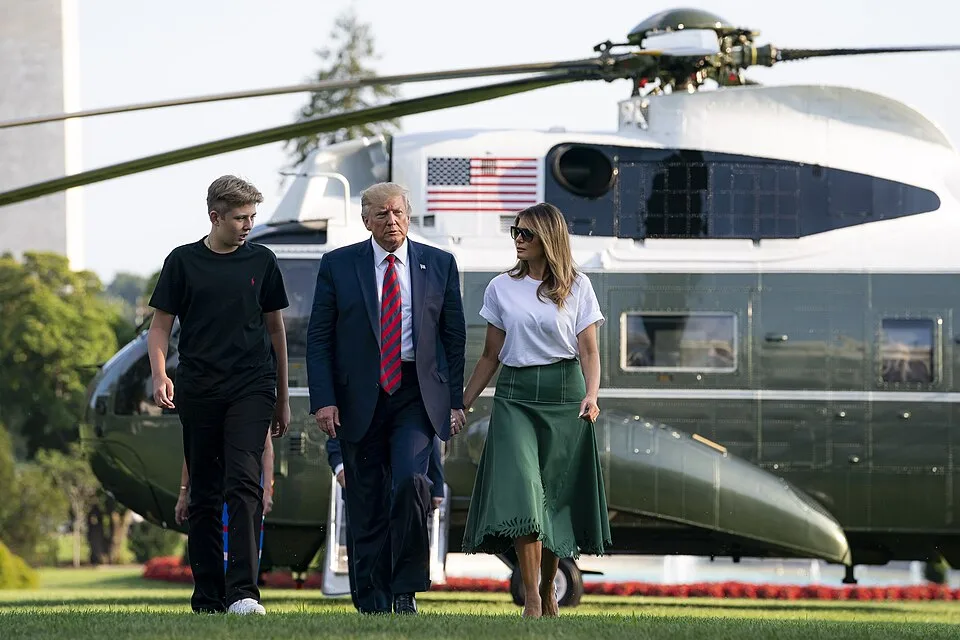
Donald Trump is installing a 100-foot-wide black granite helipad on the White House South Lawn, skipping congressional approval, bypassing the Commission of Fine Arts, and letting a major defense contractor pay for the whole thing. He asked nobody. Nobody said no. Construction started last month.
What Is Actually Being Built Here
According to the New York Times, the helipad will be 100 feet in diameter, made of black granite, and will feature a presidential seal at its center. It sits on the South Lawn, which has historically hosted events like the Easter Egg Roll and a hundred years of American civic tradition. Now it will host Marine One and whatever vibe that projects.
Lockheed Martin, one of the largest defense contractors in the world, is paying for the construction. The price tag, per Trump's own estimate, is somewhere between $5 million and $6 million. Lockheed says it made the contribution to the National Park Service and that everything was done in accordance with applicable laws. Sure.
Work started last month, the Times reports, shortly after a temporary stadium built to host a UFC fight on the South Lawn left the grass significantly damaged. Dana White's organization had set aside $700,000 for lawn repairs. Trump looked at the wrecked grass, thought about it, and decided to skip the repairs and build a helipad instead. As you do.
Why No One Reviewed This and Why That Is Insane
Past presidents have gone to Congress and to bodies like the Commission of Fine Arts before making major changes to the White House grounds. That is not a quirk or a courtesy. It is how the process works for a building that belongs to the American public. Trump did not do any of that here.
A White House spokesman told the Times that "operational upgrades to the White House grounds, such as the helipad installation, do not require commission reviews." That is the entire explanation. That is the whole argument. A spokesman said so.
This is the same administration currently in litigation over a proposed 90,000-square-foot ballroom it wants to build at the White House, also without congressional approval. So there is at least a consistent philosophy here, which is that the rules are for other people and the White House belongs to whoever is living in it at the time.
The Helicopters Ate the Lawn, So Someone Has to Pay
There is an actual substantive reason a helipad exists as a concept, and the Times explains it clearly. The Navy bought 23 new VH-92A helicopters to replace the aging models that have carried presidents for more than four decades. Total program cost: approximately $5 billion, according to the Government Accountability Office. Each aircraft runs about $215 million.
The problem is that these helicopters are considerably more powerful than the old ones, and when they land on grass, they do not discolor it. They rip it out. The VH-92A has two engines with more than three times the thrust capacity of the current Marine One model. Trump put it plainly: "When you land on the grass, it's not that the grass gets discolored, it gets ripped out."
So here is where Lockheed Martin enters the picture. Lockheed builds the VH-92A through its subsidiary Sikorsky. The helicopters that eat White House grass are their product. Trump told reporters the company "felt a little bit guilty" about not disclosing how powerful the new aircraft were. So now they are paying for a granite landing pad. That is one way to handle a warranty claim.
Meanwhile, in Florida, the Rules Apply Fine
Here is the part that should make your eye twitch. Trump is also trying to build a helipad at Mar-a-Lago, his private resort in Palm Beach. That project, the Times reports, has gone through local historic preservation commission review, multiple public hearings, negotiations with town lawyers, and votes by the Town Council.
Because Mar-a-Lago is a historic property, any physical changes require approval from the Palm Beach Landmarks Preservation Commission. The town is allowing the helipad but has placed strict limits on its use after Trump leaves office. According to Palm Beach town attorney Joanne O'Connor, any post-presidency helicopter trips would require Secret Service approval and must involve an emergency. It cannot, for example, be used to facilitate a golf outing.
So the private resort in Florida is navigating a full public review process with community input and use restrictions. The White House, the people's house, got a spokesman's email. This is not a coincidence. This is a demonstration of who has leverage and who does not.
Trump on Helipads, in His Own Words
Trump spoke recently from the Oval Office about the difficulty most people face when trying to get helipad permits. "The hardest thing to get is a helipad, OK?" he said. He then noted that he had always been lucky and had always gotten his helipads.
This is technically accurate and also an almost perfectly self-aware encapsulation of his entire worldview. The rules that stop ordinary people do not stop him. He knows this. He says it out loud. He is building the helipad right now.
The man spent decades in New York real estate complaining about zoning hell, and now he is the one who gets to define what requires review and what does not. The helipad is almost beside the point at this stage. It is the logic that should concern you.
The Dingo Take
Let's be precise about what is happening here. A $5-to-$6 million construction project is going up on the grounds of the White House, paid for by a defense contractor with billions in federal contracts, with no vote from Congress, no sign-off from any independent review body, and no meaningful public process. The administration's justification is a single sentence from a spokesman. That's it. That is the entire paper trail.
Lockheed Martin builds the helicopters. The helicopters damage the lawn. Lockheed Martin pays for the fix. And in exchange, they get to be the company that literally paved the South Lawn for the sitting president. The ethics statement they put out says their engagement with the federal government follows "rigorous ethics and compliance standards." Rigorous. They used that word. For a $6 million gift to a president who controls their contract pipeline.
The real kicker is Mar-a-Lago. The private club with a paying membership went through a full public review with restrictions and accountability. The White House got waved through because a spokesman said so. If you needed one image to capture how this administration thinks about the concept of public accountability, a black granite presidential seal being laid into the South Lawn without anyone's permission is a pretty clean one.



Comments