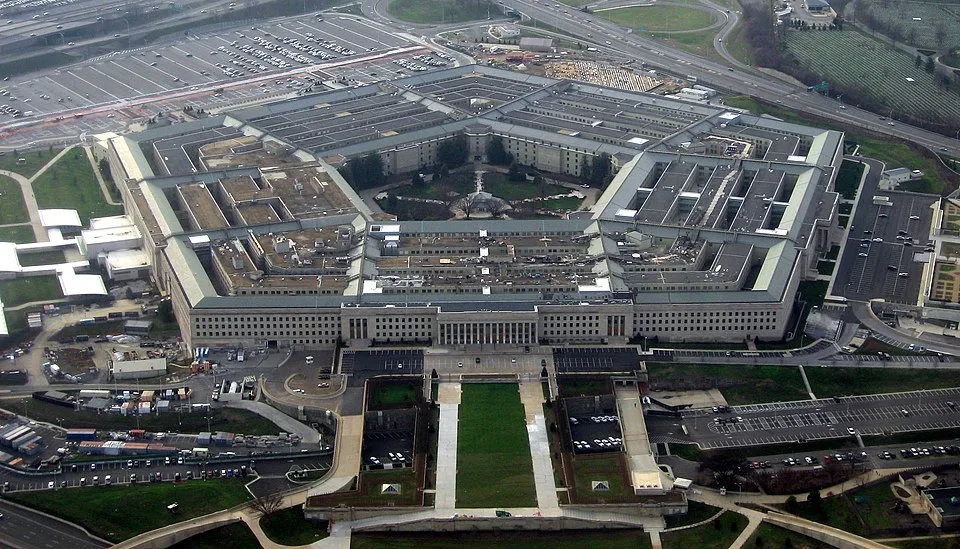
A federal appeals court ruled Thursday that the Pentagon can keep requiring journalists to be escorted around its own headquarters like shoplifting suspects at a Best Buy. Two out of three judges on the D.C. Circuit sided with the Trump administration, halting a lower court decision that had blocked the policy. Pete Hegseth's war on the press just got its first appellate win.
What the Court Actually Said
The U.S. Court of Appeals for the D.C. Circuit split 2-1 in favor of the Defense Department, agreeing to pause a lower court ruling that had blocked the escort requirement. Judges Karen Henderson, a George H.W. Bush appointee, and Patricia Millett, an Obama appointee, wrote that the New York Times and reporter Julian Barnes had not demonstrated that the policy singled them out unfairly.
The two judges reasoned, per their unsigned order reported by CBS News, that the Times never argued the policy was selectively applied or had an impact on their reporting that was different from its effect on every other reporter. The logic being: if everyone is equally surveilled and chaperoned, nobody can complain. Which is a fun legal theory if you're fine with the government doing terrible things to the whole press corps at once.
The dissent, written by Biden appointee Judge Bradley Garcia, did not find that logic convincing. Garcia wrote that a 'retaliatory government policy should not be immunized simply because it is broadly and evenly applied.' In other words, the fact that the government is suppressing everyone equally doesn't make it not suppression. A point so obvious it's genuinely alarming that it needed to be written down.
How We Got Here: Hegseth's Slow Squeeze on Pentagon Press
This didn't come out of nowhere. Since Pete Hegseth took over as Defense Secretary, the Pentagon has been systematically tightening the screws on reporters who cover the military. CBS News has documented a series of escalating restrictions, including new credentialing rules that required journalists to agree to a lengthy list of restrictions just to maintain their access to the building.
Major outlets including CBS News, the Washington Post, CNN, and the New York Times all refused to sign on to those rules. The Times and Barnes filed a lawsuit, arguing the restrictions violated the First Amendment. A federal judge agreed in March and struck down some of the rules.
The Pentagon's response to losing in court was not to reconsider. It was to issue a revised policy that physically moved press workspace out of the Pentagon building and introduced the escort requirement now at the center of this fight. When you beat them in court, they just come back with a different, equally hostile policy. It's like a game of press-freedom whack-a-mole, except the mallet is the U.S. Defense Department.
The Times Sued Again. Then Won. Then Won Less.
The Times filed a second lawsuit in May specifically targeting the escort policy, and last month U.S. District Judge Paul Friedman sided with the newspaper and blocked the rule. That was the lower court victory the appeals court just put on ice.
The Trump administration appealed Friedman's decision, arguing through Justice Department lawyers that the escort policy applies equally to all journalists and hasn't stopped anyone from doing their jobs. DOJ lawyers, per CBS News, called the Times' retaliation claims 'nonsensical.' That's a characterization that might land better if the Pentagon hadn't also banned the Times from an embed, moved their workspace out of the building, and introduced a supervisor requirement after a string of legal defeats.
A Times spokesperson told CBS News the paper was disappointed with the interim ruling but appreciated the court expediting the appeal and intends to keep litigating on the merits. Translation: this isn't over.
The Dissent Is the Part You Should Actually Read
Judge Garcia's dissent deserves more attention than it's getting. His point is deceptively simple: if threatening to impose this requirement on one journalist would chill that journalist's speech, as the district court already found, then threatening to impose it on every journalist doesn't un-chill anything. If anything, he wrote, the chilling effect might be worse, because anyone who cares about their colleagues feels it too.
This is not an exotic legal argument. It is a basic observation about how intimidation works. The majority's reasoning essentially suggests the government gets a free pass on press suppression as long as it suppresses everyone at the same time. Applied consistently, that logic would immunize almost any broadly-enforced restriction on the press from First Amendment scrutiny. Which is presumably exactly why the Trump administration is running with it.
The Dingo Take
Let's be direct about what's happening here. The Pentagon, under Pete Hegseth, lost in court. Then lost again. Then restructured its harassment of the press into a form that two out of three appeals court judges are now willing to temporarily tolerate because it's applied uniformly. This is not a victory for press freedom being carefully balanced against legitimate security concerns. This is the government finding the right legal argument to keep reporters on a leash while the courts figure out whether the leash is constitutional.
The majority opinion's core logic is genuinely worth sitting with for a second. The New York Times can't prove it's being specifically targeted, because the Pentagon targeted everyone. That's the argument that worked. Think about what that incentivizes. If you're a government that wants to retaliate against a specific outlet, the smart move is to make the retaliation wide enough that no single outlet can prove it was singled out. Congratulations, you've just read the playbook.
This case is not over. The appeals court expedited it, the Times is fighting, and Judge Friedman's underlying ruling still reflects a serious constitutional analysis that deserves a full hearing. But in the meantime, journalists covering the most powerful military on earth are being walked around its headquarters like they can't be trusted with the good silverware. And a federal court just said that's probably fine for now. Sleep well.



Comments