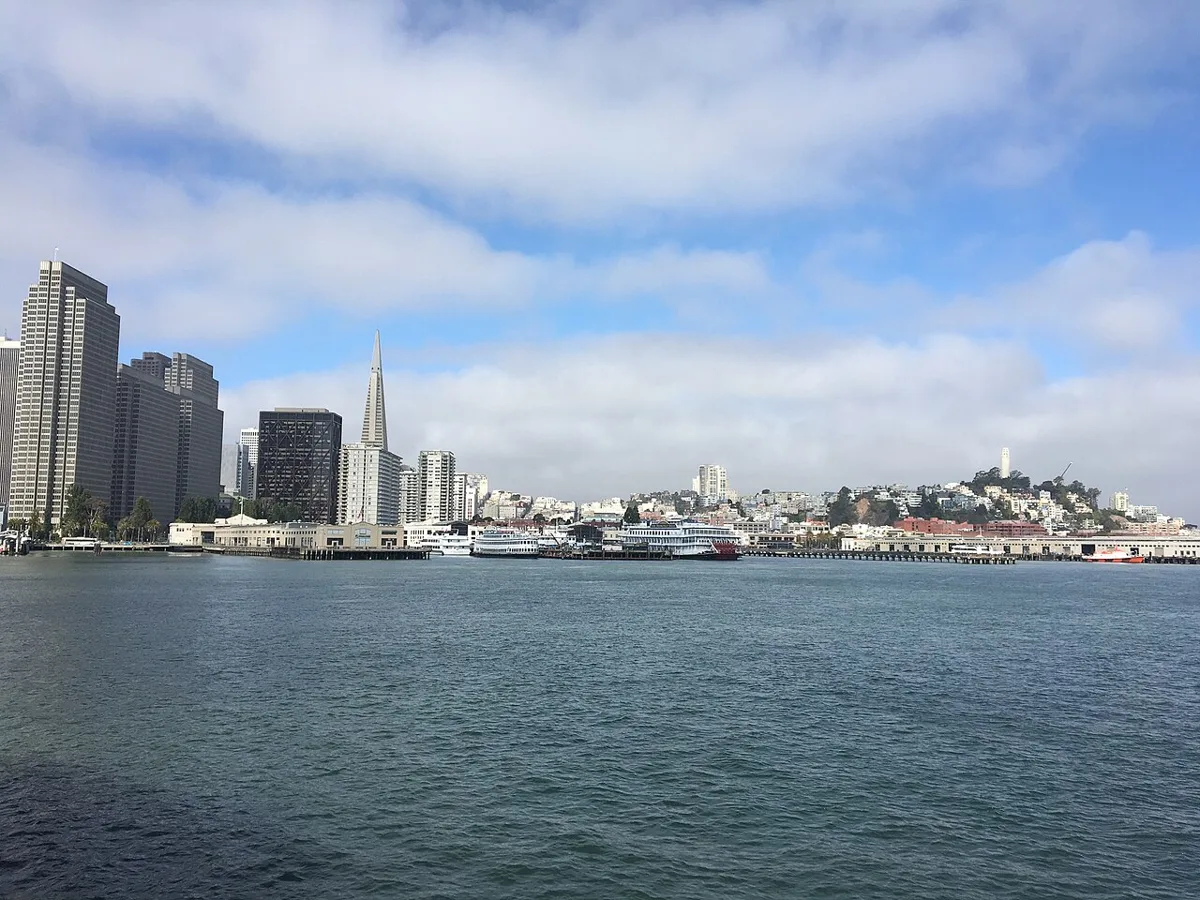
Twenty people boarded a boat in San Francisco Bay to scatter a dead friend's ashes and say goodbye. Three of them are now dead themselves, and two more are still missing, presumably trapped inside a cabin cruiser sitting 120 feet underwater west of Alcatraz. This is one of the most heartbreaking sentences we have ever had to write.
Who Was on That Boat
The New York Post reports that the 20 passengers were family members and friends from the Stockton and Sacramento areas, gathered to honor Maria Boisa, a Fremont nurse who died ten years ago at just 32 years old. They had chartered the Volare, a 49-foot private cabin cruiser, to scatter her ashes in the bay.
They spent about three hours anchored at Angel Island's Ayala Cove first. A moment of peace. A proper send-off, a decade in the making, for a young woman gone too soon. Then they turned the boat toward shore.
That's when everything went wrong.
What Happened When They Headed Home
Rough afternoon conditions hit the boat on the return trip. According to the New York Post, a powerful swell caused the top-heavy vessel to roll onto its side, take on water rapidly, and sink. The whole sequence happened fast enough that sixteen people had to be rescued from the water, with three of those sustaining injuries.
Four people did not make it out. Seventy-nine-year-old Clifford Joseph Boisa, a retired Sutter County reserve deputy, died in the disaster. He was Maria Boisa's family. He came to say goodbye to someone he loved and never came home himself.
The two remaining missing passengers are believed to be trapped inside the sunken hull, which now sits somewhere between 120 and 130 feet below the surface. That is not a search and rescue situation anymore. That is a recovery operation, and everyone involved knows it.
Tondra Miller, Named and Remembered
The San Francisco Medical Examiner's office identified the victim recovered Thursday as 58-year-old Tondra Miller, also known as Tondra Madruga. According to the San Francisco Chronicle, she was a friend of Maria Boisa, the woman whose ashes brought everyone onto that boat in the first place.
She came to mourn someone she loved. Her family is now mourning her.
In a Facebook statement shared by Quin Madruga and reported by the New York Post, the family called Tondra their "beloved mother, daughter, sister, and aunt." They asked for privacy, thanked first responders, civilian boaters, and community members who helped with the rescue, and closed with a simple line: "Thank you for your prayers, love, and support." The statement was signed by Breanna Hewitt Crouch.
The Boat, the Depth, the Clock
The Volare rests west of Alcatraz Island, in water deep enough that recovery divers are going to be working at serious risk to themselves. At 120 to 130 feet down, standard recreational diving limits are already being approached. Commercial saturation divers or specialized teams will be needed for any extended work at that depth.
The Coast Guard, San Francisco Fire Department, and San Francisco Police Department have all been involved in the response. The families of the two missing passengers are waiting. At a certain point, after a certain number of days, "missing" stops being a status and starts being a formality. We are approaching that point.
The Dingo Take
There is nothing to editorialize about the people on that boat. They were doing something beautiful. They were honoring a 32-year-old nurse who died too young, doing it properly, with the people who loved her, a full decade after her death. That kind of loyalty and grief is not political. It just is.
What deserves scrutiny is the vessel and whoever put 20 people on a "top-heavy" 49-foot cabin cruiser in San Francisco Bay in afternoon conditions without apparently accounting for what afternoon conditions in that bay can do. The Bay is not decorative. The swells that come through the Golden Gate in the afternoon are not a secret. Whether this was a charter operation, a private boat, a licensed operator, or a friend doing a favor, someone made decisions about seaworthiness and passenger load that ended with three people dead and two more presumed trapped under 120 feet of cold Pacific water.
The families involved have been extraordinarily gracious in their public statements, thanking first responders and asking for privacy. They deserve every bit of it. But when the grief subsides and the official inquiries begin, somebody needs to answer for how a memorial cruise became a mass casualty event. Maria Boisa's friends and family came to give her a peaceful goodbye. She got one. They didn't.




Comments