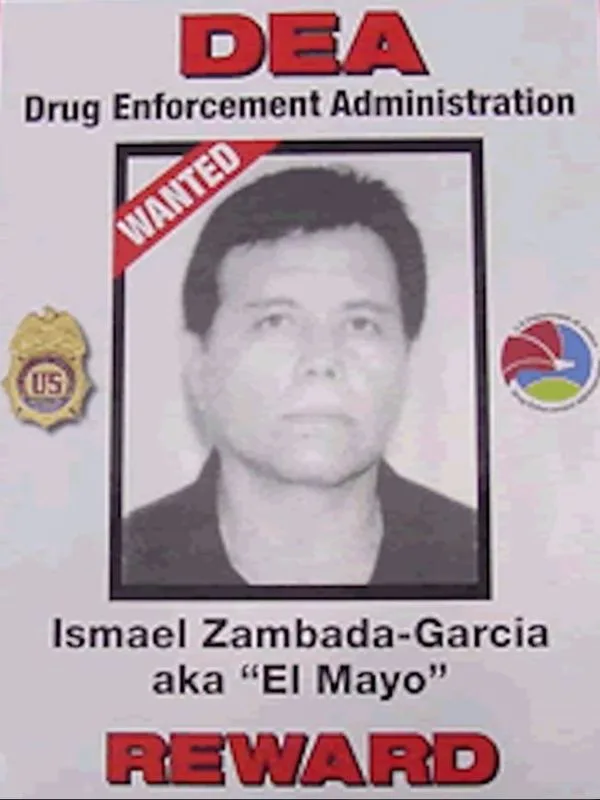
The co-founder of the most powerful drug trafficking organization in human history stood in a Brooklyn federal courtroom on Monday and apologized for his crimes before a judge told him he would die in prison. Ismael 'El Mayo' Zambada, 76, was sentenced to life without parole and ordered to pay $15 billion, a number so large it barely feels real, for nearly four decades of cocaine, fentanyl, murder, and industrial-scale corruption. The man who once said he feared jail more than death is now going to get both.
Forty Years, 1.5 Million Kilograms, One Life Sentence
US District Judge Brian Cogan handed down the sentence in federal court in Brooklyn, the culmination of what prosecutors described as one of the most consequential narcotics cases in American history. Zambada pleaded guilty last August to engaging in a continuing criminal enterprise and racketeering conspiracy, copping to culpability for 85 underlying crimes, after prosecutors agreed to take the death penalty off the table.
The numbers in this case are genuinely staggering. CBS News reports that from 1980 until last year, Zambada and his cartel were responsible for transporting at least 1.5 million kilograms of cocaine into the United States. The $15 billion he was ordered to forfeit represents the proceeds from his role as principal leader of the cartel. These aren't round numbers plucked for effect. These are the figures prosecutors presented and a federal judge accepted.
US Attorney Joseph Nocella Jr. put it plainly in a statement quoted by both the BBC and CBS News: 'Ismael Zambada Garcia spent nearly four decades poisoning American communities to make billions of dollars in profit and ordering the murders of anyone who stood in his way. Today, that chapter closes for good.'
The Man Behind the Operation
Here is something worth understanding about El Mayo that tends to get lost in the El Chapo mythology. Zambada was the one actually running things. CBS News notes that he was widely seen as the cartel's strategist and dealmaker, far more involved in the day-to-day mechanics of the operation than the flamboyant Guzmán. El Chapo was the brand. El Mayo was the business.
Under his direction, the Sinaloa Cartel built relationships with cocaine producers in Colombia, developed systems for importing product by boat and plane, perfected smuggling routes across the US-Mexico border, and paid 'hefty bribes to Mexican officials so they could operate freely,' Zambada himself acknowledged upon pleading guilty. The cartel was pulling in hundreds of millions of dollars a year.
Prosecutors described him in their sentencing memo, as CBS News reported, as 'one of the most, if not the most, prolific and powerful narcotraffickers in the world,' adding that 'it would be difficult to overstate the magnitude' of his crimes. That is the Department of Justice, a body not known for purple prose, struggling to find words big enough for what this man built.
The Violence He Ordered
The cartel did not get that big by being polite. Federal prosecutors laid out what they called 'systematic assassinations' of cartel members, police, and military officials carried out under Zambada's direction. Months before his 2024 arrest, according to CBS News, he ordered the murder of his own nephew, Eliseo Imperial Castro, after learning the man was collecting debts in Zambada's name and pocketing the money.
In 2023, prosecutors said, at least three people were killed in retaliatory violence that Zambada personally directed after a cache of fentanyl, meth, and cocaine was stolen from the cartel. This is the texture of the operation beneath all the billions. Somebody skims a little, somebody gets killed. Somebody steals product, three people get killed. Forty years of that, at scale, across two countries.
For context on what the broader Sinaloa operation looks like under the Chapitos, the faction led by El Chapo's sons who engineered Zambada's capture: CBS News reported that an indictment by the Justice Department alleged those associates used corkscrews, electrocution, and hot chiles to torture rivals, with some victims reportedly fed, dead or alive, to tigers. The cartel is not a nuanced institution.
How a 76-Year-Old Cartel Boss Ended Up in Brooklyn
Zambada's path to that courtroom is one of the stranger stories in the long, strange history of the drug war. In July 2024, El Chapo's son, Joaquin Guzmán Lopez, told Zambada they were flying to northern Mexico to inspect some clandestine airstrips. The plane landed in Texas instead. US agents were waiting. Zambada's lawyers say he was beaten, tied up, abducted, and put on that plane against his will. Prosecutors have a different characterization of events. Either way, he ended up in American custody.
Guzmán Lopez, who orchestrated the whole thing, was also arrested in July 2024 and has since pleaded guilty to federal drug charges. He has not yet been sentenced. Whatever deal he cut to hand over El Mayo is presumably reflected in whatever leniency he is eventually shown. The BBC reports that El Chapo himself is serving life at the federal Supermax in Florence, Colorado, so the Guzmán family's track record with US justice is not exactly inspiring.
The capture immediately ignited a war within the Sinaloa Cartel between Zambada's loyalists and the Chapitos faction. According to both the BBC and CBS News, hundreds of people have been reported missing during the fighting that has torn through the Mexican state of Sinaloa since Zambada was taken into custody. His arrest did not pacify anything. It just changed who was shooting at whom.
An Apology and a Request for a Hospital Bed
In court on Monday, Zambada spoke through a Spanish-language translator. 'No one wins in a war like this,' he said, according to CBS News. He apologized 'for the harm I caused and for the example I set' and urged younger people to 'choose a different path.' He said, 'If there's one thing I can say that has value today, it's this: the violence must end.'
This is the part where we note that he ran this operation for roughly four decades and is expressing these sentiments now that he's 76 and facing the rest of his natural life in a federal prison. Make of that what you will.
On the subject of that prison, there is an ongoing dispute. Zambada's defense has asked that he be sent to a prison hospital, citing age-related health issues that will require ongoing medical care. Federal prosecutors are pushing back, arguing per the BBC that Zambada still poses a serious security threat and could continue directing drug operations even from behind bars. The final decision belongs to the federal Bureau of Prisons, and given that prosecutors are making the security threat argument, a cushy hospital ward seems like a long shot.
The Dingo Take
Let's be clear about what this sentence represents and what it does not. Locking up a 76-year-old man who is already past the age where he could plausibly run a multinational criminal empire from a prison cell is a symbolic victory more than a strategic one. The Sinaloa Cartel is still there. The demand for cocaine and fentanyl in the United States is still there. The poverty and institutional rot in Mexico that makes cartel recruitment trivially easy is still there. Zambada himself said in a 2010 interview that his arrest or death would not change drug trafficking in Mexico. He was not wrong.
The Trump administration will use this sentencing as a talking point, and it is not nothing. Getting El Mayo into an American courtroom was a genuine law enforcement achievement, however strange the circumstances of his capture. But the administration that is cheering this outcome is also the one that has spent its time in office gutting the agencies and alliances that make sustained anti-cartel pressure possible. Designating the cartels as terrorist organizations makes for a great press release. Dismantling federal law enforcement infrastructure quietly makes that designation harder to act on.
Zambada is going to die in an American prison, and the Sinaloa Cartel is going to keep sending drugs across the border. Those two things are both true at the same time, and no amount of prosecutorial chest-thumping changes the math. The chapter that closes for good, as the US Attorney put it, is one man's chapter. The book is still being written, one kilogram at a time.



Comments