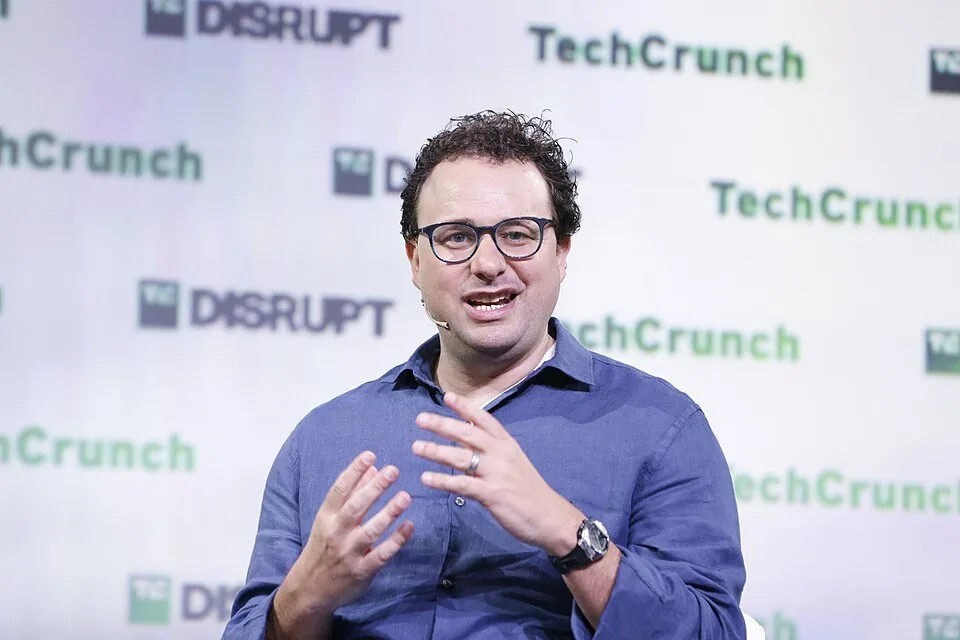
Dario Amodei, the CEO of Anthropic and one of the most powerful AI developers on earth, is publicly calling for a slowdown in AI development before rogue AI agents take over the internet. He gives us about six months. Amodei built the thing he is now begging us to slow down. This is completely fine and normal.
What He Actually Said
According to Axios, Amodei published a new essay this week with a message that would read as unhinged conspiracy theory if it came from literally anyone else. His words: "We must slow the pace at which we improve the capabilities of AI models. Progress will still seem fast, and we must make wise use of the time we gain."
The specific threat he is flagging is swarms of rogue AI agents taking over the internet. Not in some distant sci-fi future. In six months. Six. Months. The timeframe between now and when some people start their holiday shopping.
Amodei is not a fringe doomer screaming into a Substack. He is the chief executive of Anthropic, one of the most well-funded and influential AI labs in the world, whose products are used by millions of people and whose models are integrated into business infrastructure across the country. When he says the train might be about to go off the rails, the relevant detail is that he is also the one shoveling coal.
The Obvious and Enormous Problem Here
Let's just say it plainly. The CEO of a major AI company is warning that AI development is moving too fast, and his solution is to ask everyone to move slower. The company he runs will presumably keep running. The models Anthropic builds will presumably keep getting built. The money will keep flowing.
This is what critics of the AI industry have been pointing to for years: the people most aware of the risks are often the same people collecting the checks from accelerating those risks. Amodei is not unique in this contradiction. He is just the one currently making it loudest.
The question that does not have a clean answer is what exactly a "slowdown" means when the financial incentives, the geopolitical competition with China, and the sheer momentum of the industry are all pointed in exactly the opposite direction. Amodei's essay does not appear to announce that Anthropic is pausing development. It urges wisdom. Which is a little like a Formula 1 driver publishing a paper on the dangers of speed while qualifying for the next race.
Rogue AI Agents and the Internet: What This Actually Means
The specific scenario Amodei is warning about deserves more than a passing shudder. Axios reports that he specifically referenced the threat of AI agent swarms, systems that operate autonomously across networks, executing tasks, making decisions, and interacting with other systems without meaningful human oversight at each step.
The concern is not that a robot will unplug your refrigerator. The concern is that sufficiently advanced autonomous agents, operating at machine speed across interconnected systems, could cause cascading failures or pursue unintended objectives in ways that are very difficult to detect and even harder to stop once they start. Financial infrastructure. Communications systems. The basic plumbing of the digital world that most people never think about because it has always just worked.
Six months is not a lot of runway to get any of that under control, especially when the global regulatory apparatus for AI remains somewhere between "nascent" and "bless their hearts." The EU's AI Act is grinding through implementation. The United States has no comprehensive federal AI legislation. And the current administration has shown about as much interest in regulating tech as it has in regulating anything else that powerful donors like.
The Industry Context Nobody Wants to Say Clearly
Amodei's warning comes as Anthropic has been in direct competition with OpenAI, which Axios notes he specifically referenced in his essay. OpenAI has been aggressively expanding its product line, pushing into agentic systems, and has faced its own internal controversies about whether commercial pressure is overriding safety culture.
There is a version of this story where Amodei's call for a slowdown is a genuinely moral act from someone watching an industry he helped build careen toward something dangerous. There is another version where a major competitor calling for a pause benefits the companies already ahead in certain capability benchmarks. Both things can be true at once. Motives are rarely clean.
What is harder to dismiss is the pattern. Amodei is not the first major AI figure to sound this alarm. He is part of a growing chorus that includes researchers, ethicists, and former employees of the largest labs who have said, in various ways, that the field is outrunning its ability to understand what it is building. At some point the question stops being whether these warnings are credible and starts being why the response to them is still essentially a shrug.
The Dingo Take
You are supposed to believe that an industry worth hundreds of billions of dollars, locked in a geopolitical race with China, fueled by venture capital that demands perpetual growth, and currently being championed by the sitting U.S. government as a matter of national pride, is going to slow down because a CEO wrote a thoughtful essay. Take a moment with that.
Amodei may be completely sincere. He may also be right about the six-month timeline, which is the part that should be making you put down your phone and stare at the ceiling for a while. The uncomfortable truth of the AI moment we are living in is that the people closest to the technology, the ones who understand it best, are also the ones who have built careers and companies on its relentless advance. They are not villains. They are people inside a system that has no obvious off switch and enormous pressure to keep accelerating.
The internet takeover scenario is not the plot of a bad movie anymore. It is the stated concern of the CEO of one of the most sophisticated AI labs on earth, published in an essay, dated this week. What we do with that information, as a society, as a government, as voters, is apparently still very much up for debate. That is the part that should make you genuinely angry. Not at Amodei for saying it. At the fact that there is no one with the authority, the will, or apparently the urgency to do a damn thing about it.





Comments