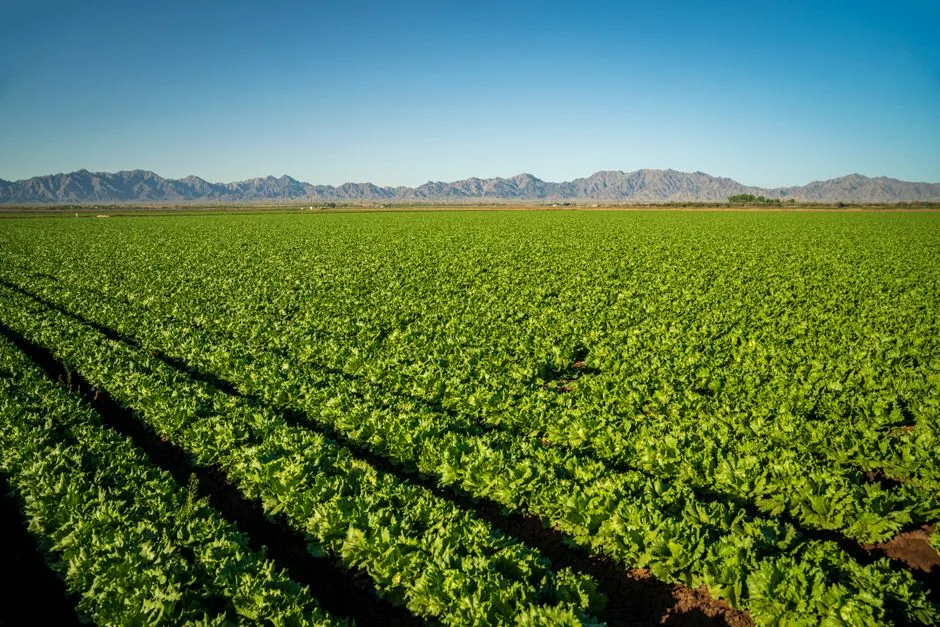
The FDA announced a false positive in its own lab testing for a parasite outbreak that has already sickened at least 1,644 people — and then, in the same breath, said it still thinks the lettuce is probably the culprit. So to recap: the agency got the science wrong, announced that publicly, and then asked you to keep trusting them on the science.
What We Know About the Outbreak
According to Axios, at least 1,644 people have fallen ill from Cyclospora, a diarrhea-causing intestinal parasite that you absolutely did not want to learn about this way. Health officials believe the true number of cases is likely much higher, because that is always how these things go — the visible tip of a very unpleasant iceberg.
Taylor Farms has voluntarily recalled shredded iceberg lettuce sourced from central Mexico. That much is still on the table, so to speak. The lettuce came out of Mexico, it went into products sold across the country, and more than 1,600 people are sick. The chain of events is not exactly mysterious.
The Part Where the FDA Contradicts Itself
Here is where things get genuinely strange. The FDA pulled back earlier test results that had directly linked Taylor Farms produce to the Cyclospora parasite. Those results, it turns out, were a false positive. The lab test that was supposed to confirm the source of a national food safety outbreak was wrong.
And yet, as Axios reports, the FDA still thinks Taylor Farms lettuce is the most likely culprit behind the outbreak. So the agency is essentially saying: our specific scientific evidence was incorrect, but our general conclusion is probably still correct. That is the kind of reasoning that would get you laughed out of a first-year logic course, even if it might ultimately prove to be accurate.
Why This Is a Real Problem for Real People
Set aside the bureaucratic embarrassment for a second, because there is a genuinely serious issue buried underneath it. Axios points out that the false positive risks confusing consumers about which recalled products to avoid. That is a massive understatement.
When a federal health agency announces it has scientific proof linking a food product to an outbreak, then retracts that proof, it hands ammunition to everyone who wants to dismiss food safety warnings as overreach. People who were already on the fence about whether to throw out their lettuce now have a reason to keep it. And people who were never going to throw it out now have a news story to forward as justification.
This is how public health communications collapse. Not in dramatic fashion, but through small, procedural failures that erode the credibility of the institutions trying to protect people from eating parasites.
The Deeper Problem with Tracking Foodborne Illness
Axios flags something important here: tracking the source of a Cyclospora outbreak is genuinely hard. This is not an excuse for a botched lab result, but it is context worth having. Cyclospora is tricky. It can survive on produce, it does not always show up cleanly in testing, and the supply chains for something like shredded iceberg lettuce are sprawling and complicated.
That said, "this is hard" and "we announced wrong results" are two separate problems, and the FDA is currently dealing with both at once. The agency faces steep challenges in identifying outbreak sources even in the best circumstances. A false positive does not just set the investigation back — it muddies the water for everyone trying to figure out if they should be worried about what is in their refrigerator right now.
What You Should Actually Do
Taylor Farms' voluntary recall of shredded iceberg lettuce from central Mexico is still active. The recall has not changed. The FDA's position that this lettuce is probably the source of the outbreak has not changed. What changed is the specific lab result they were going to use to prove it.
If you have Taylor Farms shredded iceberg lettuce at home, throw it out. That advice has not been walked back. The false positive is a problem for the investigation and for the FDA's credibility — it is not a reason to start eating the recalled product. The agency got the test wrong, not the direction of the underlying concern.
The Dingo Take
There is something almost poetic about the FDA managing to both raise the alarm on a parasitic outbreak affecting over 1,600 Americans and simultaneously undermine its own alarm-raising — all in a single news cycle. The agency told the public it had proof. Then it said it did not have that proof. Then it said it still believes what the proof was supposed to prove. This is not how institutional credibility works. You do not get to retract the evidence and keep the conclusion without doing some very careful explaining.
This is also happening at a moment when the FDA, like every other federal health agency, is operating under intensifying political pressure and resource constraints. When you are stretched thin, mistakes happen. When mistakes happen in food safety, people who were already going to ignore recalls now have a reason, and the people who needed a clear signal get noise instead. The 1,644 confirmed cases are not a statistic — they are people who got a foodborne parasite and are now watching the agency tasked with preventing that shrug and say 'trust us anyway.'
Taylor Farms lettuce is still recalled. The outbreak is still active. The FDA still thinks this is the source. None of that has changed. But the agency now has to rebuild trust in its own process while simultaneously trying to close out an investigation it fumbled publicly. That is not an enviable position. It is, however, a completely avoidable one.




Comments