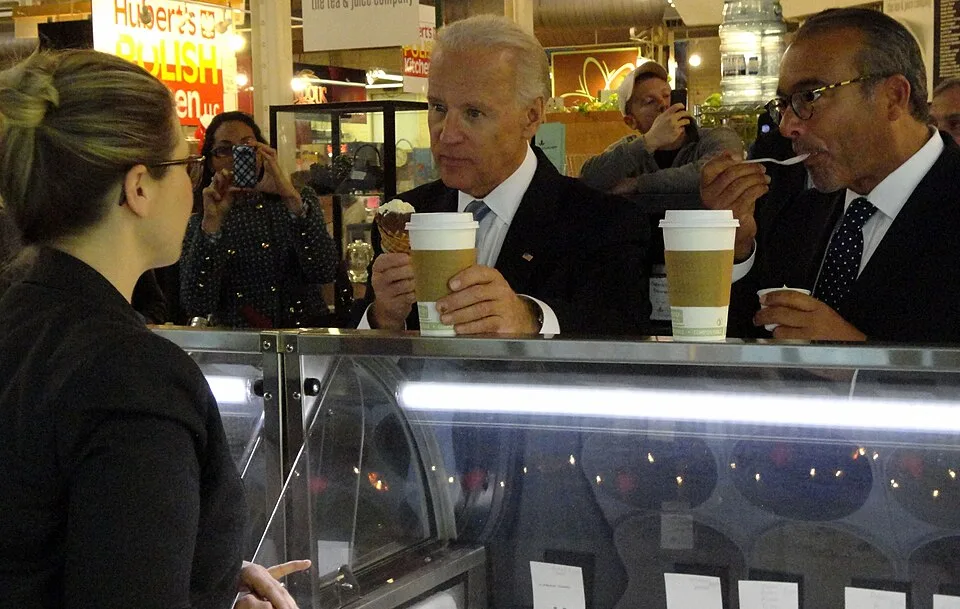
A federal appeals court ruled Monday night that Joe Biden's private conversations with his biographer belong to the Heritage Foundation now, because nothing says 'justice' like handing a conservative think tank a retired private citizen's decade-old tape recordings. The 2-1 decision from the D.C. Circuit rejected Biden's emergency bid to block the release, though the court put a hold on the ruling until August 3 to give his legal team time to appeal further. The clock is ticking.
What Are These Tapes and Why Does Anyone Want Them
Back in 2016 and 2017, Biden sat down with author Mark Zwonitzer for a memoir called 'Promise Me, Dad.' Normal stuff. A former vice president talks to his biographer, some recordings get made, a book gets written. Nobody outside of publishing circles cares.
Then Robert Hur happened. Hur, the special counsel appointed to investigate Biden's handling of classified documents after his vice presidency, got his hands on those recordings and put them to very specific use. His 2024 report, as CBS News notes, cited the tapes as evidence of Biden's 'diminished faculties and faulty memory,' describing the conversations as 'painfully slow, with Mr. Biden struggling to remember events and straining at times to read and relay his own notebook entries.' That framing lit a fuse.
The Heritage Foundation filed a Freedom of Information Act request shortly after Hur's report dropped, demanding the underlying material the special counsel used. They wanted the transcripts. They wanted the audio. The Justice Department, under Biden, said no. Then Trump won, and suddenly the DOJ had a completely different answer.
The Trump DOJ Does What the Trump DOJ Does
Here is the part where the machinery of the federal government gets used as a political instrument, which at this point should surprise exactly nobody. Once Trump's people took over the Justice Department, the department reversed course and announced it intended to hand the recordings over to both Congress and the Heritage Foundation. Gone was any pretense that FOIA exemptions might apply.
Biden's lawyers pushed back hard. They argued in court filings that these were private conversations never meant for public consumption, comparing them to diary entries or private text messages. 'The Department has them only because it collected the recordings as part of a criminal investigation that resulted in no charges,' his legal team wrote, which is a completely fair point that the court majority did not find persuasive enough.
The Justice Department countered that the public has a legitimate interest in reviewing the material Hur relied on to reach his conclusions. 'Releasing the materials will allow the public to assess the persuasiveness of Hur's determinations,' DOJ lawyers told the D.C. Circuit. That argument sounds reasonable until you remember that Hur made his determinations, chose not to charge Biden with anything, and the investigation is over. What exactly is the public assessing at this point?
The Court Ruling and What the Dissent Tells You
The D.C. Circuit panel split 2-1, which means one of the three judges looked at this situation and said, no, actually, something is wrong here. The majority concluded that Biden 'has not shown a likelihood that the requested materials must be withheld from disclosure,' which is a legal way of saying his case wasn't strong enough at this stage.
The stay until August 3 gives Biden's team a narrow window to push the case further, either back to the full D.C. Circuit or up to the Supreme Court. His lawyers had already won a temporary administrative injunction on July 10 that held things up for ten days, so they know how to slow this down. Whether they can stop it entirely is a different question.
Biden's legal team argued there is no urgent need here. 'This FOIA action has been pending for nearly two and a half years, and there is no meaningful public interest in the disclosure of decade-old conversations of a former President who is now a private citizen, and who neither holds nor is seeking public office,' they said in filings. That argument has a certain logic to it. The Heritage Foundation filed in 2024. They survived without these tapes for two and a half years. What exactly changed?
The Heritage Foundation's Role in All of This
Let's be clear about what the Heritage Foundation is. It is not a journalism organization. It is not a nonpartisan watchdog. It is the organization that produced Project 2025, the governing blueprint for the Trump administration's second term. Handing them private recordings of a political opponent, obtained during a criminal investigation that produced zero charges, is not a transparency exercise. It is opposition research with federal assistance.
The recordings, if released, will almost certainly be used to generate content arguing Biden was cognitively impaired during and after his vice presidency. That argument may or may not be accurate. But the venue for that debate is not a FOIA lawsuit engineered by a think tank with a direct pipeline to the White House. Biden's memoir, 'Promise Me, America,' is expected out later this year. If people want to assess his mental state and his version of events, they will have the opportunity.
The Dingo Take
Let's call this what it is. A former president's private conversations, recorded for a book and seized during a criminal investigation that went nowhere, are now being handed to a political organization that exists to support the current administration's agenda. The Justice Department that once withheld this material is now fighting in court to release it, not because the law changed but because the people running the Justice Department changed. If you cannot see the problem with that, you are not trying.
Biden's lawyers are not wrong that these recordings occupy a weird legal space. They were private. They were collected incidentally during an investigation. No crime was found. The investigation ended. Under any normal reading of why FOIA exemptions exist, there is a reasonable argument that releasing them serves no legitimate government purpose beyond embarrassing a private citizen for partisan points. The court majority disagreed, at least at this preliminary stage, but a 2-1 decision is not a slam dunk.
The August 3 deadline is the next moment to watch. Biden's team will almost certainly try for a further stay, and depending on which judges hear it, they might get one. But the broader picture here is grim. The federal government's investigative machinery collected something sensitive about a political figure, that figure was cleared of wrongdoing, and now the machinery is being used to feed that sensitive material to his political enemies. If that process feels broken to you, that is because it is.

Comments