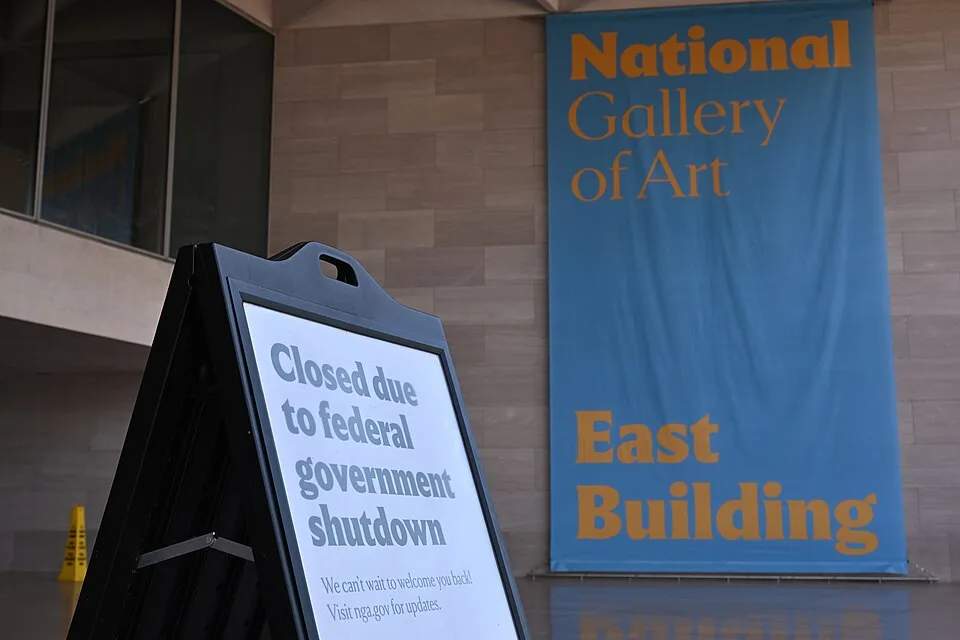
The House of Representatives voted Tuesday to extend government funding until December 4, which is a very technical way of saying Republicans looked at the ticking shutdown clock and decided it was somebody else's problem until after the election. The bill passed 220-205, almost entirely along party lines, and now heads to a Senate that is already working on its own version because apparently nothing can just be simple.
What They Actually Did Here
A continuing resolution, for the uninitiated, is Congress's version of rolling your credit card balance to a new card. You're not fixing the problem. You're buying time and hoping nobody notices the underlying disaster. This one, as The Guardian reports, keeps the government funded at current spending levels until December 4, punting the real budget fight for fiscal year 2027 well past the November midterms.
The vote broke down exactly how you'd expect: 204 House Democrats voted against it, six voted for it, and all but one Republican voted yes. Speaker Mike Johnson is calling it a win. And technically, in the narrowest possible sense, it is. The House didn't blow up. The bill passed. That is, genuinely, the bar we are clearing right now.
The government's current spending authority expires September 30. While the House has passed three of its 12 required appropriations bills for fiscal year 2027, the Senate has passed zero, according to The Guardian. Not one. Zero have even cleared a committee. The Senate is not exactly racing to meet them halfway.
The Record That Nobody Wanted to Break
Here's the context that makes this moment extra grim. The current fiscal year produced the longest government shutdown in American history. As Fox News Digital reports, it lasted from October 1, 2025 until November 12, 2025 — 43 days of Senate Democrats blocking Republican-led funding priorities over cuts to federal healthcare programs. Then Democrats forced two more shorter shutdowns this year over immigration enforcement reforms following killings in Minneapolis, per The Guardian.
Republicans are now arguing, with some justification, that they cannot trust Democrats not to blow up government funding right before a major election. Johnson told reporters Tuesday that Democrats have "already demonstrated they don't care what kind of pain they inflict on the American people" and that they'd "love nothing more than a government shutdown as tens of millions of Americans head to the polls in November."
That is a cynical read. It is also not an entirely wrong one. Democrats did, in fact, use shutdown leverage repeatedly this Congress. The question of who caused what for which reasons is its own rabbit hole, but the general pattern is real.
The Democrat Case Against It
House Democrats didn't oppose this because they secretly want a shutdown. Their objections were more specific. Rep. Rosa DeLauro, the top Democrat on the House Appropriations Committee, called the measure "hastily" conceived and flagged that it funds Customs and Border Patrol without what she described as "substantial reforms" to an agency central to Trump's immigration crackdown, according to The Guardian.
House Democratic Caucus Chair Pete Aguilar told reporters he voted against it partly because of what he called "drafting errors" that give Customs and Border Patrol flexibility to move money around in ways the administration had claimed were already funded through the reconciliation bill. That is a technical argument, but it is not a made-up one. Slipping funding flexibility into a must-pass stopgap bill is exactly the kind of move that deserves scrutiny.
DeLauro's broader point, though, is worth sitting with: "We are putting the cart before the horse by considering this legislation without understanding the full scope of what is needed to continue operations through December 4." Congress is not funding the government thoughtfully. It is panicking and extending the panic deadline.
The Senate Has Entered the Chat With Its Own Bill
Even with the House win in hand, this is not resolved. Fox News Digital reports that Senate appropriators are crafting their own version of the continuing resolution because the House bill is missing extensions to certain programs that will run out of funding before September 30. Those missing pieces, called anomalies, were sent to the Senate from the White House on Monday.
Sen. John Hoeven of North Dakota, a member of the Senate Appropriations Committee, told Fox News Digital he appreciated the House bill but acknowledged there are "a few issues" that need to be fixed to get bipartisan Senate support. And Senate Majority Leader John Thune is pushing to get something to the floor before the August recess, which is a tight window. The House is leaving Washington by the end of this week.
So the situation is: the House passed a bill, the Senate thinks the bill needs fixes, both chambers are about to go on vacation, and the deadline is September 30. This is fine. Everything is fine.
What the November Map Has to Do With Any of This
A lot, actually. Democrats are competing to retake the House in November, and they are within striking distance of the Senate, though they would need to flip at least three seats in states that backed Trump in 2024, per The Guardian. A government shutdown landing in October, right before the election, would be a major story. It would also be a major political liability for whoever voters decide to blame for it.
That is the entire logic of this move. Tom Cole, the House Appropriations chair who pushed the resolution through, said the Republican conference "refuses to let the obstruction and inaction of Senate Democrats trigger another manufactured shutdown." Translation: they want to fight this battle in December, after the votes are counted, not in October, when voters are watching.
The phrase "manufactured shutdown" is doing a lot of work in that sentence. Every shutdown involves choices made by actual human beings in actual positions of power. They are all manufactured, in the sense that they are all the result of political decisions. Republicans are not wrong that Democrats have used shutdown leverage. Democrats are not wrong that Republicans have structured spending fights to force exactly those choices.
The Dingo Take
Let's be honest about what is actually happening here. Congress cannot pass a budget. It has not passed a real, complete, on-time budget in decades. What it does instead is lurch from deadline to deadline, passing short-term patches, pointing fingers at whoever is standing closest when the music stops, and then going on vacation. House Republicans passed this bill not because they solved anything but because they would like to not be holding the bag in October. That is the entire policy.
The Tom Emmer quote in the Fox News reporting deserves its own moment of attention. The House Majority Whip, the third-ranking Republican in the chamber, responded to a government funding vote by calling Democrats "marxists and communists" and invoking "Commie Mamdani" in reference to New York City's mayor. That is the intellectual environment in which federal budget negotiations are currently taking place. Sleep well.
The Senate still has to pass something. Senate Republicans and Democrats are, according to Fox News Digital, actually working together right now on a bipartisan version, which is either encouraging or a sign that even this basic task requires the House to produce something unusable before the adults can step in. Either way, if something does not land before September 30, this whole fight starts over in the worst possible political moment. Enjoy your August, Congress. You've earned absolutely none of it.





Comments