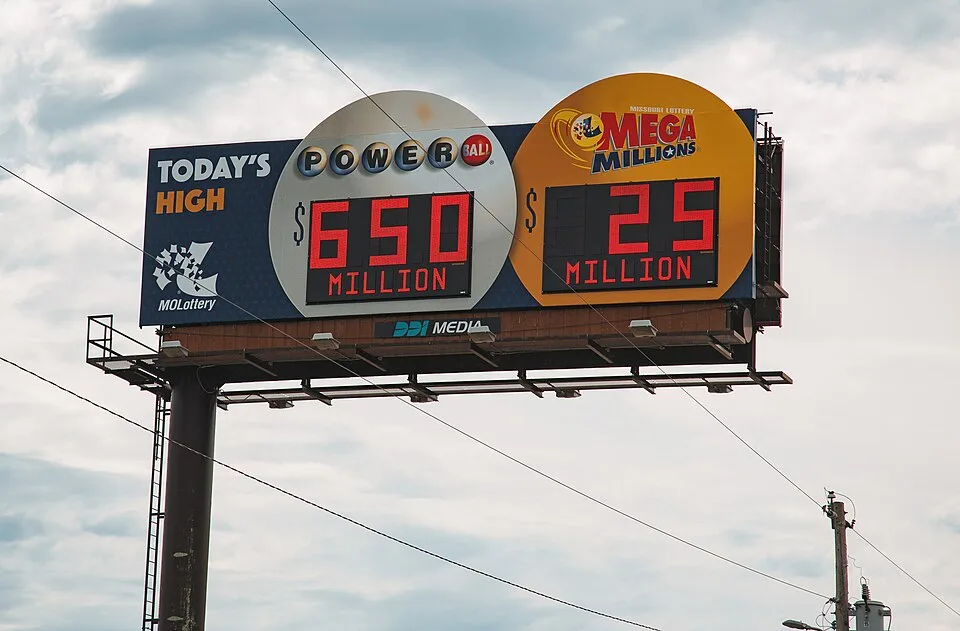
America's most popular mechanism for transferring working-class money into a single stranger's bank account has gone international. Starting Tuesday, British citizens can participate in Powerball for the very first time, which means they can now experience the unique joy of handing over pocket change for a 1-in-292.2-million shot at becoming obscenely wealthy. Solidarity, cousins.
How Did This Happen and Why
Back in April, the Multi-State Lottery Association struck a deal with Allwyn UK, the company that already operates the National Lottery and EuroMillions across the pond, to bring Powerball tickets to British shores. As NPR reports, Wednesday night's drawing will be the first one that UK players can actually participate in, making this the first time any lottery outside the United States has contributed to the Powerball jackpot pool.
The pitch from lottery officials is straightforward: more players means the jackpot grows faster, which draws more players, which grows the jackpot faster. It is, in the most literal possible sense, a pyramid scheme with better branding and a government stamp of approval. To be fair, that's always been true. They're just scaling it up now.
For context on what UK players are upgrading from: EuroMillions, also run by Allwyn across nine European countries, topped out at 250 million euros in 2025. The largest Powerball payout in history was just over $2 billion, from a ticket bought in California in 2022. You can see why someone might make the switch.
The Fine Print They Put in Small Font for a Reason
Here is where it gets interesting, and by interesting I mean complicated in the way that benefits the lottery and not you. UK players buying Powerball tickets will only be competing for the jackpot itself, not the lower-tier prizes that American players can win. British players will have a separate lower-tier prize structure, which means if you match four numbers and the Powerball, your experience is going to look different depending on which side of the Atlantic you're standing on.
The advertised jackpot amounts will also differ between the two countries, for two reasons. Currency conversion is the obvious one. The less obvious one is that the United States advertises lottery prizes pretax, while the UK does not. So Americans see a big shiny number, then get a much smaller number when they actually win. The British, apparently, just see the smaller number from the jump. There's something almost refreshing about that.
There's one more kicker buried in the fine print. In the US, jackpot winners can choose between an annuity paid over 30 years or a lump-sum cash option, and nearly every single winner takes the cash. UK winners do not get that choice. They get the annuity, spread over 30 years. Win $2 billion in Britain and you're collecting installments until 2056. Hope you're patient.
The Odds, In Case You've Forgotten How Bad They Are
The odds of winning a Powerball jackpot are 1 in 292.2 million. That number applies equally to players in Louisville, Kentucky and players in Leeds. The lottery has been quite clear about this. There is no geographic advantage. There is no strategy. There is no skill. You pick five numbers from 1 to 69 and one red Powerball number from 1 to 26, and then you wait, and then almost certainly nothing happens.
For reference, you are more likely to be struck by lightning while simultaneously being attacked by a shark than you are to win the Powerball jackpot. That statistic might not be precisely accurate. The general vibe of it absolutely is.
Tickets cost $2 in the US, with the UK equivalent going on sale now through Allwyn. Drawings happen Mondays, Wednesdays and Saturdays. Powerball is currently played in 45 US states, plus Washington DC, Puerto Rico and the US Virgin Islands. Now add the United Kingdom to that list. The empire strikes back, one losing ticket at a time.
What This Actually Means for Jackpots
US lottery officials are genuinely excited about the expanded player base, and for once their excitement is grounded in something real. More players buying tickets means the jackpot accumulates faster between winners, which means the headline number gets larger sooner, which means more people buy tickets because the headline number is larger. This is not a secret. Lottery officials are describing this cycle openly and with enthusiasm.
The practical effect is that Americans who already play Powerball might see jackpots climb to record territory more frequently, now that there's an entire additional country feeding money into the pool. Whether that makes the lottery a better deal for any individual player is a question with a very simple answer, which is no, it does not, the odds are 1 in 292.2 million and no amount of jackpot size changes that math.
But people are going to play anyway, on both continents, because that's what people do. The dream is cheap at two dollars. Or whatever two dollars converts to in pounds this week.
The Dingo Take
Look, nobody here is going to pretend the lottery is a good investment. It is a tax on hope, as the old line goes, and it disproportionately extracts money from people who can least afford to lose it. Those are real criticisms worth sitting with, and they apply whether the ticket is sold in Memphis or Manchester.
But there is something almost poetic about this particular moment. American institutions have spent the better part of a decade exporting dysfunction to the rest of the world, whether intentionally or just by cultural osmosis. And here comes the UK, voluntarily importing one of America's most reliable disappointment machines, paying good money for the privilege of a 1-in-292-million shot at something that probably won't happen. In that sense, maybe Powerball is the most honest American export in years. No illusions about what it is. Just pure, naked, consensual long-shot gambling with a jackpot that grows until someone somewhere gets very, very lucky.
The British survived the Blitz. They'll survive losing $2 on a Wednesday. Welcome to the pool. The water is fine, and the odds are terrible.




Comments