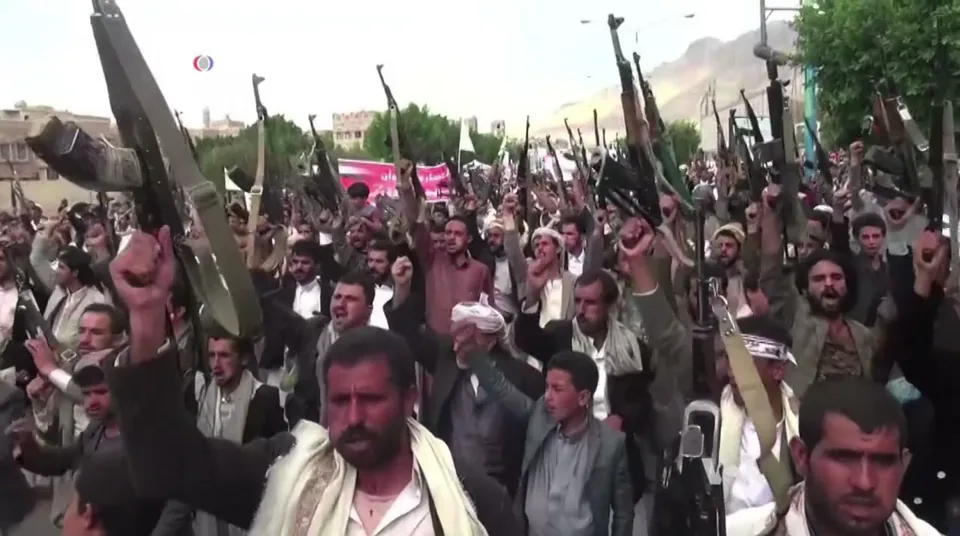
The Houthis now control every island in the Bab el-Mandeb Strait, the chokepoint that Saudi Arabia has been desperately using to get its oil to the world ever since the Strait of Hormuz went sideways. They also just took the port of Mokha. Oh, and Saudi Arabia shut down its 750-mile backup pipeline after drone strikes hit it Thursday. So that's where we are.
What the Houthis Just Grabbed, and Why It Matters
To understand why this week was a catastrophe for global oil markets, you need a quick geography lesson. The Bab el-Mandeb Strait is a narrow channel between Yemen and Djibouti. It connects the Red Sea to the Gulf of Aden, which connects to the Indian Ocean, which is how Saudi crude gets to Europe and Asia without going around the entire continent of Africa. It is not optional plumbing.
According to CBS News, Yemen's Houthis have now seized the port of Mokha, the strategic island of Perim, and the last two islands in the strait that weren't already under their control. A military official in the Yemeni government confirmed the island seizures. The Iran-backed rebels have, in the span of a few days, turned a theoretical threat to Red Sea shipping into a very real one.
This isn't some distant territorial dispute between factions most Americans couldn't name. The Houthis now have firing positions on both sides of one of the most important shipping lanes on the planet. Tankers trying to move Saudi oil through the Bab el-Mandeb are going to have to run that gauntlet. Or not. Which is sort of the whole problem.
Saudi Arabia's Backup Plan Just Got Blown Up. Literally.
Here's the part where it gets worse. Since the war with Iran disrupted the Strait of Hormuz earlier this year, Saudi Arabia has been rerouting oil through its East-West pipeline, a 750-mile line built in the 1980s during the Iran-Iraq war for exactly this kind of emergency. The International Energy Agency says flow through the pipeline more than doubled after the war started. It was carrying 5 to 7 million barrels per day.
On Thursday, multiple drones launched from Iraq hit the pipeline. CBS News reports that Saudi authorities confirmed the attack caused injuries and damage in the Riyadh and Medina regions, and the kingdom shut the pipeline down as a precaution. Saudi Arabia's foreign ministry blamed drones from Iraq. Saudi authorities didn't formally name who sent them, but multiple reports point to the Houthis, who are backed by Iran, which is also fighting the United States right now. None of this is subtle.
So to recap: the Strait of Hormuz is disrupted by the Iran war. The Bab el-Mandeb Strait is now controlled by Iranian proxies. The pipeline built to avoid both of those problems just got droned. Saudi Arabia is running out of ways to export the oil the global economy needs to function.
MBS Is On the Phone With Trump. Again.
CBS News reports that Saudi Crown Prince Mohammed bin Salman has personally pressed President Trump, in multiple recent calls, to take military action against the Houthis. Two sources familiar with those conversations confirmed it. The crown prince is watching his oil infrastructure get systematically dismantled and he wants the United States to do something about it.
Trump, for his part, is already running a war with Iran that started in late February. Adding a major ground or air campaign against Houthi positions in Yemen would be... a lot. The conversations are apparently ongoing, which suggests no decision has been made, which suggests the White House is staring at a problem with no clean answer and hoping it resolves itself. It will not resolve itself.
Meanwhile, Iranian Foreign Minister Abbas Araghchi has been publicly taunting U.S. Treasury Secretary Scott Bessent on social media. Bessent announced sanctions that the U.S. compared to "economic D-Day." Tehran's response has been, essentially, to laugh at him. The diplomatic situation is about as stable as the oil supply.
Markets Bounced Friday. Don't Get Comfortable.
U.S. stocks did recover some ground on Friday, and oil prices pulled back slightly after Brent crude touched nearly $110 a barrel overnight, its highest since May. The Associated Press reports that Brent fell back under $105, which Wall Street treated as good news with the kind of desperate relief of someone grateful the building fire only reached the third floor.
Inflation is still running at 3.4% year-over-year, according to a Friday report cited by the AP. Gasoline, food, and the basic cost of living all remain elevated, and that's before anyone has fully priced in a scenario where Saudi Arabia's export capacity takes a sustained hit. Friday's market bounce was a relief valve, not a resolution.
The longer the Bab el-Mandeb stays under Houthi control and the longer the East-West pipeline stays offline, the more pressure builds on prices that are already straining household budgets across the country. The market calmed down for one afternoon. The underlying situation did not.
Where the Rest of the Region Stands Right Now
The Israel-Lebanon front remains active. CBS News reports that the next round of peace talks between Israel and Lebanon, which had been scheduled for Rome in early September, have been pushed to October. The Lebanese and Israeli ambassadors will meet at the State Department next week instead, which is a significant step down from a formal negotiating round in a neutral European capital.
The broader framework involves disarming Hezbollah, withdrawing Israeli forces from southern Lebanon, and deploying the Lebanese army to the area. Hezbollah entered the war after the U.S. and Israel launched strikes against Iran in late February, firing missiles into Israel. There was a relative lull after a memorandum of understanding was reached in June, but CBS News reports that strikes have increased in intensity in recent days. The lull is over.
The Dingo Take
You are supposed to believe this is manageable. That the markets bouncing on a Friday afternoon means the situation is stabilizing. That delaying peace talks by a month is diplomacy rather than failure. That a Crown Prince cold-calling the President of the United States multiple times in a week because his entire export infrastructure is being methodically destroyed is just normal wartime communication.
It is not normal. The Houthis just completed their control over a strait that moves a meaningful chunk of the world's oil. Saudi Arabia's emergency bypass pipeline is offline. The Strait of Hormuz was already the reason Saudi Arabia needed that pipeline. The United States is fighting Iran directly. Hezbollah is back in the fight. Peace talks got kicked to next month. And the Iranian foreign minister is on the internet dunking on Scott Bessent. This is not a situation that has a pressure release valve anyone has found yet.
Somewhere in the 1980s, some Saudi engineer built that East-West pipeline specifically so that Iran could never hold Saudi oil exports hostage. It took Iran-backed forces less than a week to make that entire plan irrelevant. Whoever briefed the administration that maximum economic pressure on Iran would produce a quick resolution owes everyone an update. The pressure is flowing the wrong direction.


Comments