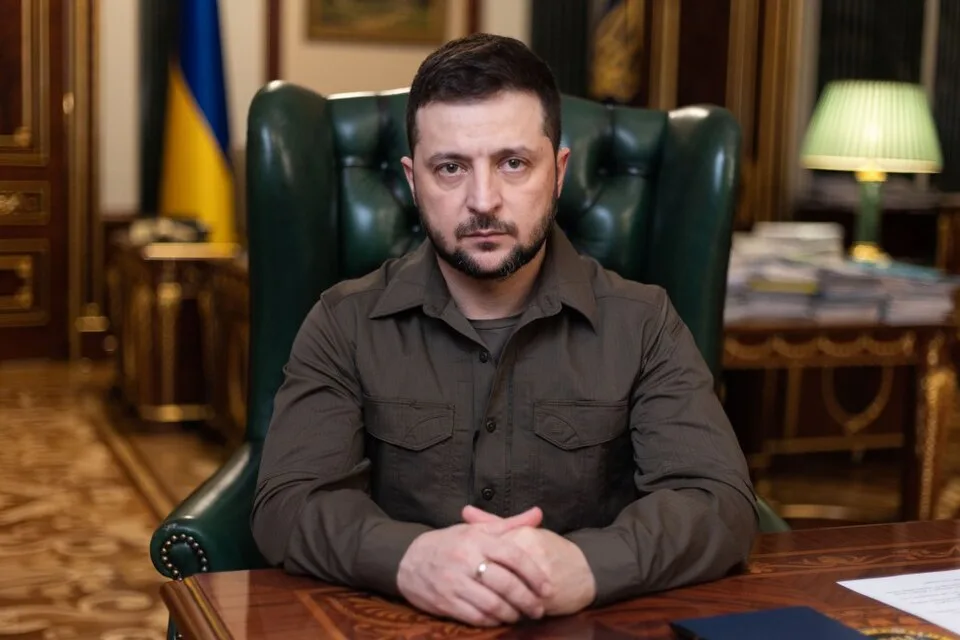
Ukraine is fighting for its survival against a nuclear-armed neighbor, and its president just fired his top general because the streets of Kyiv demanded it. Volodymyr Zelenskyy sacked Commander-in-Chief Oleksandr Syrskyi on Tuesday, replacing him with Gen. Mykhailo Drapatyi, after days of mass protests that NBC News is calling the fiercest leadership crisis of his presidency. The guy they were protesting against had a nickname: 'The Butcher.'
How We Got Here: One Firing Too Many
To understand why Ukrainians took to the streets during an active war, you have to start about a week earlier. Zelenskyy fired Defense Minister Mykhailo Fedorov, one of his closest allies, without publicly explaining why. Fedorov is 35 years old, a tech-world modernizer who bet Ukraine's battlefield future on cheap, lethal drone warfare. That bet has been paying off. Ukrainians noticed.
According to NBC News, Zelenskyy told aides he was essentially left with a choice: keep Fedorov or keep Syrskyi. The two men had stopped talking to each other entirely. Fedorov confirmed the breakdown publicly, saying Syrskyi refused to address problems directly and actively resisted reform of Ukraine's defense structure. When a wartime defense minister and a wartime commander-in-chief stop communicating, something has to give. Zelenskyy chose Syrskyi. Then Ukrainians chose the streets.
Who Is 'The Butcher' and Why Did Protesters Want Him Gone
Oleksandr Syrskyi, 60, is a product of Soviet military training. He is an infantry-and-artillery guy in a drone-warfare war. Critics credit him with the defense of Kyiv in the early days of Russia's invasion, and Zelenskyy praised him for operations in Kharkiv and Kursk when announcing his dismissal Tuesday. That part of the record is real.
But the nickname tells you the rest. NBC News reports that Syrskyi earned the label 'The Butcher' for a brutal battlefield reputation, with critics pointing specifically to the late withdrawal from Bakhmut, where delayed orders cost Ukrainian lives, and the retreat from Russia's Kursk region that reportedly left soldiers stranded and walking back under enemy fire for days. For the protesters in Kyiv, Syrskyi wasn't just a bad general. He was a symbol of the Soviet-era military thinking Ukraine has been trying to bury since 1991.
A senior air force commander quit in protest over Fedorov's firing before Zelenskyy reversed course on Syrskyi. That detail matters. When your officers start resigning in solidarity with protesters during a war, the leadership crisis has gotten serious.
Why Fedorov and Drones Are the Whole Story
Here is what this fight is actually about. Ukraine is a smaller, poorer country trying to hold off and slowly grind down a much larger military power. The way it has found to do that is cheap drone technology. Low-cost drones hitting expensive Russian assets, deep inside Russian territory, with growing accuracy and frequency. NBC News reports that Ukraine has demonstrated a real and expanding ability to strike strategic sites deep inside Russia. That capability came from Fedorov's ministry.
Syrskyi's more traditional approach, focused on holding ground with infantry and artillery, represents a way of fighting that may have made sense in 1943. In 2026, when a drone that costs a few thousand dollars can destroy a tank worth millions, the calculus has shifted. Fedorov understood that. The protesters understood that Fedorov understood that. What they feared, as NBC News reports, was that removing him would wipe out the gains Ukraine had made by outsmarting its better-armed enemy.
"Why is this trajectory breaking now, and why are we veering off course? There is such a risk. And the Ukrainian people have taken to the streets for that," Fedorov said at a news conference Saturday. Hard to argue with the self-awareness on that one.
What Zelenskyy Did and What He Didn't Fix
Tuesday's announcement came via Telegram, as these things apparently do now. Zelenskyy named Mykhailo Drapatyi as the new commander-in-chief and issued the kind of unity statement that leaders issue when they are not sure the situation is actually unified. "Our shared wish is one, victory over the enemy and conditions at the front and in pressure on Russia that would force Russia toward peace," he wrote, per NPR.
Zelenskyy also separately met with Fedorov on Tuesday and offered him a government position overseeing Ukraine's technology sector. Whether Fedorov accepted was not clear as of Tuesday afternoon, according to both NPR and NBC News. That ambiguity is doing a lot of work. Firing Syrskyi satisfies half of what the protesters demanded. Reinstating Fedorov to a meaningful role satisfies the other half. Right now Zelenskyy has definitely done the first thing and maybe done the second thing, in a form Fedorov may or may not accept.
The Ground Reality That Makes All of This Worse
While this leadership drama was consuming Kyiv, the actual war kept going, badly. Russian troops continue to slowly advance in eastern Ukraine, NBC News reports, and a dwindling supply of missile interceptors has left Kyiv and other major Ukrainian cities increasingly exposed to Russian bombardment. The air defense situation alone should be dominating every conversation in that government.
This is the part that gets lost when leadership crises eat all the oxygen. Ukraine's ability to hold its cities and hold its front lines depends on a consistent, modernizing military strategy paired with adequate air defense. Right now they have a new commander-in-chief who hasn't been tested at this scale, a defense minister situation that is still unresolved, and a missile shield that is running thin. The timing is, to put it gently, not great.
The Dingo Take
Give Zelenskyy credit for one thing: he actually listened. Mass protests in a country fighting for its life are not a minor thing to ignore, and when a senior air force commander resigns in solidarity with the people in the streets, you have moved past ordinary political turbulence into something that can genuinely fracture a wartime government. Zelenskyy blinked, and in this specific case, blinking was probably the right call.
But the underlying problem did not get solved on Tuesday, it got shuffled. The real question was never just Syrskyi versus Fedorov. It was whether Ukraine's military establishment would embrace the drone-warfare revolution that has given a smaller country real leverage over a larger one, or whether Soviet-era instincts would pull the whole operation backward. Firing 'The Butcher' answers the personnel question. It does not answer the strategic one. Whoever Drapatyi turns out to be, he is walking into a command structure that just had a very public breakdown, in the middle of a war, with no guaranteed resolution.
Fedorov's response on Saturday was the most honest thing anyone said all week: "Change is inevitable. The dialogue is happening." Translation: we are not done fighting over this, and everyone knows it. The protesters may go home. The argument about how Ukraine fights this war is going to keep going, and the outcome of that argument matters enormously for whether Ukraine is still a country in five years.



Comments