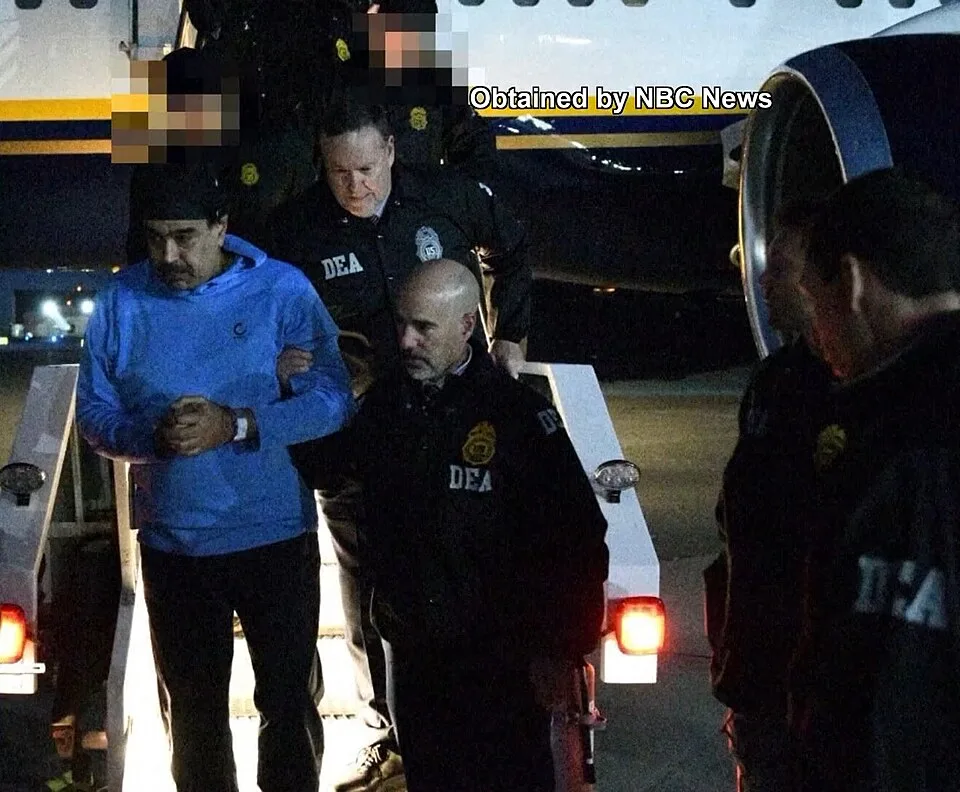
The sitting president of Venezuela is currently locked up in a Brooklyn jail, fighting federal drug trafficking charges that could put him away for life, after US forces raided his home in the middle of the night and flew him to New York. His wife is in the cell next to him, metaphorically speaking. And he hasn't even asked for bail.
A Midnight Raid That Broke Every Diplomatic Norm in the Book
Back in January, US forces showed up at Nicolás Maduro's home in Caracas sometime around the witching hour and removed him from his own country. Not through negotiations, not through an extradition treaty, not through any of the boring legal machinery that typically governs how one sovereign nation handles a grievance with the leader of another sovereign nation. They just took him.
The Trump administration calls it a 'surgical law enforcement operation.' Maduro calls it a kidnapping. He's also calling himself a prisoner of war, which, whatever you think of the man, is not a phrase you expect to hear from someone sitting in a Brooklyn detention facility awaiting a pretrial hearing.
His wife, Cilia Flores, 69, was swept up in the same operation and faces the same charges. They've both pleaded not guilty. Neither has asked to be released on bail, which either speaks to a principled refusal to legitimize the proceedings or a very pessimistic read of their chances with a bail motion.
The Actual Charges, Which Are Pretty Serious
This isn't some technical financial crimes situation. US prosecutors allege that Maduro ran a conspiracy to pump thousands of tons of cocaine into the United States by weaponizing Venezuelan law enforcement itself to protect and assist drug kingpins. That is the allegation: that the president of a country turned his country's cops into a cartel's private security detail.
The Guardian reports that the case against Maduro was first brought six years ago, meaning prosecutors have been building this for a while. The potential sentence is life in prison. That's the number on the table if a jury agrees with the government's version of events.
At his arraignment in January, Maduro addressed the court in Spanish: 'I am not guilty. I am a decent man, the constitutional president of my country.' That's a sentence that's going to sound different depending entirely on your opinion of Nicolás Maduro, Venezuelan politics, and the last decade of that country's collapse.
The Legal Fight Before the Real Fight Even Starts
Maduro's attorney, Barry Pollack, is making clear that the government isn't going to sail through this thing unchallenged. According to The Guardian, Pollack plans to contest the legality of what he's calling Maduro's 'military abduction,' and Wednesday's hearing is part of that ongoing effort to force the court to deal with those objections before anyone gets anywhere near a trial.
The lawyers say there are complex legal defenses that the court has to work through first. That's legalese for: we are going to make this very, very long and very, very complicated. Judge Alvin K. Hellerstein has not yet set a trial date, which given the extraordinary legal questions swirling around this case, is not surprising.
Think about the jurisdictional nightmare here for a second. Can a US court try a foreign head of state? Does the method of his capture taint the case against him? Does the fact that he was seized by US military forces rather than extradited through legal channels matter? These are not simple questions, and American courts have not exactly had a lot of practice answering them.
What This Actually Means on the World Stage
Let's be real about what the Trump administration did here. They reached into a foreign country and grabbed its head of government out of his house. Whatever you think of Maduro, and there is a very long list of reasons to think very poorly of Maduro, this is a thing that happened. Governments around the world noticed.
The administration framed it as a law enforcement action, but the word 'military' keeps appearing in the coverage for a reason. This was not the FBI knocking politely on a door. Other governments are watching this and doing math about what it means when the US decides that the norms of sovereignty are optional when they find them inconvenient.
The charges, again, may be entirely legitimate. The evidence may be damning. Maduro may have done exactly what prosecutors say he did. But the way this went down sets a precedent that is going to echo in ways this administration either hasn't thought through or doesn't care about.
The Dingo Take
Here's the thing about this story: it's genuinely possible to believe that Nicolás Maduro is a corrupt authoritarian who presided over the systematic destruction of Venezuela and also to be deeply uncomfortable with the United States military snatching a foreign head of state out of his house at midnight like some kind of international repo operation. Both things can be true simultaneously. The Trump administration is betting that enough people will focus only on the first part.
The 'surgical law enforcement operation' framing is doing a lot of heavy lifting. Law enforcement operations typically involve law enforcement, warrants, and some baseline engagement with the legal systems of the countries involved. What happened in Caracas in January was something else. The world's most powerful military removed a sitting head of state from his country. Calling it a law enforcement action is like calling a sledgehammer a precision instrument because it eventually hit the nail.
The legal proceedings ahead are going to be genuinely fascinating and genuinely important. If the courts decide the method of capture taints the case, Maduro walks. If they wave it through, the US has established that it can try foreign leaders seized by military force in American courts. Either outcome reshapes something. A Brooklyn jail holding a Venezuelan president is not a situation that resolves quietly.




Comments