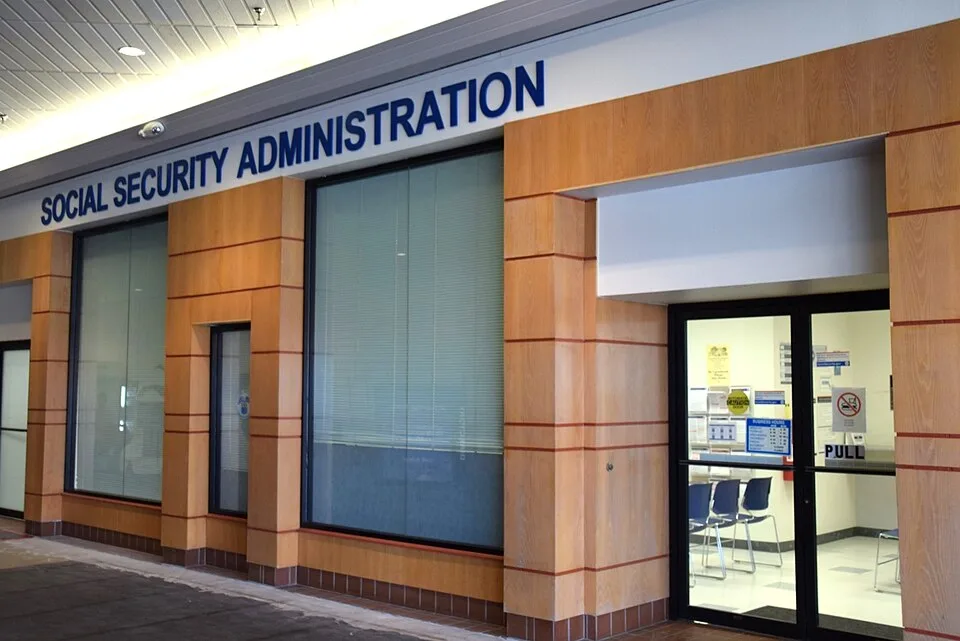
The head of the Social Security Administration sent an email to tens of millions of American seniors claiming they received an average of $7,500 in tax relief this year, thanks to Donald Trump's One Big Beautiful Bill. According to tax policy experts, the actual average tax cut is closer to $1,100. This is not a rounding error. This is a lie, sent from a federal agency, to retirees who trusted it.
What the Email Actually Said
On July 2, Social Security Commissioner Frank Bisignano sent an email with the subject line "Making Life More Affordable for America's Seniors." The email was framed as an update on the agency's customer service improvements, shorter wait times at field offices, faster call response, that kind of thing. Fine. Normal agency stuff.
Then it went somewhere else. "Thanks to President Trump, over 35 million American seniors received an average of $7,500 in relief this tax season," Bisignano wrote. He capped it off with, "Put simply, America's seniors are winning!" An exclamation point. In a federal agency communication. About taxes.
The email went out over the Social Security Administration's official distribution list, which exists to inform beneficiaries about their benefits. Not to run political victory laps on behalf of a White House legislative agenda. But here we are.
The $7,500 Figure Is a Fantasy
Here's the thing about the $7,500 number: it is not what happened. What the One Big Beautiful Bill actually did was create a new $6,000 tax deduction for filers aged 65 and older. A deduction. Not a rebate, not a direct payment, not a dollar-for-dollar tax cut. A deduction lowers your taxable income, and the actual savings you see depends entirely on your tax bracket.
The Tax Policy Center estimated last year that seniors would see an average tax reduction of approximately $1,100 from the senior deduction, according to Max Richtman, president and CEO of the National Committee to Preserve Social Security and Medicare. That is not $7,500. That is not even close to $7,500. That is a $6,400 gap between what a federal official told seniors and what analysts who actually do math for a living found.
Shannon Benton, executive director of the nonpartisan Senior Citizens League, was blunt when CBS News asked about Bisignano's claim. "It wasn't a $7,500 tax refund or $7,500 in direct savings," she said. CBS News also cited a Center on Budget and Policy Priorities report finding that nearly half of all seniors don't owe any federal income tax at all, meaning they can't claim the deduction in the first place. So when Bisignano says 35 million seniors got $7,500 in relief, he is including people who got zero.
Democrats Are Not Having It
Five Democratic senators fired off a letter to Bisignano on July 21, and they did not write it to compliment his prose style. Senators Elizabeth Warren, Ron Wyden, Tammy Baldwin, Sheldon Whitehouse, and Ben Ray Lujan accused the commissioner of distributing "misleading information" and "a partisan, politicized message" through an agency that is supposed to operate independently of the White House's political shop.
"You have once again disregarded your promise to 'run the SSA in an independent and nonpartisan manner' and instead are wasting taxpayer resources while threatening the credibility and trustworthiness of the Social Security program," the senators wrote. That promise, by the way, was made by Bisignano himself during his March 2025 Senate nomination hearing, presumably while senators were deciding whether to confirm him. They did. He promptly forgot.
The senators have asked Bisignano to answer their questions by August 11. They called the $7,500 figure a "gross overestimate," which is the senatorial way of saying what the rest of us would say with considerably shorter words.
What Treasury's Own Numbers Show
If you want to know what the deduction actually delivered to real people, look at the Treasury Department's own data, which CBS News cited. Filers earning between $100,000 and $200,000 received an average tax cut of just over $1,250. Filers earning between $50,000 and $100,000 received an average of just over $815. Those are the real numbers. From the administration's own Treasury Department.
Also from the Treasury data: 68% of filers who claimed the enhanced senior deduction had incomes under $100,000. Another 94% had incomes under $200,000. So this isn't even a case where the big cuts went to wealthier seniors and dragged the average up to something resembling Bisignano's number. The cuts were modest, they went mostly to middle-income and lower-income retirees, and they were nowhere near $7,500.
Nancy Altman, president of Social Security Works, called the political use of the SSA email list "unprecedented" and "highly inappropriate." The list exists, she told CBS News, to share important information about benefits. Not to deliver campaign messaging wearing a federal agency's uniform.
This Is Not the First Time
Those senators chose their words carefully when they wrote that Bisignano had "once again" disregarded his promise of independence. This isn't an isolated slip. The pattern here is an agency that is supposed to serve all Americans being used as a vehicle to promote the legislative accomplishments of the party that appointed its leadership.
Max Richtman of the National Committee to Preserve Social Security and Medicare did not mince words with CBS News. "The OBBBA did not reduce or eliminate taxes on SS benefits," he said. "Trump and Bisignano are misleading the public by claiming otherwise." That is a serious charge from a serious organization, and it deserves to be treated as such.
The Dingo Take
Let's be precise about what happened here. A cabinet-level official used the Social Security Administration's official communications infrastructure to send retirees a claim that overstated their tax benefit by roughly 600 percent, by the most favorable reading of the numbers. And he did it in an email that read like something the Trump campaign's rapid response team wrote after one too many energy drinks. "America's seniors are winning!" That's the SSA. That's the agency people depend on for accurate information about their retirement benefits.
The defense, such as it is, would probably be that the $7,500 represents some version of an average deduction amount rather than average tax savings. But here's what that defense requires you to ignore: deductions and savings are not the same thing, nearly half of seniors can't use the deduction at all, and the administration's own Treasury numbers show the typical cut landing well below $1,300. You don't accidentally get from $1,100 to $7,500. That is a choice.
Bisignano promised senators he would run the SSA as an independent, nonpartisan agency. He made that promise to get the job. Then he used the job's resources to run political messaging for the White House on the taxpayer's dime, targeting the exact population most likely to believe what the Social Security Administration tells them because it has always been, historically, an institution worth trusting. The damage here isn't just to one email. It's to the credibility of every piece of information the SSA sends from this point forward. Seniors deserve better than a press release with a federal seal on it.

Comments