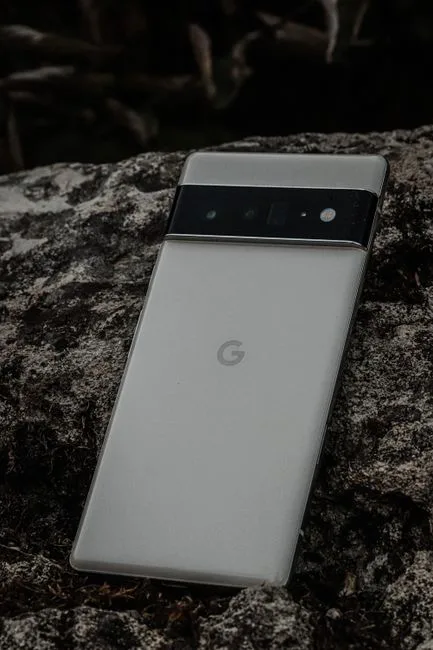
The Department of Justice is attempting to throw a man in federal prison, in part, because he had privacy software on his phone. Sam Tunick, an Atlanta resident connected to the movement against the police training facility known as Cop City, is being prosecuted under a federal statute that makes it a crime to destroy property to prevent it from being seized. The property in question is his own phone. The software in question is something millions of security-conscious people use every day.
What Actually Happened at the Airport
Tunick got off a plane at Atlanta's Hartsfield-Jackson airport on January 24th of last year, returning from a vacation. Whale-watching. A friend's boat. The Dominican Republic. A normal human trip. What he did not know was that, three hours before he landed, a homeland security agent had already circulated an email with his name and photo, flagging him for investigation into what the email called "suspected terrorism activities." He had been placed on a terrorism watchlist because of his alleged association with the movement against Cop City.
Agents pulled him into a room with a table, chairs, and a camera, and proceeded to question him extensively about child sexual abuse images. Not about Cop City. Not about the terrorism the watchlist email referenced. Child sexual abuse images. According to The Guardian's reporting on Monday's hearing, Tunick's defense team argues this line of questioning was "a pretext for a fishing expedition" into his political associations. The agents, for their part, testified it was just a routine border inspection, looking for anything prohibited. They produced no warrant. They did not read Tunick his rights.
Tunick asked for a lawyer four times. He was turned away four times.
The Phone Did Exactly What It Was Designed to Do
After agents repeatedly demanded Tunick unlock his phone, threatening to seize it if he refused, he eventually gave them a passcode. At that point, according to the defense motion The Guardian reviewed, "the screen went blank, flashed several times and the phone appeared to restart." GrapheneOS had wiped the device.
GrapheneOS is an open-source operating system built for Google Pixel phones. It's a tool used by journalists, lawyers, security researchers, and privacy-conscious people who would rather not have their entire digital life handed over during a warrantless border stop. One of its features is the ability to set a passcode that, when entered, wipes the phone clean. Tunick entered that passcode. The phone did what it was built to do.
The federal government's position is that this constitutes destruction of property to obstruct a seizure, which is a federal crime. Cybersecurity expert Christophe Boutry, quoted by The Guardian, called the framing "concerning" and said it "sends the message that GrapheneOS is criminal by default." Bill Buddington, senior staff technologist at the Electronic Frontier Foundation, said he had not seen a comparable case. Neither had Boutry. That's because there isn't one. This appears to be the first time the government has tried to use this statute against a phone operating system.
The Cop City Connection and the Bigger Pattern
Cop City is a $109 million police training facility in Atlanta that opened last spring, built on cleared forest land. Opposition to it drew from a wide range of local and national groups, centered on concerns about police militarization and the destruction of urban green space. The Guardian notes that several state-level attempts to prosecute protesters have already collapsed. The feds, apparently undeterred, have now filed two indictments, with Tunick's case being the second recent federal effort.
Putting an activist on a terrorism watchlist for opposing a police training center should be a bigger news story than it currently is. Quietly flagging someone as a terrorism suspect, intercepting them at an airport under false pretenses, questioning them without a warrant or Miranda rights, and then prosecuting them for having the audacity to use phone security features is a very specific chain of events. Each link in that chain is alarming on its own. Together they describe something that looks a lot less like law enforcement and a lot more like political targeting dressed up in legal clothing.
This Is Happening Elsewhere Too
Boutry told The Guardian that Tunick's case echoes trends in France and Spain, where authorities have grown increasingly frustrated by their inability to access the phones of journalists, lawyers, and political opponents who use GrapheneOS. In Catalonia specifically, police have reportedly been profiling people who own Google Pixel phones on the assumption that they have GrapheneOS installed and are therefore drug dealers or gang members. Owning a particular phone model is now enough to get you flagged in some jurisdictions.
The logic here is worth sitting with for a second. Privacy software exists. People who want privacy use it. Governments that want access to people's private data resent this. The solution, apparently, is to treat the desire for privacy as evidence of criminality. That is the framework being road-tested right now, in Atlanta, in a federal courtroom.
What Happens Next
Monday's hearing was on a motion filed by Tunick's public defenders asking the court to suppress all evidence obtained during the airport interrogation, arguing it violated his constitutional rights. A ruling isn't expected until at least late October, according to The Guardian.
The suppression motion is the immediate battleground, but the larger question underneath it is which constitutional rights actually apply at international airports and national borders. Courts have long allowed broader government authority at border crossings. What this case forces into focus is how far that authority extends when the target is a person's political associations, the pretext is fabricated, and the tool being criminalized is privacy software used by millions of ordinary people.
The Dingo Take
Let's be direct about what the government is arguing here. A man came home from vacation. Agents who had already secretly flagged him as a terrorism suspect pulled him into a room, lied about what they were looking for, denied him a lawyer four times, and demanded access to his phone without a warrant. When he gave them a passcode that wiped the device, which is a feature, not a bug, they decided to prosecute him for it. The DOJ wants a federal conviction because a phone did what its user configured it to do. If that doesn't make your skin crawl, read it again.
The Cop City movement is almost beside the point now. This case has evolved into something bigger: a test of whether the government can criminalize the act of protecting your own data from warrantless searches. The EFF hasn't seen a case like this before. Cybersecurity experts haven't seen a case like this before. That's because the government hasn't been brazen enough to try it before, or at least not in public, not like this.
Marlon Kautz of the Atlanta Solidarity Fund put it plainly to The Guardian: we all have a right to secure our private data against unconstitutional searches. That should not be a controversial statement. It is, apparently, a prosecutable one. The ruling in October won't just affect Sam Tunick. It will set a precedent for every person in the country who has ever decided their phone is their own business.





Comments