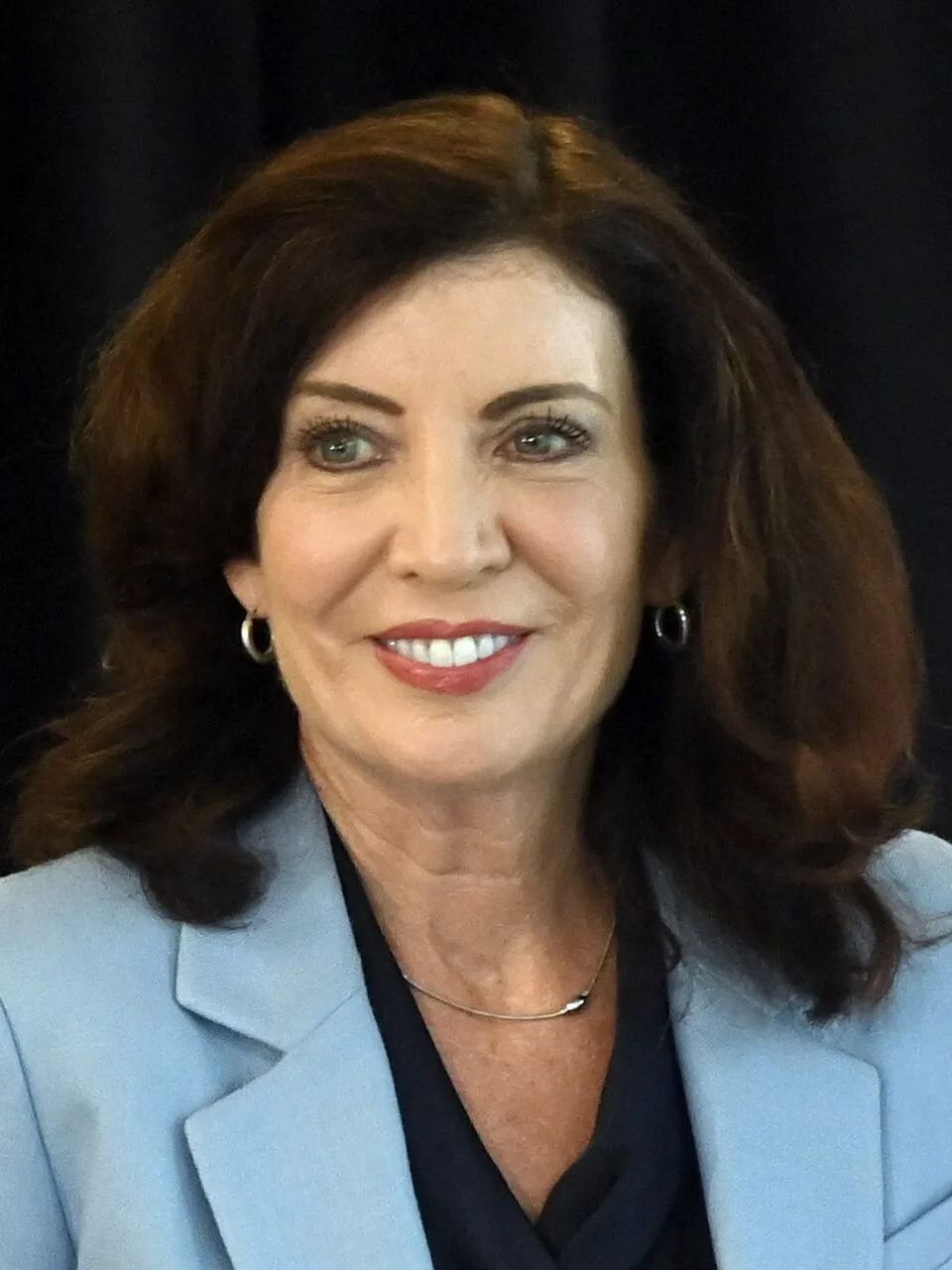
New York Governor Kathy Hochul just did something no other state governor has done: she slammed the brakes on the entire data center industry, signing the country's first statewide moratorium on new large data center construction. Her reasoning is blunt. Tech giants, she told NBC News, 'are flooding the zone' faster than states and communities can even figure out what hit them.
Small Towns, Big Tech, Zero Warning
Here's the thing about the AI boom that the press releases from OpenAI and Microsoft tend to leave out: the actual physical infrastructure has to go somewhere. And that somewhere, increasingly, is small towns that have no idea what just landed on them.
As NBC News reports, Hochul said her office started hearing from local governments across New York that were drowning in data center permit applications and had no idea how to handle them. 'There are so many applications in primarily small communities across the state of New York,' she said, adding that these towns 'aren't quite sure how to manage this.'
Think about that for a second. A company worth more than the GDP of most countries shows up in your town of 12,000 people and says it wants to build a facility that will draw enormous amounts of power, strain the local grid, and potentially drive up everyone's electricity bills. What exactly does your local zoning board do with that? They don't have lawyers on retainer who specialize in negotiating with trillion-dollar corporations. Hochul's point is that they shouldn't have to figure it out alone.
What the Moratorium Actually Does
Hochul's order pauses state permitting for new large data centers and directs state regulators to create new standards for how these facilities get approved. This isn't a permanent ban. It's a one-year timeout while New York figures out the rules of the road.
She told NBC News that the core problem is simple: tech companies have far more leverage than small towns do. Local communities lack, in her words, 'the negotiating ability, the clout, the wherewithal to be able to negotiate the best benefits or to make sure that these companies are either bringing their own power or paying a premium into the grid to cover the cost.' Translation: right now, companies get to show up, demand a lot, and offer whatever they feel like offering. That's over, at least in New York, for the next year.
Hochul also revealed that her administration had conversations with at least one major AI company before the announcement, though she declined to name which one. She said her team told the company directly: 'We'll define the rules of the road, and we'll want you to follow them.' Whether that lands as a reasonable heads-up or an awkward call depends heavily on which end of the phone you were on.
The 'Rejecting Innovation' Charge Is Already Flying
Predictably, critics are already framing this as New York slamming the door on the future. The Wall Street Journal's editorial board went after Hochul hard, and she wrote back a letter of her own. The exchange is exactly as fun as it sounds.
Hochul pushed back on the innovation framing directly in her NBC News interview, calling it 'a false, false narrative.' She pointed out that New York doesn't actually have that many large data centers compared to neighboring states, so the state isn't exactly turning away the industry's backbone. She argued that companies come to New York for the talent and the financial ecosystem, not the server farms. 'You don't have to have the data centers here to be successful,' she said.
Her stated goal is not to be 'first' but to 'be the first to get it right.' That's a decent line. Whether it holds up in practice depends on whether the regulatory process she's kicking off produces something coherent or just a longer list of unanswered questions.
This Isn't a Fringe Position Anymore
It would be easy to read this as one Democratic governor doing something politically convenient in a year where AI backlash is fashionable. It's more complicated than that. NBC News notes that state lawmakers in both parties have been pushing data center moratoriums, and Hochul specifically mentioned a recent conversation with a Republican local official from Long Island who is dealing with the same pressures.
Sen. Bernie Sanders and Rep. Alexandria Ocasio-Cortez have pushed for a federal-level moratorium. Grassroots groups have been multiplying across the country over the last year, driven by concerns about electricity costs and environmental impact. Data center advocates argue the pushback rests on faulty assumptions and point to economic benefits. But 'trust us, it'll be fine' is getting harder to sell to communities watching their power bills climb.
Hochul rejected the characterization that her move amounts to political pandering, telling NBC News that anyone who thinks that 'doesn't know me.' Which is exactly what someone doing something for political reasons would say, sure, but also exactly what someone doing something they genuinely believe in would say. The two are not mutually exclusive.
The Broader Context Nobody Wants to Talk About
The data center question sits at the center of a genuine tension in how we're building the AI economy. The companies driving this boom need enormous physical infrastructure. That infrastructure consumes staggering amounts of electricity and water. It has to be built somewhere. And the communities where it gets built often had very little say in whether they wanted it.
That's not an anti-technology position. It's just a description of how things have been going. The question Hochul is trying to force is whether the benefits of hosting this infrastructure actually flow to the communities bearing the costs, or whether the profits go to shareholders in Palo Alto while the power bills go up in upstate New York.
We don't have an answer to that yet. Neither does she. That's the whole point of the moratorium.
The Dingo Take
Look, reasonable people can disagree about whether a one-year pause on data center permitting is the right tool here. There are genuine arguments that slowing down construction creates its own economic costs, and that the energy and infrastructure concerns can be addressed through smarter regulation rather than a full stop. Those arguments deserve engagement.
But the baseline situation Hochul is describing is not controversial. Small communities across the country have been getting steamrolled by companies with vastly more legal and financial firepower than any local government can match. The AI build-out is happening at a speed that has outrun the regulatory frameworks meant to govern it. Somebody eventually had to say 'wait, let's actually think about this' and face the inevitable Wall Street Journal editorial about how they hate progress and America and the future.
The part worth watching is what comes out of this year-long review. If New York produces a coherent set of standards that actually gives communities leverage and ensures companies pay their fair share of grid costs, Hochul will have done something genuinely useful. If the state produces another 400-page regulatory document that accomplishes nothing except delaying things for a year, the Journal will have a field day. We will be watching. We are always watching.


Comments