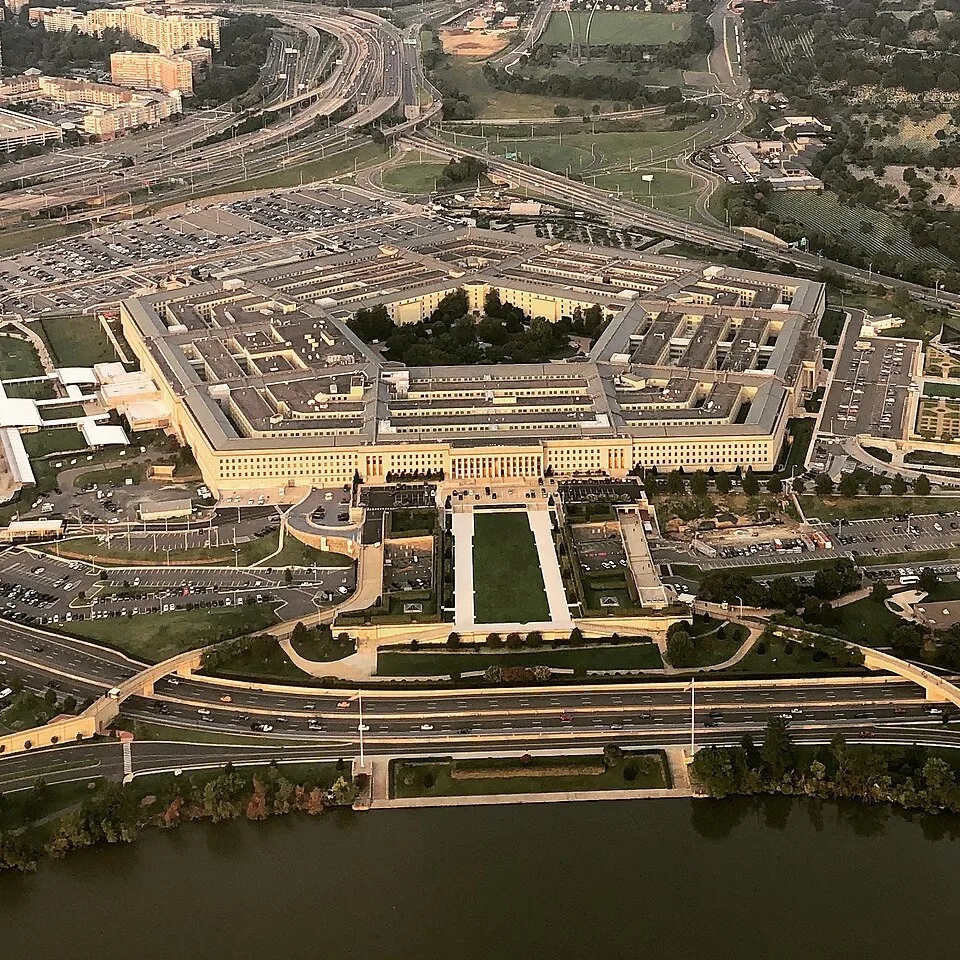
The Pentagon published an official list of American service members killed in the Iran war. Then, quietly, four names disappeared. Those four soldiers had their remains saluted by the President of the United States at Dover Air Force Base on Wednesday. By Thursday, the government had decided they didn't count.
The List That Shrank Overnight
Here's what actually happened. According to the New York Times, the Pentagon's Defense Casualty Analysis System website listed 18 American service members killed during Operation Epic Fury as of Wednesday. By Thursday, that number had dropped to 14. Four soldiers, gone from the record.
Those four soldiers died over the past weekend when Iran retaliated for new US strikes with an attack on a base in Jordan. A fourth was killed during a controlled detonation of an Iranian drone at Erbil air base in Iraq. Their names had appeared in an official Pentagon press release announcing the formal transfer of their remains back to the United States. The Guardian confirmed that the current list, despite showing it was last updated Wednesday, reflects just 14 deaths. A separate Names of Fallen list on the same site shows only 13.
This is not a rounding error. These were human beings with names, families, and funerals. They were real enough for Trump to fly to Dover and salute their flag-draped caskets. They just apparently weren't real enough to stay on the list.
Why the Numbers Changed: Pick Your Explanation
Three military officials told the Times that the Trump administration removed the four service members from the count because their deaths occurred after Trump declared a ceasefire in April. That's the explanation. The war, in the administration's telling, was over. So soldiers dying in it afterward are a kind of administrative inconvenience.
The Pentagon's official response to the Times was different. A spokesperson said the drop in the number was due to "temporary data disruptions" that would be quickly fixed. A data disruption. Four specific human beings, whose names appeared in a formal transfer of remains press release, vanished due to a data disruption.
Those two explanations cannot both be true. Either the administration made a deliberate decision to exclude post-ceasefire deaths from the official count, or there was a technical glitch. The Pentagon has not clarified which story it is standing behind. The Guardian reports the department did not respond to a request for comment.
Trump's Scoreboard Problem
You need to understand the context for why any of this matters to the administration. On Wednesday, the same day the four soldiers' remains were transferred at Dover, Trump posted a chart on his social media platform comparing the death toll of 18 in his Iran war to casualties from Korea, Vietnam, Iraq, and Afghanistan. The caption read: "These are the real facts. REPORT THEM!"
The chart itself misstated the death tolls from Iraq and Afghanistan, according to the Guardian. But the broader point is that Trump has built a political argument around the body count being low. He went to Dover to salute the caskets, then turned around and used the deaths as a talking point about his own restraint and competence as a wartime president.
If the number goes up, the argument gets harder to make. If the number goes down, it becomes a cleaner chart. You do the math.
Vietnam: A Number Trump Keeps Getting Wrong
While speaking to reporters Thursday on his way to Dover, Trump claimed the dead soldiers had all expressed support for his position that Iran cannot be allowed to develop nuclear weapons. The soldiers were killed in combat. How exactly the administration gathered their views on nonproliferation policy is unclear.
At a separate event Thursday, Trump compared his Iran war death toll to Vietnam again. "You know, we were in Vietnam for 20 years, lost thousands and hundreds of thousands of lives," he said. Then later: "Whereas in Vietnam, we lost 200,000." The Guardian points out the actual US military death toll in Vietnam was 58,220. Trump inflated it by nearly 250 percent, which is a strange way to make a comparison you're trying to win.
He also repeated his line about not serving in that war, saying he "did not serve in" Vietnam as a young man. He said this as a point of contrast, apparently, though the contrast he intended to draw remains somewhat elusive.
What a Ceasefire Apparently Means Now
The Iran war, which Trump launched on February 28 under the name Operation Epic Fury, has been going on for nearly five months. Trump declared a ceasefire in April. Fighting has continued since then, including the strikes and retaliatory attacks this past weekend that killed the four service members now absent from the Pentagon's count.
If the military officials' account to the Times is accurate, the administration has decided that a ceasefire declaration functions as a kind of legal firewall for the death toll. Deaths before the ceasefire count. Deaths after it don't, even if those deaths result directly from the ongoing military engagement the ceasefire was supposed to end.
This would be a novel and extraordinarily convenient approach to accounting for war dead. It would also mean that the longer the post-ceasefire violence continues, the lower the official death toll will remain, because every new fatality simply falls outside the designated counting window.
The Dingo Take
Let's be completely direct about what this looks like. A government that was caught with a higher body count than it wanted found a rationale to lower that number, and the rationale is that the people died after a ceasefire that didn't actually stop the dying. Whether it was a political decision dressed up as a data error, or a data error that happens to be politically useful, the result is the same: four soldiers who were killed in a war zone, whose remains were received by their commander in chief at Dover Air Force Base, have been administratively erased from the official record of that war.
Trump posted "These are the real facts. REPORT THEM!" about a chart that used wrong numbers. He told reporters the dead soldiers had expressed support for his nuclear policy. He inflated Vietnam's death toll by 142,000 people while using it as a benchmark for his own war's lethality. Any single one of these things would be a story on a slow news day. All of them happening on the same Thursday, in the same 24-hour window that four names disappeared from a government website, is not a coincidence. It's a pattern.
The families of those four soldiers know their kids are dead. The military officials who talked to the Times know those soldiers are dead. The Pentagon spokesperson who blamed a data disruption knows those soldiers are dead. The question isn't whether these men existed. The question is whether this administration will ever stop treating their deaths as a math problem to be solved in the President's favor. Based on available evidence, don't hold your breath.



Comments