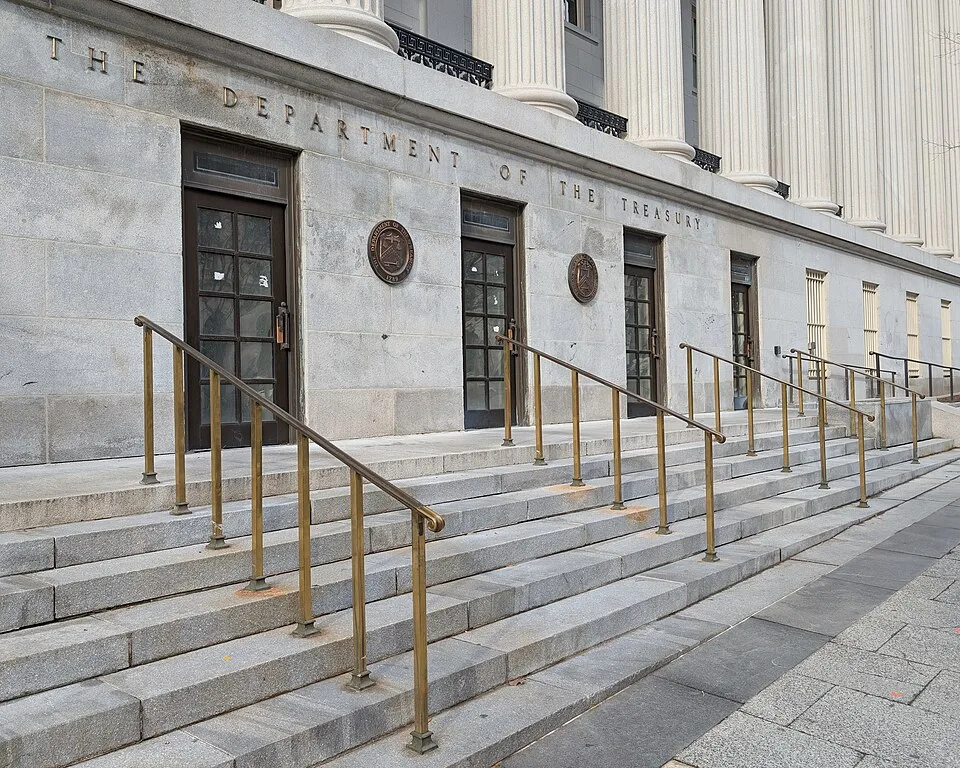
Investors are demanding a much bigger bribe to lend money to the United States government, and the reasons why are a perfect window into how badly we've broken the global economy. According to Axios, this isn't the usual inflation freakout — this is something structurally nastier. The world is running out of cheap capital, and everybody needs an enormous pile of it at the exact same time.
What's Actually Happening in the Bond Market
Treasury yields have been climbing relentlessly, and Axios reports the Federal Reserve Bank of St. Louis and U.S. Treasury data confirm this isn't a blip. Investors are simply demanding higher returns to part with their money, especially when it comes to longer-term lending. Think of it like this: if ten people at a bar all need to borrow your car at the same time, the price of borrowing your car goes up.
The key thing Axios flags is what's different about this particular sell-off. Previous spikes in yields were mostly about inflation fears — the market freaking out that the Fed was behind the curve and that dollars would be worth less by the time anyone paid them back. This time, the pressure is coming from somewhere more structural and considerably harder to fix with a few interest rate adjustments.
Three Hungry Mouths, One Shrinking Pie
Axios identifies a collision of enormous capital demands all hitting at once. Governments are running wide fiscal deficits and need to borrow heavily to finance them. The AI infrastructure buildout — data centers, chips, power grids, the whole sprawling apparatus — requires staggering private investment. And that's before you even get to the rest of the global economy, which also still needs money to, you know, function.
All of those borrowers are in the same market, competing for the same pool of investor capital. When demand for borrowing exceeds the available supply of willing lenders, the price of borrowing goes up. That price is the yield. This is Econ 101, but nobody in a position of fiscal authority seems to have taken the class.
The United States government is one of the biggest borrowers on the planet, which means it's one of the parties most exposed when the cost of borrowing rises. Every time yields climb, the interest payments on the national debt get heavier. That money has to come from somewhere, and it's not coming from any serious effort to reduce the deficit.
The AI Spending Binge Nobody Wants to Slow Down
The AI buildout factor here deserves a second look, because it's easy to treat it as a sidebar. It isn't. The race to build AI infrastructure has triggered a capital spending wave that is genuinely historic in scale. Every major tech company is competing to pour concrete, rack servers, and sign power purchase agreements, and they all need financing to do it.
This isn't inherently evil. Infrastructure gets built, economies evolve. But when you layer a multi-trillion-dollar private sector spending race on top of governments that are already borrowing heavily, you compress the supply of available investment capital in a way that hits everyone who needs to borrow. Including homeowners with adjustable rate mortgages. Including small businesses. Including the federal government itself.
Why Washington's Non-Response Is the Real Story
Here's what makes this maddening. The fiscal deficit side of this equation is a policy choice. Governments don't have to run the deficits they're running. The United States in particular has spent years cutting taxes while refusing to seriously address spending, producing the kind of structural borrowing need that puts constant upward pressure on yields.
Rather than treat rising yields as a warning sign worth heeding, the current political environment in Washington has treated any concern about debt as either alarmism or an excuse to gut social programs. The nuanced position — maybe we should bring in more revenue and stop staging theatrical fights about the debt ceiling while the actual debt quietly explodes — has essentially no constituency in either party right now.
Axios notes that the competition between all these borrowers is forcing everyone to pay more. That cost doesn't stay in the bond market. It flows downstream into mortgage rates, car loans, credit card rates, and the operating costs of every business that carries debt. Which is most of them.
What 'Higher for Longer' Actually Means for Real People
There's been a lot of talk since 2022 about interest rates being 'higher for longer,' which is the kind of phrase that sounds like a minor inconvenience and is in practice a slow-moving financial catastrophe for millions of households. If you bought a home with a fixed rate mortgage before 2022, you're probably fine. If you're trying to buy now, you're getting crushed.
Businesses that planned their finances around the decade-long era of near-zero rates are also dealing with a completely different cost structure. Companies that borrowed cheap to fund expansion, acquisition, or just day-to-day operations are rolling that debt over at much higher rates. Some of them will absorb it. Others won't.
The Treasury yield story isn't abstract. It's the interest rate on your credit card, the monthly payment on a car you can barely afford, the mortgage that prices you out of a neighborhood you grew up in. When governments compete with AI billionaires for the world's capital and lose, you're the one who pays the difference.
The Dingo Take
The bond market is doing what bond markets do: telling you the truth that politicians won't. When investors demand a higher return to lend money to the United States government, they're saying, in the polite language of finance, that they don't entirely trust what they're looking at. Massive deficits, no credible plan to address them, and a political class more interested in tax cuts for donors than in the basic math of national finance. The market is not impressed.
What Axios is describing is a structural shift, not a tantrum. The world genuinely needs more capital than it has right now, and the price of that capital is going up accordingly. The government's response to this has been roughly equivalent to responding to a house fire by arguing about who forgot to buy batteries for the smoke detector. Meanwhile the yields climb.
Somewhere in Washington, someone who understands this is watching the numbers and quietly dreading the quarterly Treasury auction reports. They're not talking about it loudly, because there's no political reward for fiscal sobriety in the current environment. There's barely a political reward for acknowledging that arithmetic exists. So the yields will keep climbing, the interest payments will keep compounding, and we'll keep having the same argument about whether any of this is actually a problem right up until it very visibly is.




Comments