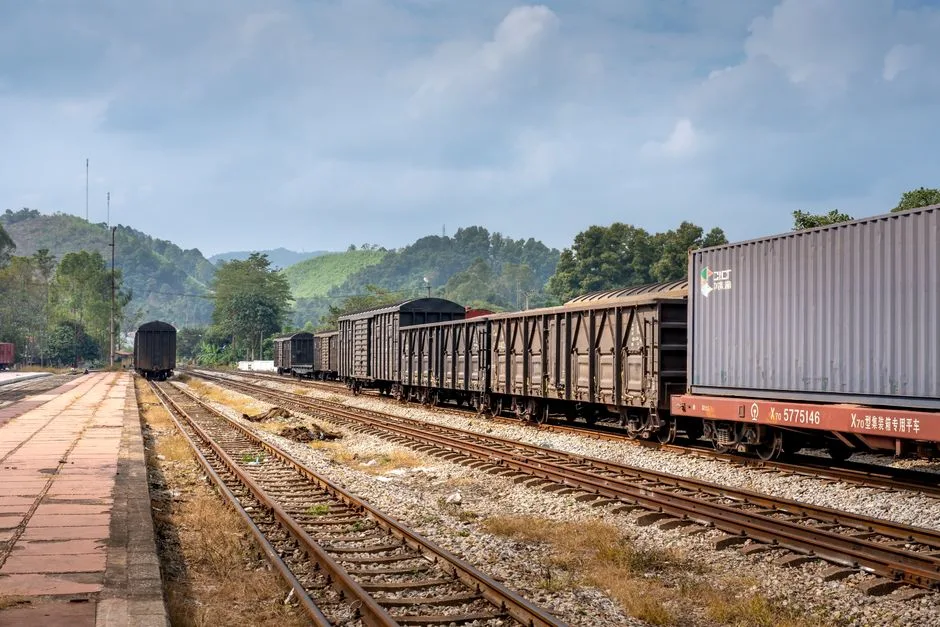
Six people, including a 14-year-old boy, died locked inside a sealed rail cargo container in Laredo, Texas, in May. The Webb County medical examiner believes they were killed by heatstroke. On Friday, federal prosecutors announced indictments against 11 people for putting them there.
What Happened in That Rail Yard
A Union Pacific employee found the bodies in a shipping container sitting in the Laredo rail yard, right on the US-Mexico border. The six victims were from Honduras and Mexico. The youngest was 14 years old. The oldest was 56. They were all part of a human-smuggling operation moving people on a freight train.
The Webb County medical examiner suspects hyperthermia killed them. That is the clinical word for what happens when you seal human beings inside an unventilated metal box in a Texas summer and forget about them. US Attorney Justin Simmons, head of the Western District of Texas, put it plainly on Friday: "It's very hard to survive in an un-air-conditioned, sealed container with the temperature being what it was on that day."
He is not wrong. Laredo regularly hits over 100 degrees in May. A sealed metal container in direct sun can reach temperatures well above that within minutes. This was not a close call that went wrong. This was a death trap.
Why Trains, and Why This Keeps Happening
Smuggling on freight trains is not new, and it is not random. According to The Guardian, trains heading toward the US often slow or stop inside Mexico before crossing the border. That gap, sometimes hours long, is exactly when smugglers load people, drugs, or other contraband into containers. By the time the train clears customs and rolls into an American rail yard, whatever or whoever is inside has already been forgotten.
Paul Nixon, a retired teacher who volunteers with the Arizona-based humanitarian group Green Valley-Sahuarita Samaritans, told The Guardian he understood exactly what drives people to this kind of risk. He described the alternative: brutal overland travel on foot, cartel violence, extreme heat, and no guarantee of surviving that route either. "We've talked to people who have just had brutal on-foot overland travel with so much cartel abuse," Nixon said. "If there was an alternative, it just seems to me that that might be one of the things that people would do."
Nixon also pointed to the climate crisis making already brutal border conditions worse. That context matters. People are not climbing into sealed cargo containers because they have good options and happen to like cargo containers. They are doing it because the other paths look equally likely to kill them.
11 People Federally Indicted
The US attorney announced a federal indictment against 11 people on Friday in connection with the deaths. The Guardian report does not detail the specific charges against each defendant or break down their individual alleged roles in the smuggling network, but federal human smuggling charges carrying death-result enhancements are among the most serious in immigration law. Convictions can carry sentences of life in federal prison.
Laredo, where the bodies were found, is one of the busiest land ports in the entire country, a place where the volume of cross-border trade is staggering. Investigators said early on that the sheer commercial activity of the area made them immediately suspect a smuggling operation. When a city is that deep in freight traffic, a container with six dead people inside it is not an anomaly the system caught. It is an anomaly the system produced.
The Door Closes and That's It
Nixon, speaking to The Guardian about the broader pattern of container deaths, did not dress it up. "People will get into a boxcar and somebody will close the door and just forget that they're there," he said. "I mean, that's a death sentence right there."
That sentence should sit with you for a moment. A 14-year-old kid climbed into a container because every other option looked worse. Someone closed the door. And that was it. The freight moved. The sun did what the Texas sun does in May. And a Union Pacific employee eventually opened the container and found six bodies.
This is not a story about smugglers being uniquely monstrous, though federal prosecutors will make a compelling case that these 11 defendants have serious answers to provide. This is also a story about a border enforcement and immigration system so brutal and so deliberately narrow in its legal pathways that people are making calculations like "boxcar versus cartel" and landing on boxcar.
The Dingo Take
Here is the thing about stories like this one. They happen. Indictments get announced. A press conference is held. The US attorney says the right words about justice and consequences. And then the same conditions that killed a 14-year-old boy in a Texas rail car in May will kill someone else in August, or October, or next May, because the indictments are aimed at individuals and the actual machine just keeps running.
The 11 people charged here absolutely deserve to face federal prosecution. Locking human beings into a sealed metal container in a Texas summer and sending the train on its way is not a gray area. But let's not pretend that putting 11 smugglers away dismantles anything. The demand for smuggling exists because legal pathways are deliberately, aggressively restricted. Every time Congress kills an immigration reform bill, every time asylum processing gets gutted, every time the rhetoric about the border is cranked up another notch without any policy that actually works, the smuggling networks get a little more business. They get a little more desperate clientele willing to climb into a boxcar.
A child died in a shipping container in Texas in May. Eleven people are going to trial. And absolutely nothing structural is going to change unless someone in power decides that dead children are a worse political outcome than actually fixing the immigration system. Based on recent evidence, do not hold your breath.




Comments