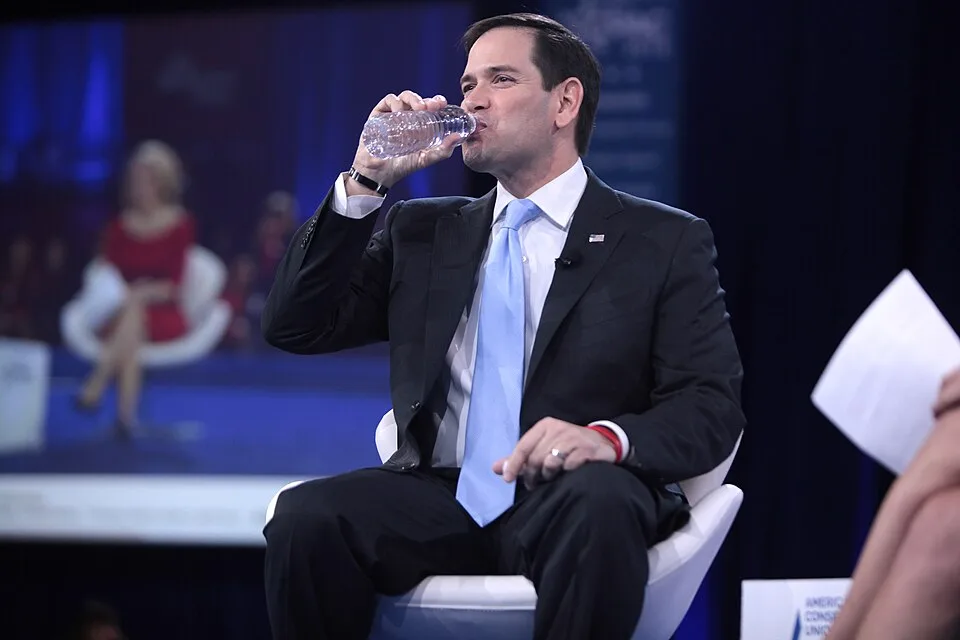
Marco Rubio flew to Manila, sat down with Sergey Lavrov, and came out the other side with essentially nothing except a polished way of saying they tried and it did not work. The Secretary of State called past U.S. mediation efforts 'unsuccessful or at least unfruitful' on Thursday, which is diplomatic speak for 'we have no idea what we're doing,' while simultaneously overseeing an active shooting war with Iran. The American foreign policy plate is not just full. It is on the floor.
What Rubio Actually Said (And What He Didn't)
Speaking to reporters after his meeting with Russian Foreign Minister Sergey Lavrov on the sidelines of the ASEAN Foreign Ministers Meeting in Manila, Rubio said the U.S. is ready to play a role in ending what he called 'the senseless war' in Ukraine. He just couldn't say when, how, or whether any of the conditions for a deal actually exist right now.
His exact words: 'That's been the challenge — an end that both sides can accept.' That's the challenge. After four-plus years of war, tens of thousands of dead, and a summit between Trump and Putin in Alaska last year that apparently produced a commitment to agreements that nobody seems to be honoring, the challenge is finding something both sides can accept. Groundbreaking analysis.
Rubio said the U.S. would 'have to find new suggestions and new ideas.' He didn't name any. He said conditions would have to change to make progress possible. He didn't say what conditions. He said Trump was committed to the work if it was possible. Big if.
Lavrov Showed Up and Said Absolutely Nothing Useful
After his meeting with Rubio, Lavrov largely ignored questions from reporters, according to NPR. That tracks. Why answer questions when your country is still grinding through eastern Ukraine and the other side just admitted the talks have been going nowhere?
The Russian Foreign Ministry, speaking from Moscow, said Lavrov told Rubio that further arming Ukraine was 'unacceptable' and accused European nations of pursuing Russia's 'strategic defeat.' Russia also reiterated its commitment to the Alaska summit agreements. Which, again, are agreements that have not produced a ceasefire, a peace deal, or anything measurable.
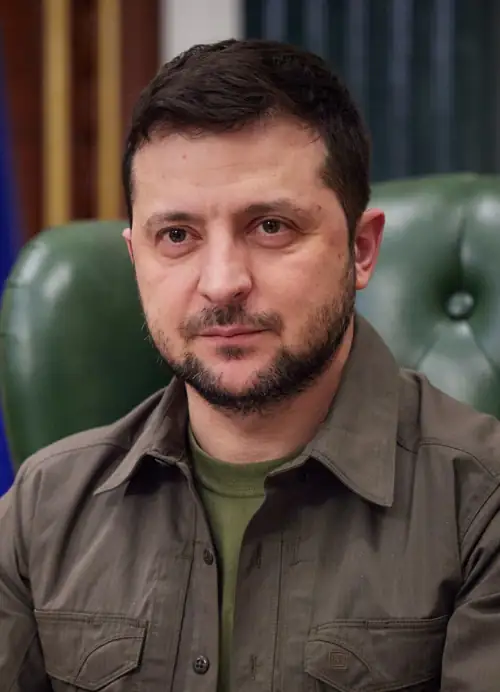
Zelenskyy, for his part, said Thursday his priority is getting back to negotiations. He has been saying versions of this for over a year. The war continues regardless.
Meanwhile, America Is Also Fighting Iran
Here's the part that deserves more attention than it's getting. U.S. peace efforts for Ukraine have been, in NPR's words, 'overshadowed by the outbreak of the Iran war earlier this year.' The Iran war. There is a war with Iran happening right now, on top of the Russia-Ukraine conflict the U.S. is trying to broker, on top of South China Sea tensions that nearly produced a shooting incident this week.
Rubio described Iran as 'begging' for talks but said Trump doesn't see the point because Tehran won't honor a deal. An interim ceasefire already collapsed. Trump has reportedly warned Iran the U.S. will destroy a bridge or power plant each time Iran fires on a ship in the Strait of Hormuz. Iran's foreign minister responded with 'eye for an eye.' Rubio countered that Trump's policy is 'a head for an eye.'
A head for an eye. That is the stated foreign policy of the United States of America, delivered by its Secretary of State at a regional diplomatic summit. In the Philippines. While also trying to broker peace in Ukraine. No big deal.
China Fired a Missile and Is Denying It Was a Problem
Because there was apparently room on this week's agenda for one more crisis, Australian Foreign Minister Penny Wong used the Manila forum to call out China's recent test-launch of a ballistic missile from a nuclear-powered submarine in the region. Wong described the lack of notification to the Philippines and Pacific nations that the missile flew over as 'destabilizing' and said it comes in the context of China's rapid nuclear buildup 'without the transparency or reassurance the region expects.'
China said the launch was part of annual exercises and that it provided appropriate notice. Australia described it as 'provocative.' These two positions cannot both be true.
Rubio also met with Chinese Foreign Minister Wang Yi on Wednesday to discuss a fresh confrontation between Chinese and Filipino forces in a disputed South China Sea shoal. He called the incident 'escalatory' and said a conflict between the U.S. and China 'would have a dramatic global impact.' He also mentioned that Xi Jinping is planning a trip to Washington in September, which Rubio predicted would be 'a very positive visit.' Cool. Looking forward to that.
No Weapons Change, No Deal, No Timeline
One thing Rubio was clear about: there has been no change to U.S. military support for Ukraine. Weapons are still being purchased by NATO allies and transferred to the country. That pipeline is open. The peace pipeline, less so.
The Alaska summit between Trump and Putin from last year was supposed to be a turning point. Both sides committed to something. Nobody can quite articulate what that something produced in practice. And now Rubio is in Manila saying the U.S. needs 'new ideas' without naming them, while Lavrov stonewalls reporters and Russia keeps fighting.
At some point, 'we're prepared to play that role if the opportunity presents itself' stops being a diplomatic position and starts being an admission that the United States has largely stepped back from the driver's seat on the biggest land war in Europe since World War II.
The Dingo Take
Let's be honest about what happened in Manila this week. The top American diplomat met the top Russian diplomat, and the readout was: talks have been unfruitful, we need new ideas, we'll try again if conditions change. That's not diplomacy. That's a form letter. The Trump administration spent the better part of 2025 suggesting it had some secret leverage that would end the Ukraine war fast. That leverage has not materialized. The war is in its fifth year.
The Iran situation makes this worse, not better. The U.S. is now actively fighting one country while trying to broker peace in another while trying not to trigger a military incident with a third. Rubio's 'head for an eye' line will probably get replayed on loop somewhere because it sounds tough, but tough talk has not closed the Strait of Hormuz conflict either. American foreign policy right now is a man spinning plates while insisting the plates are fine.
Somewhere, Zelenskyy is still asking for negotiations. Somewhere, Lavrov is still ignoring reporters. Somewhere, a bridge in Iran is one missile strike away from becoming a news cycle. And Marco Rubio is on a plane back from Manila with no deal, no timeline, and nothing but a reminder that the U.S. is 'engaged in Asia every single day.' Great. Engagement is not the same thing as results, and right now the scoreboard is not looking good for anyone involved.


Comments