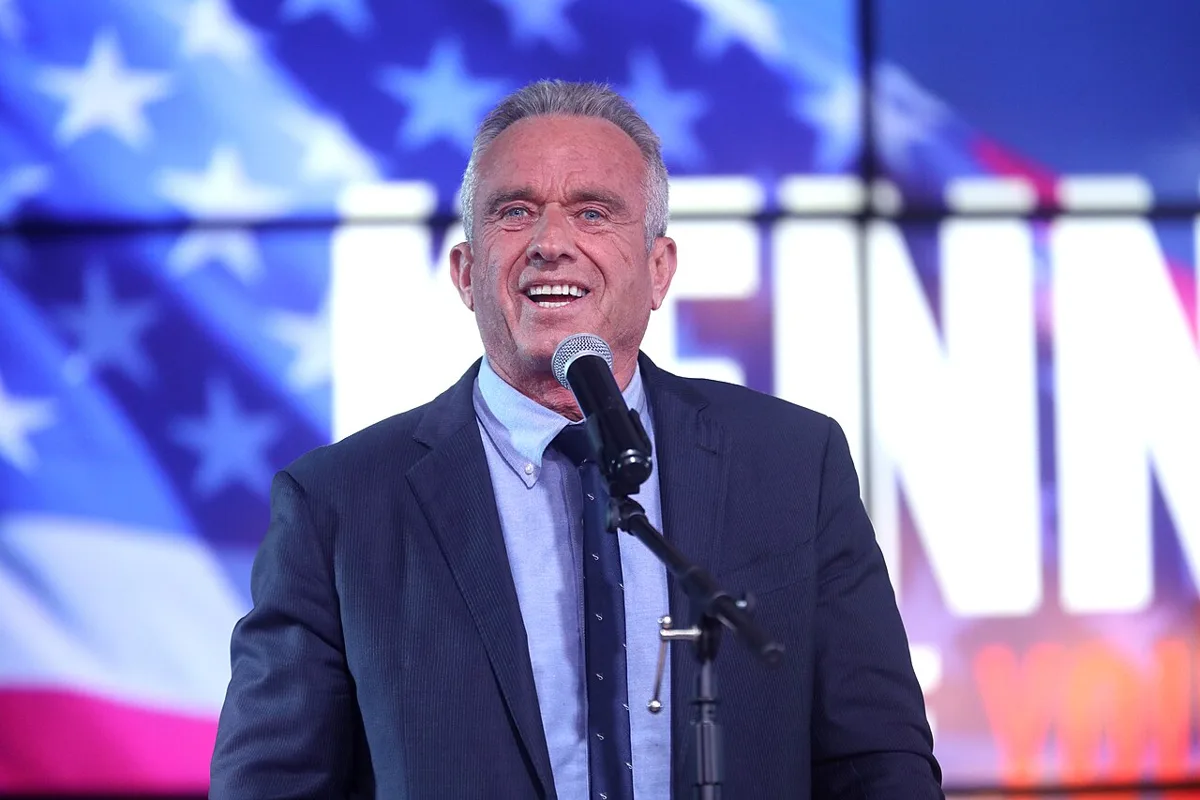
Seven months into 2026, the United States has recorded 2,318 confirmed measles cases, a 35-year high, according to the CDC. To put that in perspective: the US has now seen more measles in the past 18 months than in the entire 25 years before that combined. And the guy running health policy is a man who has spent years telling anyone who would listen that vaccines are suspicious.
The Numbers Are Genuinely Staggering
Let's be precise about what the CDC is reporting, because precision matters here. The US hit 2,289 cases last year, which was already a modern record. This year has already blown past that with five months still left on the clock. Forty-five states have recorded cases. Virginia, Pennsylvania, and Utah are all currently managing active outbreaks right now, today, in 2026.
For context, measles was eliminated in the United States in 2000. Eliminated. Gone. Public health experts spent decades and enormous resources making that happen. The measles virus is extraordinarily contagious, can cause encephalitis, and carries a particularly cruel long-term complication called immune amnesia, which essentially wipes the immune system's memory and leaves survivors vulnerable to infections their body had already learned to fight. This is not a minor childhood inconvenience. This is a serious disease that used to infect millions of American kids every year before the vaccine existed.
Last year, the virus killed two unvaccinated children during a Texas outbreak in a Mennonite community, and an unvaccinated adult in New Mexico. Children are dying of a disease we know exactly how to prevent. That's the situation.
What Elimination Status Actually Means, and Why Losing It Is a Big Deal
The BBC reports that this November, an international panel will decide whether the United States loses its measles elimination status, which Canada already lost last year. A country loses that designation after a year or more of continuous transmission of the same viral strain. The US is currently on the clock.
This is not a bureaucratic technicality. Elimination status signals to the world that a country has its public health infrastructure together enough to stop a contagious disease from circulating freely. Losing it means the opposite. It means measles is now a permanent feature of American life rather than an imported anomaly that gets quickly contained. It means other countries start issuing travel advisories. It means the US joins a list of nations that have allowed preventable disease to take hold because the political will to stop it collapsed.
America spent 25 years building that status. At current trajectory, it will take considerably less time to throw it away.
RFK Jr.'s Greatest Hits from the Secretary of Health Chair
Here is where things get genuinely maddening. Robert F. Kennedy Jr., a man whose entire public profile for the past decade has been built on casting doubt on vaccine safety, is the United States Secretary of Health and Human Services. He was confirmed, he has the office, he has the power, and he is using it.
According to the BBC, Kennedy has sent thoroughly mixed signals on the MMR vaccine, the shot that is 97% effective at preventing measles when administered in two doses. He has said the vaccine is the "most effective way to prevent the spread of measles," which sounds fine until you learn that in the same period he has actively promoted unproven alternative treatments and overseen an attempted overhaul of childhood immunization schedules that a federal judge had to block. The proposed changes would have slashed the number of recommended childhood vaccines from 17 to 11. A judge stopped that. Not Congress, not voters, a judge.
When Kennedy went before lawmakers earlier this year, his explanation for the crisis was essentially: everybody's having a bad year. "The whole world had their worst measles year," he said. That's the defense. Comparative mediocrity from the person responsible for fixing it.
When Vaccination Rates Hit 20%, Everyone Loses
The math on measles herd immunity is not complicated. You need roughly 95% of the population vaccinated to stop the virus from spreading and to protect people who genuinely cannot get vaccinated for medical reasons. That's the threshold. Get below it, and measles finds its way through.
During last year's outbreak in Spartanburg, South Carolina, the BBC reports that some schools in the affected Russian and Ukrainian immigrant community had vaccination rates as low as 20%. Twenty percent. In a country with a world-class vaccine program, free or low-cost shots widely available, and decades of public health infrastructure designed specifically to prevent this outcome. Twenty percent. That is not a supply problem. That is a trust problem, and trust problems get dramatically worse when the Secretary of Health is a famous vaccine skeptic.
Vaccine hesitancy does not emerge from a vacuum. It grows when credible-seeming authority figures validate it. When the person running the Department of Health and Human Services treats the MMR vaccine as something that deserves a skeptical second look, some portion of the public will take that as permission to skip it. The consequences of that permission are now showing up in case counts across 45 states.
The Part Where America Might Officially Rejoin the Measles Club
The November panel review is worth watching closely. If the US loses elimination status, it will be a historic marker: the moment a preventable public health collapse became official and internationally recognized. Canada already crossed that line. The US is steps behind.
Public health experts have been unambiguous, according to the BBC, that Kennedy's messaging and policy decisions have actively made this crisis harder to contain. That's not partisan spin from political opponents. That's the professional consensus of the people whose entire careers are built around stopping exactly this kind of outbreak. They are watching a textbook case of institutional vaccine skepticism translating directly into rising case counts, and they're saying so out loud.
The Dingo Take
Let's just say the quiet part at full volume: this is what happens when you hand the Department of Health and Human Services to someone who built his career being wrong about vaccines. Not skeptical in a thoughtful, evidence-weighing way. Wrong. Provably, repeatedly, consequentially wrong. RFK Jr. did not stumble into vaccine skepticism as a side note. It was the whole project. And the people who put him in that chair knew exactly what they were getting.
Two kids died in Texas last year from measles. A disease with a 97% effective vaccine. The US is on track to lose elimination status it spent a generation earning. Forty-five states are reporting cases. And the response from the top of the public health apparatus is essentially: have you considered cod liver oil, and also everyone's having a tough year. This is not an accident or an unforeseeable outcome. It is the direct and predictable result of a deliberate personnel choice.
The thing about vaccine-preventable disease is that it does not care about politics. It does not respect which team you're on or how sincerely you believe the shots are suspicious. It spreads through unvaccinated populations because that is what it does, and right now the United States is producing more unvaccinated people by the month because the trust in public health institutions is being systematically torched from the inside. Children will keep getting sick until that changes. Some of them will die. That's not a prediction. Based on last year, it's already a pattern.


Comments