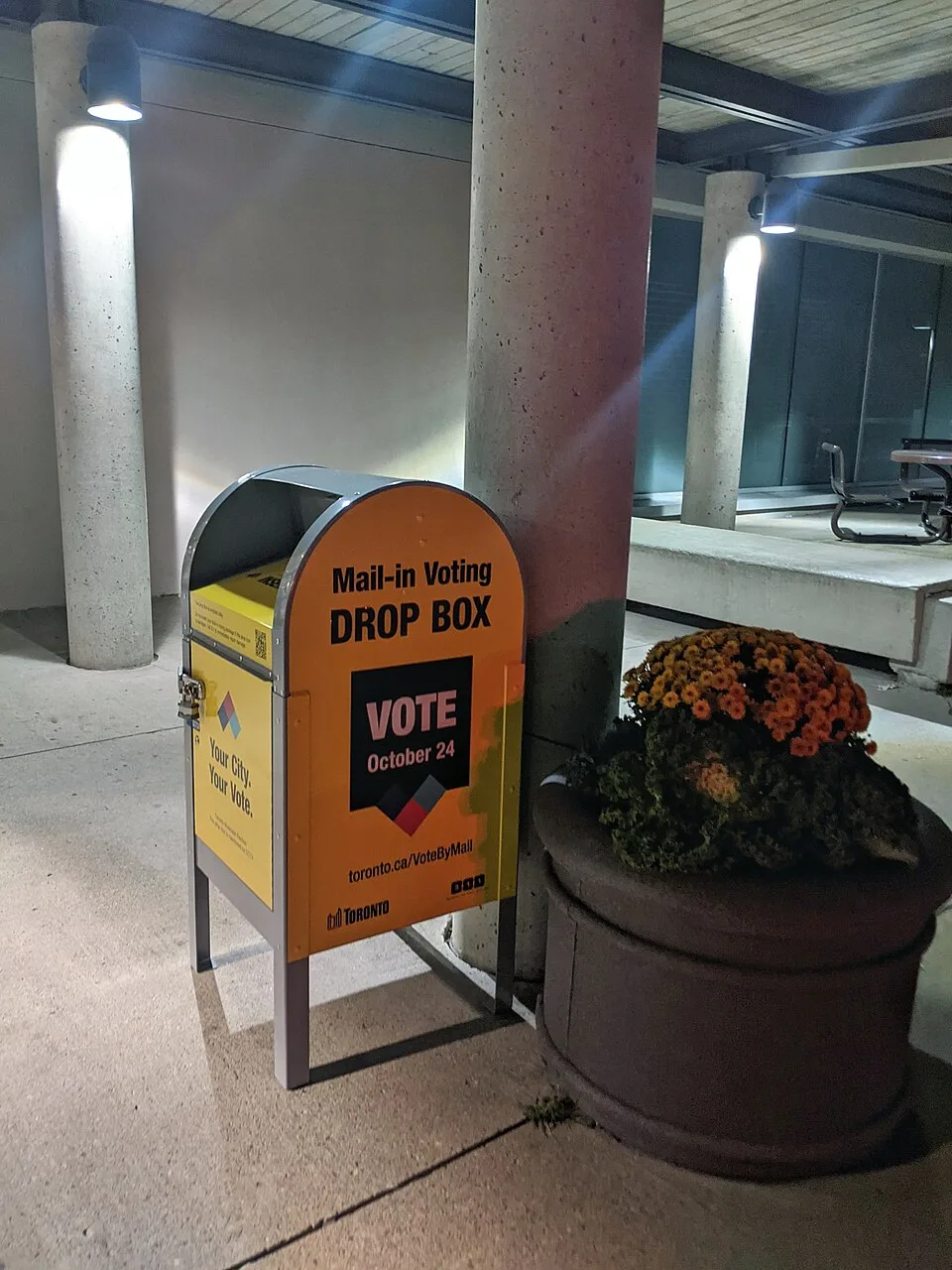
A federal appeals court told the Trump administration to sit down and think about what it's done, refusing by a 2-1 vote on Saturday to let the White House enforce key parts of Trump's mail-in voting crackdown in 23 Democratic-led states. The ruling keeps a June injunction in place through the November 3 midterms, and the DOJ has already telegraphed its next move: going straight to the Supreme Court. Buckle up.
What Trump Actually Signed and Why It Matters
Back in March, Trump signed Executive Order 14399, which Fox News reports is the centerpiece of what the administration calls its "election integrity agenda." The order does three main things. It tells the Department of Homeland Security to compile lists of confirmed U.S. citizens and hand them to states. It tells the U.S. Postal Service to create new standards for mail-in ballots. And it tells the Justice Department to go after state and local election officials who issue federal ballots to people deemed ineligible.
That last part is worth sitting with for a second. The sitting president directed his own Justice Department to hunt down election administrators in states that disagree with him about voting rules. Not investigate credible fraud after the fact. Preemptively threaten. That's the ball game, folks.
Twenty-Three States Said No, and Courts Have Agreed
The lawsuit challenging the order was brought by 23 states plus Washington D.C., led by California, Massachusetts, Nevada, and Washington. Their argument is straightforward: the Constitution gives states the primary responsibility for running federal elections, and Trump doesn't have the authority to unilaterally rewrite how they do it via executive order.
U.S. District Judge Indira Talwani agreed in June, ruling that several provisions of the order likely exceeded the president's authority. She blocked federal agencies from implementing those provisions in the plaintiff states through the November elections. Saturday's 1st Circuit ruling, per Fox News, doesn't resolve the underlying legal fight, but it keeps Talwani's injunction alive while the appeal grinds forward.
The Administration's Argument Was a Little Embarrassing
Here's where it gets almost funny. The DOJ's argument for why the injunction should be paused was that the lawsuit was premature, because federal agencies hadn't finished writing the rules needed to actually implement the executive order yet. So the administration's defense was, essentially, "you can't stop us from doing this thing we haven't figured out how to do yet."
The appeals court wasn't buying it. As Fox News reports, the majority wrote that the executive order "lays out a clear set of rapidly approaching deadlines by which states must coordinate with federal officials and comply with new voting procedures," and that the plaintiff states "have no practical choice but to respond to the order now." In other words, the deadlines are real, the pressure on states is real, and the harm is real, regardless of whether the bureaucratic machinery is fully assembled.
The Supreme Court Is Waiting in the Wings
The DOJ previously told the court that if it lost this round, it would seek emergency relief from the Supreme Court. That's not a subtle hint. That's the administration announcing its strategy out loud. With a 6-3 conservative supermajority on the bench, the White House is clearly betting that what it can't win in the lower courts, it can take from the justices Trump himself appointed.
That may or may not work. Emergency applications to the Supreme Court require at least five justices to agree, and even this court has occasionally pushed back on executive overreach when the legal argument is weak enough. But with November 3 approaching fast, the timeline pressure is real. A Supreme Court application could come any day.
The Dissent and What Comes Next
The 1st Circuit ruling was 2-1, which means one judge thought the administration should get what it wanted. We don't have the dissent's reasoning from the Fox News report, but a 2-1 split gives the administration ammunition when it goes to the Supreme Court, both as a sign of legal controversy worth resolving and as a hint that at least one serious jurist saw things their way.
The White House and DOJ did not respond to Fox News Digital's requests for comment before publication. Which tracks. When you're about to file an emergency petition to the highest court in the country, you probably aren't doing a lot of press availability.
The Dingo Take
Let's be clear about what this executive order is actually designed to do. It's not designed to catch non-citizen voters, because that problem, while real in the sense that it occasionally happens, is vanishingly rare and already illegal. It's designed to make voting by mail complicated enough, and threatening enough for election workers, that participation drops in Democratic-leaning areas where mail voting is most common. That's the play. It has always been the play.
The courts have seen this, which is why a federal district judge and now a majority of a federal appeals court have both said, in careful legal language, that the president appears to have colored outside the lines. The administration's response is to sprint to the Supreme Court and hope the justices they installed will fix that problem for them. It's not subtle. It's not pretending to be subtle.
What happens next probably gets decided in the next few weeks, either at One First Street in Washington or by the calendar running out. If the Supreme Court declines to intervene, the injunction holds through the midterms and the administration loses this round. If the Court steps in, we're in brand new territory for how much a president can bend federal election administration to his will before an election he has an obvious stake in. That is not a question anyone with any sense wanted to be answering in the summer of 2026.


Comments