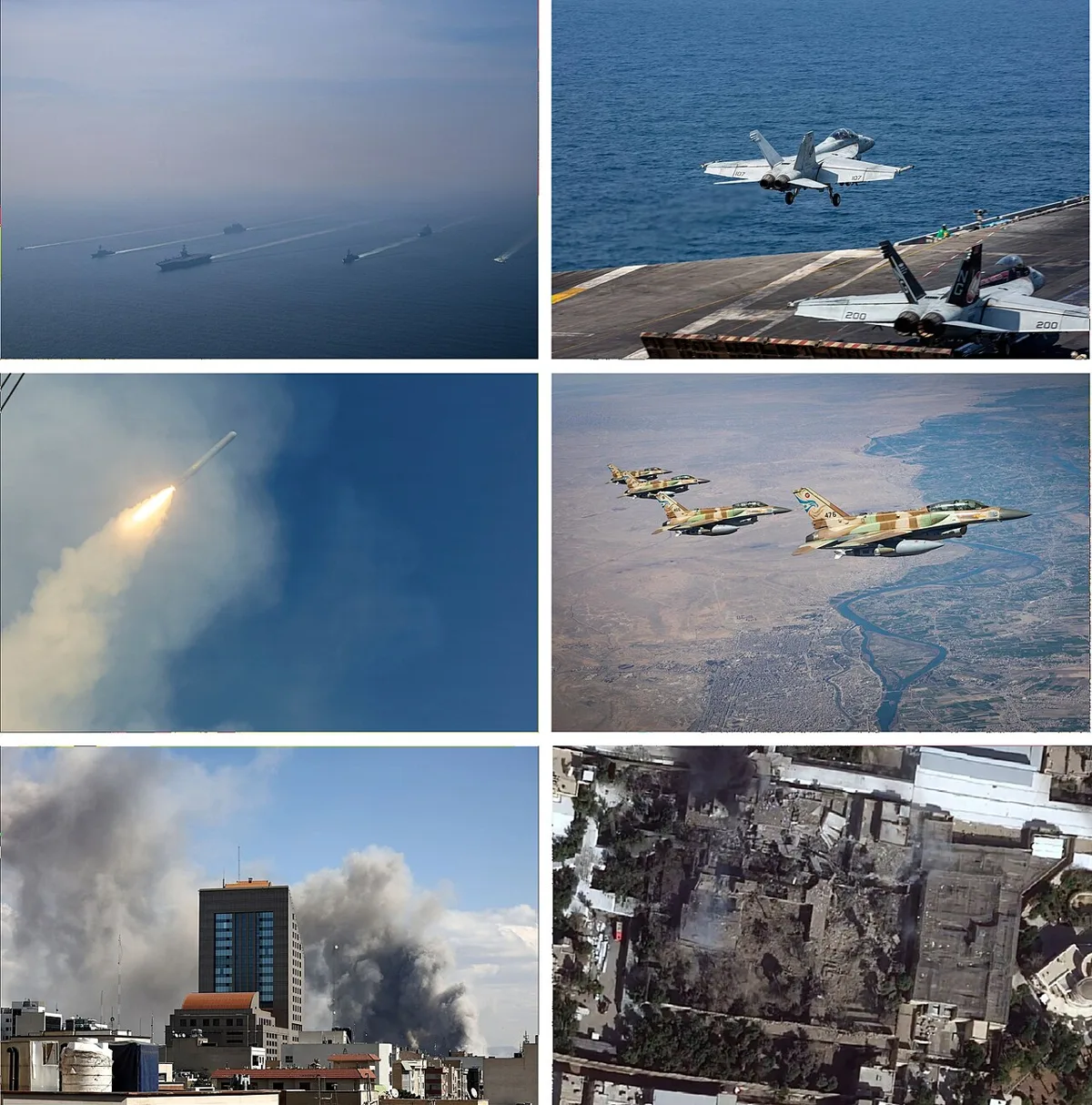
The Pentagon has apparently decided that if the law doesn't work for you, you just chop the war in half and pretend you have two shorter ones. According to The Guardian, the Defense Department quietly updated its casualty database over the weekend, inventing a brand new conflict category to sidestep the 60-day clock on the War Powers Act. Eighteen Americans are dead and 624 have been wounded in a war that, legally speaking, the White House still hasn't gotten around to asking Congress about.
The Numbers They Didn't Want You to See
Let's start with the basic math here, because it keeps changing and not in ways that inspire confidence. The Guardian reports that the Pentagon's Defense Casualty Analysis System now shows 14 service members killed and more than 400 wounded under Operation Epic Fury, which was the name for the initial phase of the US-Iran war that kicked off on February 28.
Here's the catch. Just days before this update, the Pentagon had already recorded 18 deaths and 482 wounded in that same database. Then those numbers shrank. Then they updated again over the weekend, adding more than 140 newly wounded. The figures are climbing and contracting like the administration is trying to find the number that sounds best in a press briefing.
Four soldiers died during renewed fighting after the ceasefire collapsed on July 6. Their names did not appear on the Pentagon's official list of service members killed in the Iran war. They did, however, show up in a Pentagon press release about transferring their remains back home. So the military quietly honored them in one document while pretending they didn't exist in the official count. That should bother everyone.
The Ruse, Explained
Here is the actual legal argument the Trump administration is making, presented as charitably as possible: the ceasefire that collapsed in April paused the War Powers Act clock on May 1, meaning the 60-day window for congressional authorization essentially froze. Now that fighting has resumed, the White House is treating it as a brand new conflict, not a continuation of the same war against the same country that started five months ago.
The Guardian lays out how the Pentagon implemented this interpretation in practice. A new casualty category called simply "Overseas Operations" was introduced for personnel killed and wounded starting July 7, the day after the ceasefire fell apart. So Operation Epic Fury ends at some convenient point, and a new nameless conflict begins, and the clock resets, and Pete Hegseth doesn't have to knock on Nancy Pelosi's door. Legally tidy. Morally grotesque.
This is the kind of thing that would get a law school student laughed out of a constitutional seminar. A war is not two separate wars because you had a brief intermission and then started killing people again.
Even Republicans Are Calling It a Ruse
When you've lost Thomas Massie, you've made a creative legal argument too far. The Republican congressman from Kentucky posted on X this week, and The Guardian quoted him directly: "Let me explain this absurd ruse: The Pentagon is pretending there have been two Iran wars separated by a brief cease-fire."
Massie didn't stop there. He wrote that by going more than 90 days without congressional authorization, Defense Secretary Pete Hegseth "IS BREAKING THE LAW and must be held accountable." That's all caps, from a Republican, about a Republican Defense Secretary. Thomas Massie is not exactly a fire-breathing progressive. When he's writing THIS IS ILLEGAL on the internet, the administration has drifted pretty far from shore.
The Guardian notes that lawmakers from both parties have challenged the administration's interpretation of the War Powers Act timeline. Which raises the obvious question: if there's bipartisan agreement that this is legally questionable, what exactly are those lawmakers doing about it besides posting?
What the War Powers Act Actually Says
The War Powers Act of 1973 exists for one reason. Congress, after watching presidents drag the country through decades of undeclared wars, decided to put a leash on executive military power. The law requires the president to notify Congress within 48 hours of committing troops to combat, and then end those operations within 60 days unless Congress votes to authorize the conflict.
The Trump administration's argument, as The Guardian explains, is that the April ceasefire paused that clock. There is no established legal precedent for this. A ceasefire is not the end of a war. It is a pause in a war. Countries sign ceasefires specifically because they want to preserve the option to resume fighting, which is exactly what happened here. Calling the resumed fighting a new conflict is the legal equivalent of arguing that your speeding ticket doesn't count because you briefly stopped at a red light.
624 Casualties and Congress Hasn't Voted on Anything
Combine both casualty counts and The Guardian's reporting puts the total at 18 Americans killed and 624 wounded since the US launched its war against Iran on February 28. That's not a skirmish. That's not a limited engagement. That is a sustained military campaign that has been running for nearly five months against one of the most heavily armed nations in the Middle East.
Congress has not authorized any of it. The administration hasn't asked them to. And now, rather than seek that authorization, the Pentagon is restructuring its own casualty database to create the legal fiction that the war is too new to require it. The soldiers whose names were missing from the official killed-in-action list this week had been in combat, died in combat, and were shipped home in flag-draped coffins. But in the Pentagon's accounting system, they didn't quite fit the category yet.
That is what bureaucratic cowardice looks like when it has real consequences.
The Dingo Take
Let's be honest about what's happening here. The Trump administration started a war, didn't ask Congress, hit the 60-day legal deadline, and instead of dealing with that politically uncomfortable fact, had some lawyers invent a new theory about ceasefire-paused clocks. Then the Pentagon operationalized that theory by splitting its own database in two. The people who died in the second half of this one continuous war are now administratively orphaned from the conflict that killed them, floating in a category called "Overseas Operations" like they fell off a supply truck somewhere.
This is not a paperwork dispute. The War Powers Act exists because the Founders, and then Congress in 1973, believed that the decision to send Americans to die in foreign wars should not belong to one person. The Trump administration's response to that principle is to argue about what counts as a war and when exactly it started and whether a ceasefire is a pause or an ending. While four new Americans came home in caskets that the official casualty list didn't acknowledge.
Thomas Massie is right that someone should be held accountable. What he hasn't explained, and neither has any other member of Congress in either party who's issued a statement about this, is what they actually plan to do. Posting on X is not oversight. Calling it an absurd ruse and then going home for the weekend is not accountability. The mechanism to stop this exists. It's called Congress. The question is whether anyone in that building has the spine to use it.




Comments