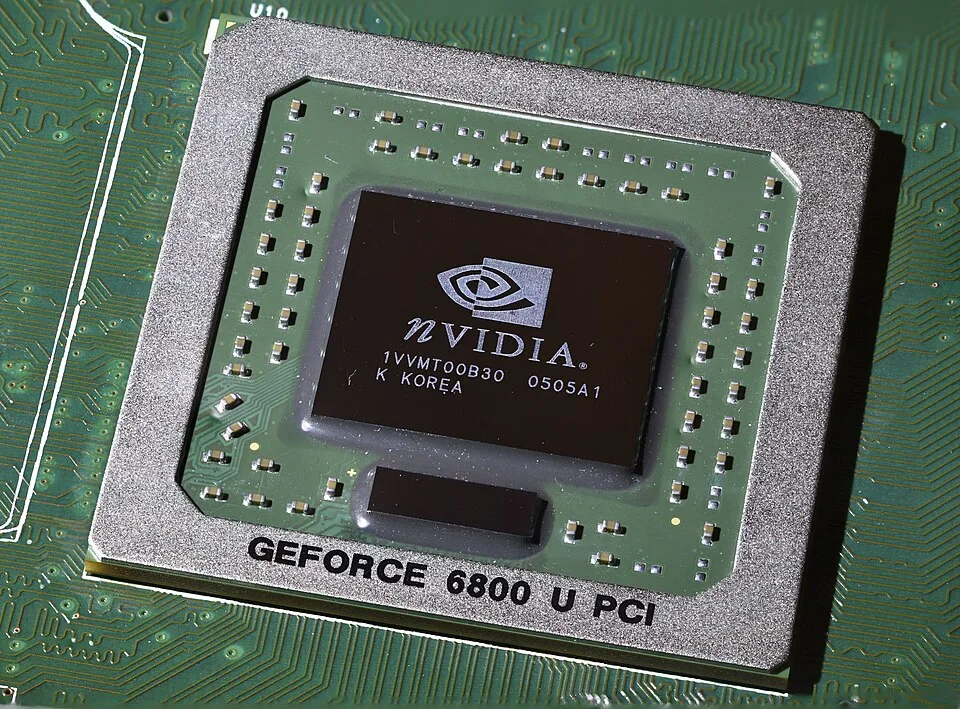
Nvidia is reportedly in talks to provide $250 billion in financing for a $500 billion OpenAI data center in Ohio, a project so large it would consume enough electricity to power several million homes. This is on top of the $30 billion Nvidia already has riding on OpenAI, plus a separate reported deal to finance OpenAI's chip purchases that could run another $350 billion. At some point the word "financing" stops being useful and you just have to say Nvidia and OpenAI are the same company.
The Biggest Data Center Anyone Has Ever Tried to Build
Let's start with the sheer scale of this thing, because it's genuinely hard to process. According to the Wall Street Journal, OpenAI is in advanced talks to lease a 10-gigawatt AI campus being developed in southern Ohio by SoftBank's energy subsidiary, SB Energy. The total cost of the project could hit $500 billion. For reference, that is more than the GDP of several countries.
The site sits on a former uranium-enrichment facility south of Columbus, which is either a poetic metaphor or just a Ohio real estate situation. Commerce Secretary Howard Lutnick, SoftBank's Masayoshi Son, and Energy Secretary Chris Wright held a groundbreaking ceremony there back in March. The first phase is expected to be finished in 2028, so start the clock on that one.
The Ohio project is also tied directly to the Trump administration's tariff diplomacy. As part of Japan's trade agreement with the U.S., Tokyo committed $33 billion to build a natural-gas power plant on federal land, operated by SB Energy. The U.S. pays SB Energy to run it, the two countries split revenue until Japan recoups its investment, and then America gets 90% going forward. It is, at minimum, a creative way to structure a trade deal.
The Part Where Michael Burry Gets Nervous
Here is where things get genuinely weird. The New York Post reports that Nvidia already has $30 billion invested in OpenAI. Nvidia is also reportedly discussing a separate deal to finance OpenAI's chip purchases, which could total $350 billion. And now Nvidia is in talks to backstop the financing that lets OpenAI lease the data center that will run on Nvidia chips.
Goldman Sachs traders and Michael Burry, the investor made famous by his bet against the 2008 housing market, have for months been warning that these arrangements are "circular" in nature. The concern, as the Post lays it out, is that Nvidia is financing and taking stakes in companies and projects that then buy Nvidia chips. The money flows from Nvidia, through a series of impressive-sounding deals, and lands back at Nvidia. Whether that is visionary vertical integration or a hall of mirrors dressed up in press releases is a question reasonable people are arguing about.
OpenAI, for its part, is an unprofitable private company without an investment-grade credit rating. Nvidia's financial backing is what allows SoftBank to raise debt for the project at reasonable terms. Which means the entire $500 billion bet is, in a meaningful way, Nvidia guaranteeing Nvidia's own future revenue. Again: reasonable people disagree on whether this is genius or something else entirely.
Meanwhile, Jensen Huang Made His Twitter Debut
In what the Post describes as his first post ever on X, Nvidia CEO Jensen Huang published a letter Friday night calling on lawmakers to keep their hands off open-source AI models. The letter was co-signed by executives from Microsoft, Meta, IBM, and Palantir, under the banner of a group calling itself the Open Secure AI Alliance. Their message to Congress: do not impose "premature restrictions on open models that stifle competition or drive innovation overseas."
The open-source AI debate has been simmering in Washington and Silicon Valley for years, and it breaks down roughly like this. Huang and the alliance argue that models not controlled by any single company accelerate development and prevent dangerous concentrations of power. Anthropic CEO Dario Amodei has argued the opposite, warning in 2023 Senate testimony that open-source AI is moving down a "very dangerous path." OpenAI's Sam Altman has also argued against open source, though OpenAI launched some open-weights tools last year, with Altman explaining to CNBC that if they did not do it, the world would be "mostly built on Chinese open-source models."
Huang's letter acknowledges the risks directly. "To be sure, open weights carry real and distinct risks. Once released, the weights are beyond the original developer's control, and modified versions are difficult to trace or reverse," he wrote. His position is that restricting them is the wrong response. The alliance says it is developing open-source cybersecurity tools for broad deployment. The timing of Huang's very public open-source advocacy, arriving days before news of a $500 billion deal with the closed-source king of AI, is the kind of irony that writes itself.
What Anthropic and Google Have to Do With Any of This
The Post notes that Anthropic, Microsoft, and Google have all spoken with Lutnick about the Ohio project, suggesting the entire American AI industry has at least knocked on this door. Google has already been backstopping some Anthropic data centers in a similar arrangement, so the model of big tech providing financial guarantees to lease massive infrastructure is becoming standard practice rather than an exception.
Anthropic is in a particularly interesting spot here, given that its CEO has been the most vocal critic of open-source AI, yet the company is apparently exploring the same government-linked infrastructure deals as everyone else. Whatever your position on the open-versus-closed-source debate, apparently everyone agrees on "enormous Ohio data centers.'
The Dingo Take
The American AI industry has constructed something that looks less like a technology sector and more like a leveraged buyout of the future, with one company holding the rope at every level. Nvidia sells the chips, finances the companies buying the chips, backstops the data centers running the chips, and takes equity stakes in the whole chain. Jensen Huang is not just a CEO at this point, he is a one-man sovereign wealth fund with a GPU monopoly attached. The people raising alarms about this, Goldman Sachs and Michael Burry chief among them, are not exactly known for being skittish. When the guy who predicted the 2008 housing collapse starts using the word "circular," you should probably read that sentence twice.
The Ohio project itself is a genuine geopolitical and economic swing. A $500 billion data center built on a former nuclear site, powered by a Japanese-financed gas plant, meant to run American AI products that will compete with Chinese ones. Howard Lutnick is apparently running U.S. trade policy and U.S. AI infrastructure policy simultaneously, which is a lot of portfolio for one former bond trader. Whether any of this ends with American technological dominance or an extremely impressive pile of stranded assets in central Ohio is not yet clear.
And somewhere in the middle of all this, Jensen Huang made his Twitter debut to defend open-source AI while simultaneously finalizing hundreds of billions of dollars in deals with the closed-source company that needs him to survive. He acknowledged the risks of open weights in the same letter. He signed it anyway. Make of that what you will.



Comments