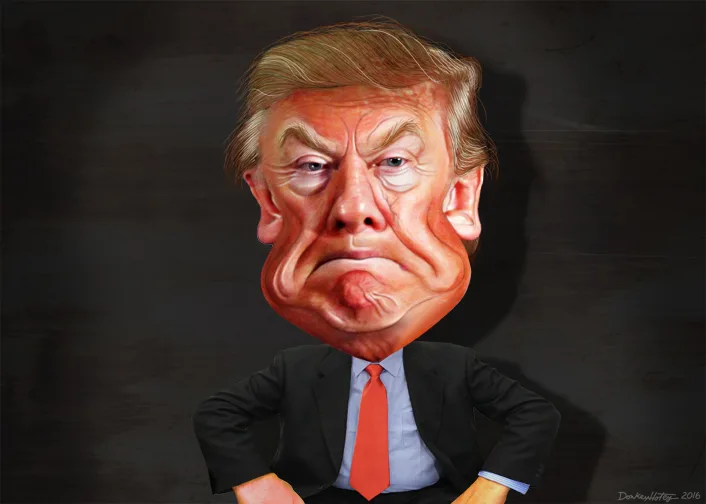
After 13 consecutive nights of US airstrikes on Iran and a tit-for-tat exchange that killed four American soldiers and dozens of Iranians, Donald Trump paused the bombing this weekend to give diplomacy, quote, 'some space.' He then logged onto Truth Social and posted AI-generated images of US military planes bombing Iranian ships. Diplomacy, apparently, contains multitudes.
Three Days of Not Bombing Each Other, Celebrated as Progress
The pause in strikes has now stretched to three nights, which in the context of this war counts as a breakthrough. UN Ambassador Mike Waltz went on Fox News Sunday to explain that Trump was 'giving talks some room,' and then went on NBC to clarify that this did not mean Trump had decided against escalation. 'I wouldn't go that far at all,' Waltz said. 'The president is keeping all options on the table.'
The Iranian side offered its own version of cautious nothing-speak. Foreign Ministry spokesman Esmaeil Baghaei told a news conference Monday that mediators were conveying messages, but that Iran had 'no negotiations with the American side.' He added that Tehran would 'never allow America to determine the timing of war and peace.' So: both sides are not bombing each other, both sides are insisting they could start again whenever they feel like it, and both sides are calling this diplomacy.
What Actually Started This Particular Round of Explosions
The broader context here is grim and worth spelling out clearly. The US and Iran signed a memorandum of understanding back in June to halt military operations, reopen the Strait of Hormuz, and work toward a permanent end to the war within 60 days. That deal lasted about six weeks before Iranian forces attacked tankers in the strait on July 13. The US immediately resumed airstrikes and reinstated a naval blockade on Iranian ports.
Iran retaliated with strikes on US military facilities and bases across the Middle East. Four American soldiers were killed. Dozens of Iranians have been killed in the subsequent US strikes, according to Iran's health ministry, as BBC News reports. The fighting has been running for nearly five months now. A CBS/YouGov poll cited by BBC News finds that 57% of Americans are frustrated about the conflict and only 19% are optimistic. Nineteen percent.
Oil Prices: The Only Thing Moving Faster Than the Body Count
The practical consequences of shutting down the Strait of Hormuz are not subtle. Before this war, roughly 20% of the world's oil passed through that single chokepoint, NBC News reports. When it closes, the global economy feels it almost immediately. Oil hit $100 a barrel last week for the first time since May as the fighting intensified and Hormuz remained effectively blocked.
With the pause in strikes, international benchmark Brent crude dropped back below $90 a barrel Monday morning, while US crude fell to around $83, both down about 7%, according to NBC News. Global markets were mostly higher, with US stock futures surging. The relief rally, though, comes with a warning label. 'A stay of military strikes might seem an improvement, but it does not come with any guarantees that oil will soon flow from the area,' PVM analyst John Evans told NBC News. 'Prices will only continue lower if high prices once again dent demand, not questionable mini-ceasefires.'
Iran's Foreign Ministry is still officially maintaining the strait is closed. On Monday, Iran's semiofficial Tasnim news agency reported that six vessels attempted to pass through Hormuz with their navigation systems switched off. One of them 'suffered an incident.' The rest were, per the agency, 'returned to the Persian Gulf under Iran's decisive management.' Whatever that means, it does not sound like open shipping lanes.
The Red Sea Is Also a Mess, Because of Course It Is
The Strait of Hormuz is not the only chokepoint in play here. Iran-backed Houthi rebels have been attacking Saudi oil installations along the Red Sea coast, and shipping traffic through the Bab el-Mandeb strait fell sharply Sunday in the aftermath, according to shipping data from Kpler shared with Reuters. Just 11 commodity vessels passed through that day, NBC News reports, marking the lowest levels in months.
And because this conflict apparently needed one more layer of chaos, Ukrainian President Volodymyr Zelenskyy said over the weekend that Russia has been sharing satellite intelligence with Iran to help Tehran direct strikes in the region. Iran's Foreign Ministry also accused Ukraine of attacking an Iranian commercial vessel in the Caspian Sea, killing one sailor and injuring another. The ministry summoned Ukraine's chargé d'affaires in Tehran in protest. The war that started as a US-Iran confrontation has now managed to pull in Houthi rebels, Hezbollah in Lebanon, Russian satellite data, and a Caspian Sea shipping incident involving Ukraine. Tremendous.
Washington's Weapons Problem It Is Pretending Does Not Exist
The New York Times reported this week that administration officials had privately warned that expanding the conflict could dangerously drain an already diminished stockpile of US air defense munitions. This is the kind of story that, if true, explains a lot about why the pause is happening right now.
Waltz rejected the reporting directly. 'The US military has everything that it needs to conduct this campaign as effectively as it needs to be,' he told CBS, BBC News reports. He also told CBS that 'additional military assets are moving into the region' and warned Iran that it should 'believe the president when he says they're locked and loaded.' Trump is set to meet Israeli Prime Minister Benjamin Netanyahu at the White House on Tuesday. Britain's new Defence Secretary Wes Streeting told the BBC he would meet US counterpart Pete Hegseth this week to discuss the strait, saying both countries are 'absolutely aligned' on securing maritime freedom there.
The Dingo Take
Let's be clear about what is happening here. The United States has spent 13 consecutive nights bombing Iran, lost four soldiers to retaliatory strikes, and watched oil prices crack $100 a barrel while two of the world's most critical shipping lanes ground to a near-halt. The president's response on Sunday was to stay off-camera and post computer-generated fantasy images of American planes destroying Iranian ships on his personal social media account. Meanwhile his ambassador ran a full Sunday show circuit to simultaneously claim diplomacy is underway AND that nothing has been decided AND that the military is ready to escalate. All three things. In one weekend.
The ceasefire that supposedly ended this war was signed in June. It lasted six weeks. The current pause has lasted three days and neither side is calling it a ceasefire. Iran says the strait is still closed. Shipping data says almost nothing is moving through either Hormuz or Bab el-Mandeb. The foreign minister of the country we are allegedly negotiating with said Monday that Tehran will 'continue to defend ourselves for as long as our interests and considerations require.' The market analyst NBC News quoted called the current moment 'questionable mini-ceasefires.' That's where we are.
Five months into a war that 57% of Americans say they are frustrated about, with a weapons stockpile the New York Times says officials are privately worried about, with oil prices that have now twice crossed $100 in two months, and with a conflict that has expanded to involve Russian intelligence sharing, Houthi attacks on Saudi infrastructure, and a Caspian Sea naval incident with Ukraine. The 'all options on the table' framing was supposed to project strength. At this point it just sounds like nobody actually knows what happens next.




Comments