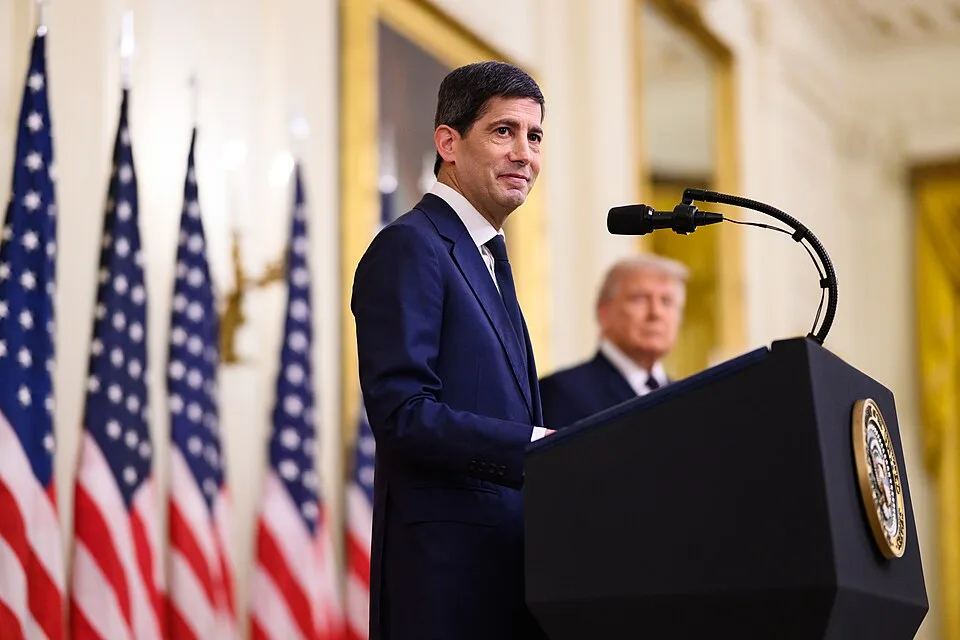
The Federal Reserve has spent the better part of thirty years building a reputation for being the most boringly predictable institution in American public life. Tell markets what you're going to do, then do it. No surprises. No drama. Kevin Warsh might be about to throw all of that out the window this week.
The Bet on the Table
According to Axios, markets are now pricing in meaningful odds that the Fed delivers an interest rate hike at the conclusion of its two-day meeting this week. Not a hike that was carefully telegraphed weeks in advance through speeches, minutes, and Fedspeak so thick you needed a decoder ring. A hike that just... happens.
To understand why that matters, you have to understand what the Fed has been for the last few decades. It is not supposed to surprise you. The whole point, ever since Ben Bernanke institutionalized forward guidance after the 2008 financial crisis, was that markets shouldn't have to guess. The Fed talks. Markets listen. Everyone adjusts. Then the Fed does exactly what it said it would do. Boring. Deliberate. Transparent.
Warsh, whom President Trump installed as Fed chair, appears to have a different philosophy. And we're about to find out just how different.
Why the 'No-Surprises' Era Existed in the First Place
This isn't just a stylistic preference. The reason the Fed moved toward radical transparency over the past two decades is that surprise rate moves historically caused chaos. Markets would swing violently. Businesses couldn't plan. The shock itself became an economic event, sometimes a damaging one.
Bernanke's great contribution was turning the Fed into an institution that communicated so clearly and consistently that a rate decision landing on announcement day was essentially already priced in. The actual vote was almost a formality. The real policy happened in the weeks of speeches and signals that preceded it.
As Axios frames it, a surprise hike this week would signal a new era where the Fed deliberately accepts more volatility and surprise as a tradeoff for what Warsh apparently sees as greater policy agility. The question nobody has fully answered yet is: agility to do what, exactly, and on whose behalf?
Warsh's History With All of This
Kevin Warsh is not an unknown quantity. He served as a Fed governor from 2006 to 2011, which means he had a front-row seat to the 2008 financial crisis and Bernanke's response to it. He has long been skeptical of some of the more interventionist tools the Fed deployed in the post-crisis years. He's a creature of Wall Street and Republican economic policy circles, and he was, for years, considered a leading candidate for the top job.
He finally got it under Trump's second term. And now the biggest question hanging over American monetary policy is whether Warsh sees the Bernanke-era communication norms as a feature or a bug. Based on what markets are apparently pricing in this week, there's real money being bet that he sees them as a bug.
That's a significant philosophical shift. The Fed chair doesn't just set interest rates. He sets expectations. And right now, expectations are, generously speaking, unsettled.
What a Surprise Hike Would Actually Mean
Let's be concrete. If the FOMC votes to raise rates this week without having clearly signaled it in advance, a few things happen simultaneously. Bonds move. Mortgage rates, which are already doing nobody any favors, could tick up further. The dollar shifts. Stock markets reprice. And every single investor, trader, and CFO in America has to update their mental model of what the Fed is now.
That last part is the most consequential. One surprise doesn't just affect the rate decision itself. It tells everyone that future meetings are also potentially surprising. You can't un-ring that bell. Once the Fed establishes that it's willing to move without warning, every meeting carries a new weight of uncertainty that simply didn't exist before.
Axios reports this would represent a meaningful break from recent central bank norms, framing it as the Fed accepting more volatility as the price of nimbleness. Whether American businesses and consumers are willing to pay that price is a different question, and one that nobody in Washington seems to be asking out loud.
The Timing Is Not Accidental
This is all happening against a backdrop of an administration that has made no secret of wanting to use every lever of economic policy aggressively. Trump has complained loudly and repeatedly about the Fed's independence, about interest rates being too high, about Jerome Powell before Warsh replaced him. He installed Warsh, in part, because he wanted a chair more aligned with his economic instincts.
Now here we are. A potential surprise rate hike, a shredding of decades of communication norms, and a Fed chair who appears willing to rewrite how the central bank operates. Whether this is Warsh acting on genuine economic conviction or performing for an audience of one in the White House is something historians will argue about. In the meantime, mortgage holders and small business owners get to live through the experiment in real time.
The meeting concludes this week. We'll know soon enough what kind of Fed we're dealing with now.
The Dingo Take
Here's the thing about blowing up institutional norms: it's easy. You just stop following them. The hard part is explaining what you're replacing them with and why that's better. Warsh has not, as far as anyone can tell, made a compelling public case for why a more volatile, less predictable Fed serves American workers and businesses better than the one Bernanke spent years carefully constructing. The argument seems to be, roughly, that nimbleness is good. Great. Nimble to do what?
The darkest read on all of this is that 'less predictable Fed' is just a polite way of saying 'a Fed that can be pressured into unexpected moves.' The whole point of the communication norms wasn't bureaucratic tidiness. It was insulation. When the market knows exactly what the Fed is going to do, it's much harder for anyone, including the president, to claim credit for moves or to pressure the central bank into behavior that serves short-term political needs rather than long-term economic stability. Kill the transparency, and you create ambiguity. Ambiguity is useful cover.
Maybe Warsh hikes this week and it turns out to be exactly the right call and markets shrug it off. That's possible. But the precedent being set matters more than any single rate decision. The Fed's independence has always been partly a norm, and norms, as we have learned exhaustively since 2017, can be dismantled faster than anyone expects once someone decides the rules don't apply to them anymore.



Comments