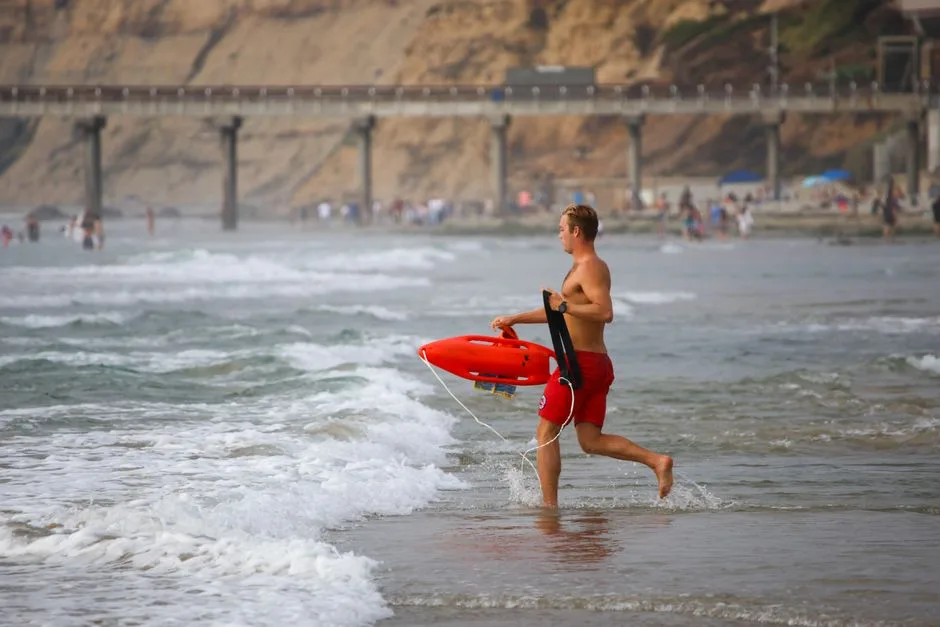
A 16-year-old rookie lifeguard pulled a drowning 10-year-old boy from violent surf at a California state beach on Saturday, kept him alive through repeated battering waves, and then — once the kid was safely back with his family — climbed up into his tower and finished his shift. Ryder Williams, who is in his first year as a California State Parks lifeguard, has since been invited to the White House. He probably deserves it.
What Actually Happened in the Water
According to the New York Post, Williams was working Tower 2 at Seabright State Beach in Santa Cruz on Saturday when he spotted 10-year-old Nathaniel Rai lose his footing in ankle-deep water. That's how fast it happens at a beach with dangerous surf: ankle-deep to swept away in seconds.
Williams didn't hesitate. In his first public statement since the rescue, he described his exact sequence: radioed it in, threw his radio and sunglasses at the base of his tower, ran toward the water, strapped his fins to his wrist, deployed his buoy, and hit the ocean. The whole thing reads like someone who had genuinely trained for this and then actually did it when it counted.
"Due to the volatility of the water, I was unable to tube up the victim," Williams said in his statement, using the technical term for securing a rescue buoy around someone. The surf was too violent for a clean textbook rescue. Waves kept hammering them both. At some point, Nathaniel went limp.
He Wasn't Going to Let Go
The New York Post reports that Williams later told his father, retired firefighter Shane Williams, exactly what was going through his head during those moments: "He was going to drown, and I wasn't going to let that happen."
That's it. That's the whole psychology of it. No complicated calculus. A kid was drowning, and Ryder Williams decided he was not going to allow that outcome.
Fellow lifeguard Aaron Bohnen eventually reached the pair after several more waves knocked them around. During all of it, Williams was apparently also yelling at well-meaning bystanders who tried to wade in to help, telling them to get back to shore. He was managing a multi-variable emergency in violent surf while being 16 years old and on his first year on the job. Once they got Nathaniel onto the beach, Williams retrieved medical equipment, waited for the boy to be assessed by others, and then went back to his tower.
The Kid Made It. The Lifeguard Kept Working.
Nathaniel Rai was returned safely to his family. That's the only outcome that matters, and it happened because a teenager made a series of fast, correct decisions under conditions that would have paralyzed plenty of adults.
"I'm grateful to have had the opportunity to return the child to his family safely," Williams said in his statement. "This is my job and I love what I do."
He then finished the rest of his shift. That detail is doing a lot of work in this story. Most people, after going through something like that, would be sitting on a cooler with a towel over their shoulders, staring at the water, processing. Williams got back in the tower. He'd already had a busy day making safety contacts because of the heavy crowds and rough conditions. He just kept going.
The White House Entrance
President Trump announced that he plans to invite Williams to the White House to receive a high civilian honor, according to the New York Post. The story got national traction fast, the kind of clean, uncomplicated hero moment that the news cycle occasionally and mercifully produces.
Williams's father being a retired firefighter adds a layer of context that writes itself. This is a kid who grew up in a household where running toward the emergency was just what you did. It apparently stuck.
The invite to the White House is a nice gesture. Whether Williams actually wants to shake hands with whoever's currently managing that particular institution is, presumably, a conversation for him and his family to have. The rescue stands completely on its own regardless of who's handing out the plaque.
The Dingo Take
You are supposed to read news and feel something. Most days that something is dread, or exhaustion, or the low-grade nausea of watching institutions fail in slow motion. And then a 16-year-old kid in Santa Cruz throws his radio and sunglasses at the base of his tower and sprints into violent surf and refuses to let a 10-year-old die, and you remember that some things still just work.
Ryder Williams did not give a press conference. He did not post a video. He gave a brief statement describing his technical actions in calm, professional language, said he was grateful, said he loves his job, and apparently said nothing more. He is 16. He is better at crisis management than most people who have been doing their jobs for decades.
The White House honor is fine, whatever. The real story here is that California State Parks put this kid through training, assigned him a tower, and when the worst thing that can happen on a beach actually happened, he executed. That's a public institution functioning exactly as intended. Beach safety programs, state park services, the whole unglamorous apparatus of government spending that keeps people from drowning on summer weekends — that's what made this rescue possible. The kid did the work. The system gave him the tools to do it. Both things are true.



Comments