China is sending Iran up to 400 shoulder-fired missile launchers, routed through Pakistan, in a $60-70 million deal designed to help Tehran shoot down the planes and drones that have been methodically dismantling its military for five months. China says this is "completely groundless." Pakistan says it's "absolutely concocted and false." Reuters has three sources who say the contract is already signed.
What's Actually Being Shipped Here
According to Reuters, the deal covers between 300 and 400 man-portable air defense systems, known as MANPADS, specifically Chinese-made QW-12 and FN-16 missiles. These are shoulder-fired, infrared-guided surface-to-air weapons built to knock down low-flying aircraft, helicopters, and drones. The kind of things that have been pounding Iranian military sites for months.
Three sources familiar with the deal told Reuters the contract was signed with Zhongqing Baoshang International Investment, a Hong Kong-based intermediary company. The plan, per those sources, is to fly the weapons out of Urumqi in western China, transit through Pakistan, and deliver them to Iran. Simple enough, except every single country involved is publicly insisting it isn't happening.
The Denial Olympics, 2026 Edition
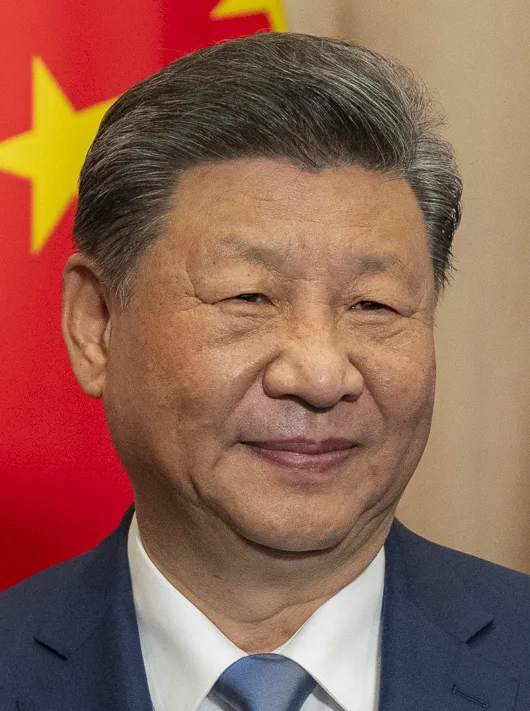
China's Foreign Ministry issued a statement calling the Reuters reporting "completely groundless" and assuring the world that Beijing has "consistently played a role in promoting peace and ending the conflict." Promoting peace. By allegedly shipping 400 missile launchers to one of the active combatants. Sure.
Pakistan's military public relations office, ISPR, said speculation about Pakistan being involved in the weapons transfer was "absolutely concocted and false." The Pakistani Foreign Ministry did not respond to requests for comment at all. Zhong Qing Bao Shang Group, the parent company of the intermediary, also went silent. Iran's foreign ministry didn't respond either. Four entities, four layers of denial or radio silence. Reuters published anyway, with three named-by-description sources, because that's how this works.
Why Iran Needs These Badly
The war context here matters. Reuters reports that US and Israeli strikes over the past five months have systematically hit facilities linked to Iran's missile programs, drone production, and existing air-defense infrastructure. Iran has responded with ballistic missile and drone barrages. But it has increasingly struggled to protect fixed military sites from advanced aircraft and precision-guided weapons.
That's precisely why MANPADS are appealing right now. Defense analysts told Reuters that portable systems like the QW-12 can be dispersed quickly, operated by small teams, and relocated constantly, making them far harder to target than fixed air-defense batteries. You can't bomb what you can't find. Iran has spent two decades building up missiles and drones, but the current conflict exposed a specific gap in short-range, mobile protection, and this deal is apparently the patch.
A Ceasefire That Keeps Needing Scare Quotes
The broader situation is, to be precise, a mess. Washington suspended its bombardment campaign on Saturday, but Reuters reports that President Trump said strikes would resume if negotiations collapsed. The conflict has technically been in a state of ceasefire since April, five months ago, which is one of the more creative uses of the word "ceasefire" in recent memory.
Into that "ceasefire," Iran is now allegedly receiving a shipment of hundreds of launchers designed specifically to counter the weapons the US has been using. A European security source told Reuters that authorities in their country were aware of multiple contracts under discussion involving QW-series MANPADS, including more advanced variants like the QW-18 and QW-19. Reuters has also previously reported that Iran was close to a separate deal with China for anti-ship cruise missiles, though it could not confirm whether that agreement was finalized.
What This Means for the Bigger Picture
Iran's military procurement strategy, as Reuters describes it, has always been a patchwork of domestic production and foreign suppliers operating around years of sanctions. This deal fits the pattern but represents one of Tehran's largest-known efforts to strengthen short-range air defenses since the war began.
The routing through Pakistan, whether or not Islamabad knows or admits it, signals how seriously all parties are taking the need for plausible deniability. Two Western intelligence sources and an Iranian official told Reuters that Tehran has also been exploring overland routes for Chinese military supplies and dual-use components, specifically to move things more discreetly and reduce interception risk. This isn't improvised. It's a logistics operation with multiple fallback options.
The Dingo Take
Three sources told Reuters the contract is signed. The weapons exist. The routing through Pakistan is described in specific detail, including the departure city of Urumqi. And every party involved is either denying it flatly or not picking up the phone. This is not a he-said-she-said situation. This is a documented arms deal that several governments would very much prefer you not think about.
The timing is what should make your head hurt. The US just paused its bombing campaign. Negotiations are supposedly underway. And Iran is allegedly taking delivery of hundreds of missile launchers in the next few weeks. You can characterize that however you want, but it is not the behavior of a party that expects a durable peace agreement to materialize. It is the behavior of a party that is using the pause to rearm.
China, for its part, gets to sit in the comfortable position of supplying weapons through intermediaries and proxies while publicly wringing its hands about peace. It has done this before, in other conflicts, with other customers. The intermediary structure exists precisely so Beijing can issue statements like the one it issued Tuesday. The architecture of deniability is the product, as much as the missiles are. Washington knows this. It has known it for years. What exactly it plans to do about it, while simultaneously trying to negotiate with Tehran, is the question nobody has a clean answer to.



Comments