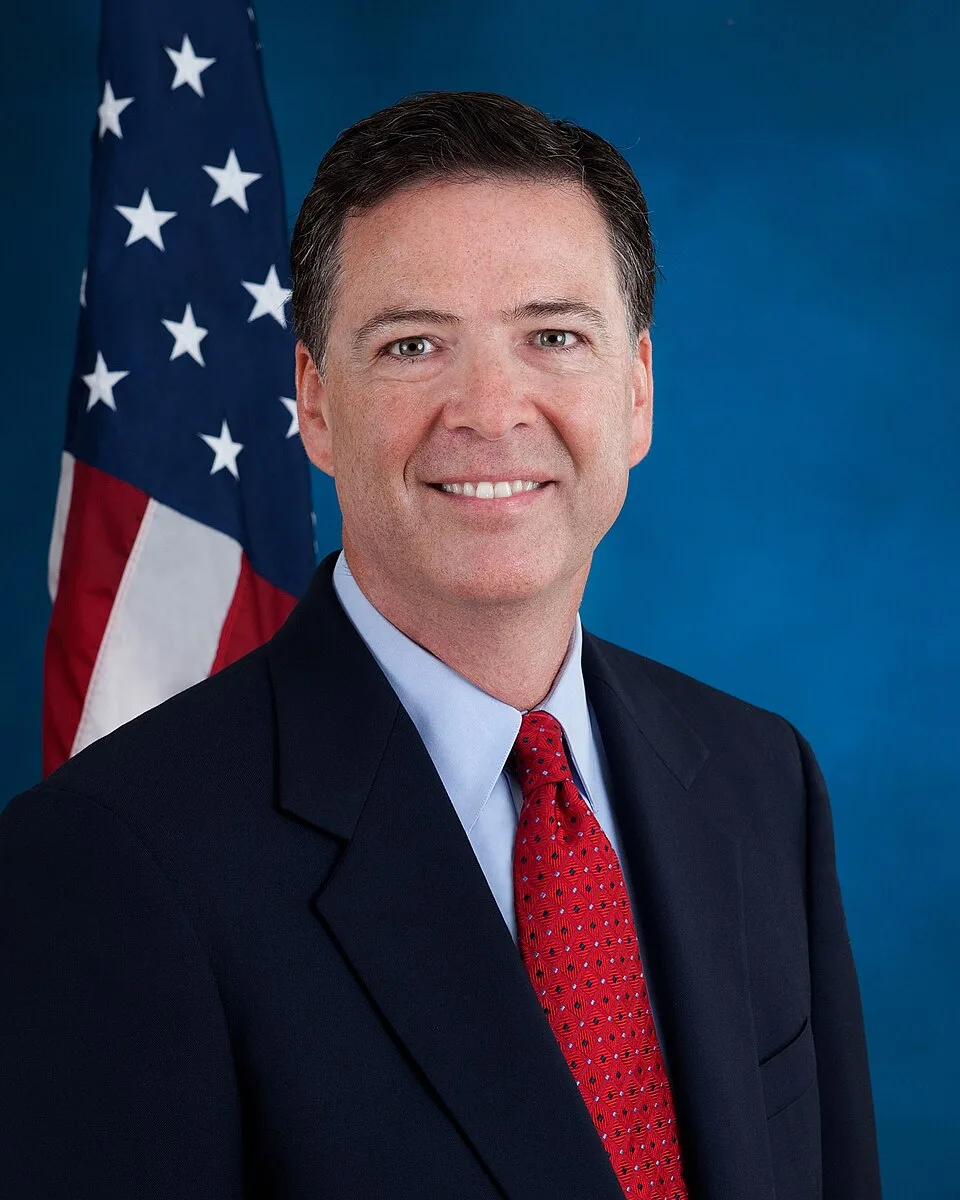
The federal government may have illegally tracked James Comey's phone to build a criminal case against him over a beach photo. The Secret Service agents they asked to do it apparently knew it was a bad idea in real time and said so in writing. None of that stopped anyone.
A 76-Page Spreadsheet of Insults and a Motion to Dismiss
Late Tuesday, Comey's legal team filed a new round of motions asking a federal judge to throw out charges accusing him of threatening President Trump's life. The charges stem from a May 2025 Instagram post showing seashells arranged to spell out "86 47" on a beach. Comey says he found the shells that way. The Trump administration says he was calling for the president's assassination.
According to CBS News, the filings included a 76-page spreadsheet cataloguing every insult Trump and Comey have traded over the past nine years. Think about that for a second. Someone had to make that spreadsheet. Someone billed hours to make that spreadsheet. That is the document that now exists in a federal court record.
Comey's attorneys are arguing the indictment should be dismissed on grounds of vindictive and selective prosecution, claiming the government is going after him specifically because Trump has a personal grudge and has been publicly demanding it for years. The Justice Department denies this, as Justice Departments always deny this.
The Secret Service Knew It Was Illegal and Did It Anyway
Here is where things get genuinely ugly. According to CBS News, Comey's motion to dismiss accuses the U.S. Secret Service of conducting "illegal electronic surveillance" of Comey without a warrant, at the request of a senior DOJ official, shortly after the Instagram post went up.
The filings show internal Secret Service discussions about "pinging" Comey's phone to track his location and a request to Verizon for location data under the pretense of an emergency. Comey was, at the time, traveling from North Carolina to his Virginia home. A routine drive.
The damning part is what one unnamed Secret Service official wrote in an internal message at the time: "At that time we did not believe that anyone's life was in immediate danger and legally it was a bad idea to ping the phone." They wrote that down. They sent it. They apparently did it anyway. The official objection is right there in the government's own records, and someone overruled it.
Mob Slang, Rudy Giuliani's Podcast, and a Witness Who Hadn't Spoken to Comey in Two Years
The surveillance allegations are drawn from an affidavit by Comey's attorney Patrick Fitzgerald, a former U.S. attorney who says he reviewed substantial discovery the government turned over. And what that discovery apparently shows about the investigation is, to put it gently, a mess.
CBS News reports that a key witness cited in the warrant applications to search Comey's digital accounts admitted in federal interviews that they had been estranged from Comey for at least two years and had never spoken to him. The same witness also admitted their first instinct when they saw the "86 47" post was that it was restaurant slang for an item being out of stock. They only changed their interpretation after listening to an episode of Rudy Giuliani's podcast. The FBI used that witness to justify search warrants.
The FBI also, per CBS News, searched its own database for any connection between Comey and use of the term "86" in his past cases, and got inconclusive results. Agents then separately searched the file on mob boss John Gambino, whom Comey prosecuted in the 1990s, and found no references to the term at all. After the indictment was already handed down, an FBI agent and a federal prosecutor went and interviewed Salvatore "Sammy the Bull" Gravano to ask if Comey ever used the word "86" with him. Gravano said no. They indicted the man first and then went looking for the evidence.
This Is the Second Indictment. The First One Collapsed.
Comey's current charges are not the first time the Trump DOJ has tried to put him in the dock. CBS News reports he was previously indicted on charges of lying to Congress in 2020. That case was dismissed not because he won on the merits, but because the federal judge found the prosecutor who brought the charges had been unconstitutionally appointed to her role as interim U.S. attorney. A legal technicality saved him last time.
Now Comey faces two counts of threatening to kill the president, and he is set to be arraigned on September 30 in New Bern, North Carolina. His legal team is pushing on every available lever: First Amendment grounds filed Monday, the vindictive prosecution motion filed Tuesday, a request for a Franks hearing to determine whether the government lied to the magistrate judge who approved the search warrants, and a demand that the grand jury proceedings be disclosed.
The Franks hearing request is pointed. Comey's lawyers argue that the warrant affidavits "omitted facts known to the affiant" and "misled the magistrates with material falsehoods," including insinuations that Comey's wife and his attorney, a former U.S. attorney, had obstructed the investigation. That is an extraordinary allegation. It is backed, according to CBS News, by the government's own discovery materials.
Nine Years of Grudges Dressed Up as a Federal Case
The backdrop to all of this, as CBS News lays out, is a feud that started in 2017 when Trump fired Comey as FBI director during his first term. Since then, Comey has called Trump "morally unfit" for office. Trump has called Comey a "dirty cop" and publicly mused about prosecuting him for years.
The 76-page spreadsheet of mutual insults is almost a perfect artifact of this moment. Two men have spent nearly a decade publicly despising each other, and now one of them controls the Justice Department, the FBI, the Secret Service, and the federal courts. The other one posted a picture of shells he found on a beach and is facing criminal charges that carry potential prison time.
Comey's lawyers put it plainly in their filing, per CBS News: the government "singled out Mr. Comey for prosecution because President Trump harbors animus toward Mr. Comey and his protected speech, and it has done so in direct response to the President's urgings." The DOJ says that is not true. The 76-page spreadsheet exists.
The Dingo Take
You are supposed to believe that the federal government identified a genuine, credible threat to the president's life in a photograph of beach seashells, launched a surveillance operation the Secret Service's own people flagged as both legally dubious and factually unjustified, anchored their warrant applications to a witness who hadn't spoken to the suspect in two years and got their interpretation of the "threat" from a Rudy Giuliani podcast, and then indicted the man before they'd finished checking whether any of their mob-slang theory was even supportable. You are supposed to look at all of that and conclude: legitimate law enforcement.
This is what the criminalization of political opposition actually looks like in practice. It is not always a midnight arrest or a show trial with obvious theatrics. Sometimes it is bureaucratic and grinding and dressed in the language of proper procedure. Search warrants. Grand juries. Arraignment dates. The machinery of justice running in reverse, pointed at a man the president has wanted punished since 2017, and every official involved telling themselves they are just doing their jobs.
The Secret Service agent who wrote that it was "a bad idea" and "legally" unsound to ping Comey's phone is the only person in this entire story who comes out looking like they understood what was happening. Whoever overruled them has not been named. The DOJ has not commented. The case is moving forward anyway. September 30 is the date. Mark it.


Comments