
The federal government has been photographing legal observers, revoking their Global Entry, threatening them with domestic terrorism watch lists, pepper-spraying them, and showing up at their homes. A new lawsuit filed Thursday says this is not a series of isolated hotheads getting out of hand. It is a coordinated, top-down policy, and someone finally decided to fight it in court.
What These People Were Actually Doing
Let's be precise about this. The people described in this lawsuit were not blocking federal officers. They were not throwing anything at anyone. They were driving behind ICE vehicles. Standing in public parking lots. Filming from sidewalks. Doing the exact thing that every journalism textbook, every civil liberties organization, and the First Amendment itself says citizens have every right to do.
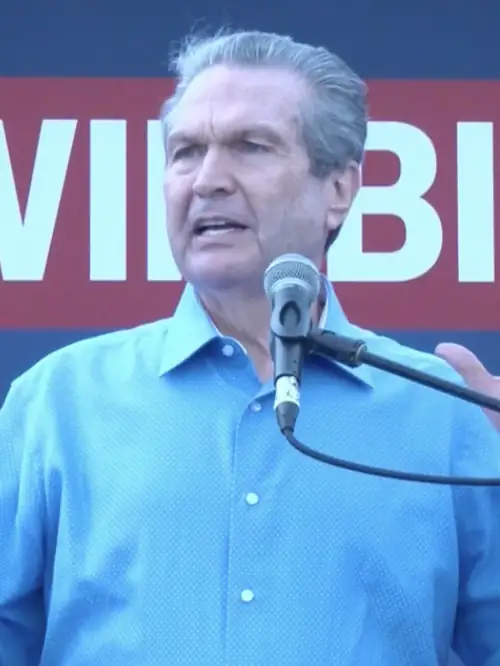
Michael Khalili, a 47-year-old father of two from Minneapolis, had been doing this for months. He told NPR he started after federal immigration officers fatally shot fellow Minneapolis observer Alex Pretti in January, and bystander videos were the only thing that demolished the Trump administration's claim that Pretti had committed an act of domestic terrorism and was a 'would-be assassin.' The videos proved those claims were false. The administration had lied. Khalili knew that without observers filming, that lie might have stood.
So he kept watching. And the federal government decided to make him stop.
The Pressure Campaign Against a Man Who Followed ICE in His Car
According to NPR's reporting, federal officers repeatedly photographed Khalili and his vehicle and told him to stop observing. One day after a particularly tense exchange in March, his Global Entry status was revoked. Just like that. Gone. It was only reinstated after a HuffPost journalist inquired about it, which tells you everything you need to know about how arbitrary and retaliatory the revocation was.
In May, a state trooper threatened him with a harassment charge for following ICE vehicles. Then in June, fifteen Minnesota activists were criminally indicted for conspiracy to impede or injure an officer. Khalili noticed that one of the counts against a defendant in that case was for following ICE vehicles across state lines in May, on the exact same day he had been warned he could be charged for doing the same thing.
His wife heard all of this. She told him she was worried federal agents would show up at their home and arrest him in front of their children. He stopped observing. The federal government had successfully scared a law-abiding father of two off a public street. That was the point.
Facial Recognition, Pepper Spray, and a Visit to Someone's House
Khalili's experience, as frightening as it is, is just one thread in a 94-page complaint that NPR reports covers incidents in Maryland, Minnesota, New Jersey, Illinois, Maine, and Tennessee. The tactics described across these states read like something from a manual on how to crush civic participation without technically making it illegal.
In one Maryland incident detailed in the lawsuit, ICE officers told local police to ban a Common Cause member from a public parking lot outside an ICE facility where the member was observing. The ICE officers told the member they knew who they were because, according to the complaint, they had run their face through a facial recognition database. In Minnesota, federal officers actually showed up at a Common Cause member's home. Other members described being photographed, followed, reported to police, and pepper-sprayed.
NPR previously reported that multiple activists in Maine were told by federal officers they could end up in a domestic terrorism database or on a watch list. A California man who runs an Instagram account tracking ICE activity was hit with an administrative subpoena seeking his identity. The pattern is unmistakable. If you watch the watchers, they will come for you.
The Lawsuit and What It's Asking For
The case was filed Thursday in Washington, D.C. by Khalili and the nonprofit Common Cause, with litigation handled by the Campaign Legal Center. It names the Department of Homeland Security, the Department of Justice, the FBI, and other federal agencies as defendants. It is asking a federal judge to bar those agencies from intimidating or retaliating against observers.
This is not the first lawsuit of its kind, NPR notes, but it is the most sweeping one yet, covering multiple states and seeking national relief rather than redress for a single incident. Common Cause's vice president for litigation, Maryam Jazini Dorcheh, told NPR directly: 'The right of citizens to criticize and hold our government accountable is the backbone of American democracy, and it is under attack.'
Danielle Lang of the Campaign Legal Center was equally blunt in her assessment, telling NPR: 'This is not about, like, some folks got out of hand in one place. This is a top-down policy of retaliation and it needs to be addressed as such.' DHS and DOJ did not respond to NPR's request for comment. The FBI declined to comment, which at this point practically is a comment.
Why This Matters Beyond Immigration Policy
You can think immigration enforcement is necessary and still understand why this is dangerous. The right to observe and document government activity in public is not a liberal or conservative principle. It is the basic mechanism by which a government stays accountable to the people it governs. When agents can revoke your travel privileges for driving behind a government vehicle, you no longer live in the country you think you live in.
And the stakes here are not abstract. NPR already reported that it was bystander video that exposed the Trump administration's false narrative about Alex Pretti after he was fatally shot by federal immigration officers in January. Without observers filming, that lie about a 'would-be assassin' committing domestic terrorism might have become the official record. That is what is actually on the line when the government scares people away from public sidewalks with facial recognition databases and late-night home visits.
The Dingo Take
The federal government ran a man's face through facial recognition software while he stood in a public parking lot, then told him it knew who he was. Federal agents showed up at another person's home. A father of two stopped filming public streets because he was afraid of being arrested in front of his kids. And none of these people had done anything illegal. Not a single thing.
This is what the word 'chilling' means in First Amendment law. You do not need to arrest everyone who watches you. You just need to arrest enough people, revoke enough travel privileges, send enough officers to enough front doors, until the rest decide the risk is not worth it. It is efficient, in the way that all authoritarian tactics are efficient. The government does not need a law against filming ICE. It just needs you to believe that filming ICE will ruin your life.
The lawsuit filed Thursday is asking a court to say that is not how this country works. Whether the courts agree, in this moment, with this judiciary, is a different question entirely. But the fact that someone had to file a 94-page federal complaint to stop the government from running citizens' faces through databases for standing on public sidewalks should make you furious regardless of what you think about immigration. This is not about the border. This is about whether the government gets to operate in the dark.


Comments