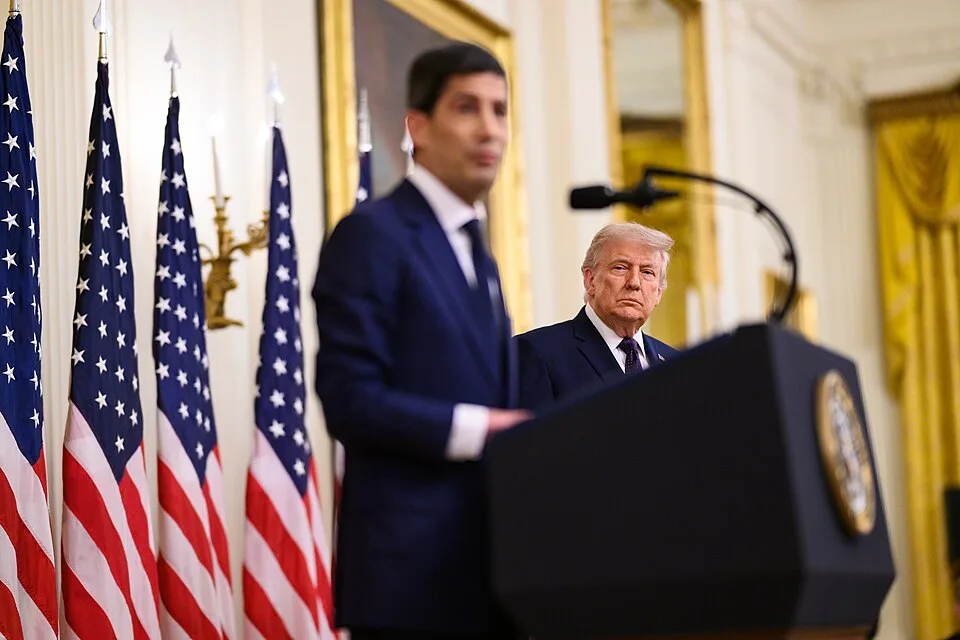
Donald Trump stood in front of reporters on Monday and declared that the United States "should have the lowest rates in the world." Two days later, the Federal Reserve looked at that statement, looked at inflation still running above target, looked at energy prices creeping back up thanks to a shaky Iran peace deal, and held rates exactly where they were. For the fifth time in a row.
The Vote, The Numbers, The Reality
The Fed's federal open market committee voted 9-3 on Wednesday to keep interest rates in the range of 3.5% to 3.75%, unchanged since December, according to The Guardian. Three dissenting members actually wanted to raise rates by a quarter point. So the pressure on the committee was not coming from both sides equally. Trump was screaming for cuts. Three members of the committee were quietly pushing for hikes. The middle ground held.
The committee's statement cited inflation that "remains elevated relative to the Committee's 2 percent goal," pointing specifically to supply shocks driving up energy prices. The US-Israel war with Iran, now in its fifth month, has kept those energy costs uncomfortably high for American households and businesses. That is the kind of thing that makes central bankers cautious. That is not, historically, when you slash borrowing costs to zero and let it rip.
Trump Wants the Lowest Rates on Earth. What Does That Even Mean?
"The United States should have the lowest rates in the world." That is a real sentence that the sitting president of the United States said to reporters this week. No context. No economic framework. Just a vibes-based assertion about where American borrowing costs should rank on a global leaderboard, as if monetary policy is a competition America has been inexplicably throwing.
To be clear about what he is asking for: the Fed's primary tool for fighting inflation is raising interest rates. Inflation is still above target. Energy prices are rising again. Three Fed members think rates should go up right now. And Trump's position is that rates should not just come down, but should be lower than every other developed economy on the planet. This is the economic equivalent of demanding your doctor prescribe you antibiotics for a fever that is still climbing.
Warsh Plays It Cool, Mostly
This is the first real test of new Fed chair Kevin Warsh, who took over in June and has been making a point of projecting sober, institutional calm. The Guardian reports that Warsh told the House financial services committee earlier this month that the Fed's members have "no tolerance for persistently elevated inflation" and a "resolute commitment to ensure price stability." That is not rate-cut language. That is rate-hike language dressed in formal wear.
Warsh has also been reshaping how the Fed communicates, announcing five task forces at his first meeting to rethink everything from forward guidance to how artificial intelligence affects policy. The committee's statement this week was noticeably shorter, a deliberate choice under Warsh's push for more streamlined communication. Whether that means he is building credibility or just redecorating while the house is on fire remains to be seen.
Trump, for his part, called Warsh "fantastic" and suggested the new chair would actually want to cut rates, blaming the hold on the rest of the board members, whom he called "very political." Warsh responded by publicly praising his colleagues and saying he has been "heartened" by their encouragement. In other words, he is not playing along. Politely, professionally, but very clearly not playing along.
Powell Is Still in the Building
Here is a detail that deserves more attention than it usually gets: Jerome Powell, the previous Fed chair whom Trump spent years publicly humiliating and then sicced a Department of Justice investigation on for failing to cut rates fast enough, is still a member of the Fed's board. He is sitting there. In the room. Voting.
Trump could not fire Powell as chair, and whatever the DOJ investigation was meant to accomplish, Powell still has a seat at the table. So when the committee votes 9-3 to hold rates, Powell's vote is in that nine. If you wanted to write a dark comedy about a president trying to bully an institution into compliance and failing at every turn, you could not script this better.
What Happens Next
At the Fed's June meeting, half of the central bank's 18 members projected at least one rate hike before the end of the year, according to The Guardian. That is a dramatic reversal from just months earlier, when a majority of members were calling for at least one rate cut over the same period. The direction of travel has reversed entirely, and it reversed because the world got more expensive and more unstable, not less.
The Iran situation is the wildcard nobody knows how to price. The Guardian describes the peace deal as "tenuous," which in diplomatic terms is doing a lot of heavy lifting. If that deal holds, energy prices stabilize, inflation data continues cooling, and the Fed might find room to cut later in the year. If the deal collapses, all bets are off. The committee seems to understand that holding steady right now is the only defensible position. Trump does not appear to share that read.
The Dingo Take
Trump's demand that America maintain the lowest interest rates in the world is not a policy position. It is a preference expressed at the volume of a policy position. There is no economic school of thought, no serious framework, no historical precedent under which you deliberately suppress borrowing costs while inflation sits above target and energy prices are rising because of an active military conflict. What Trump is describing is not monetary policy. It is monetary wishful thinking, and the Fed just said no for the fifth consecutive time.
What makes this genuinely remarkable is not the disagreement itself. Presidents have always wanted lower rates. It is human nature to want cheap money. What is remarkable is that Trump went after the last Fed chair with a federal investigation, installed a new chair he presumably thought would be more compliant, and that new chair promptly presided over a committee where three members want to raise rates. Three members. The institution did not bend. It did not even wobble. It held, 9-3, in the direction Trump most hates.
At some point, you have to reckon with the fact that the levers Trump keeps pulling are not attached to anything he thinks they are. The DOJ investigation did not move Powell. The insults did not move Warsh. The cameras and the reporters and the confident declarations about what interest rates should be globally have not moved a single vote on that committee. Nine members held. Three wanted to go higher. Zero wanted to cut. The scoreboard is right there.


Comments